
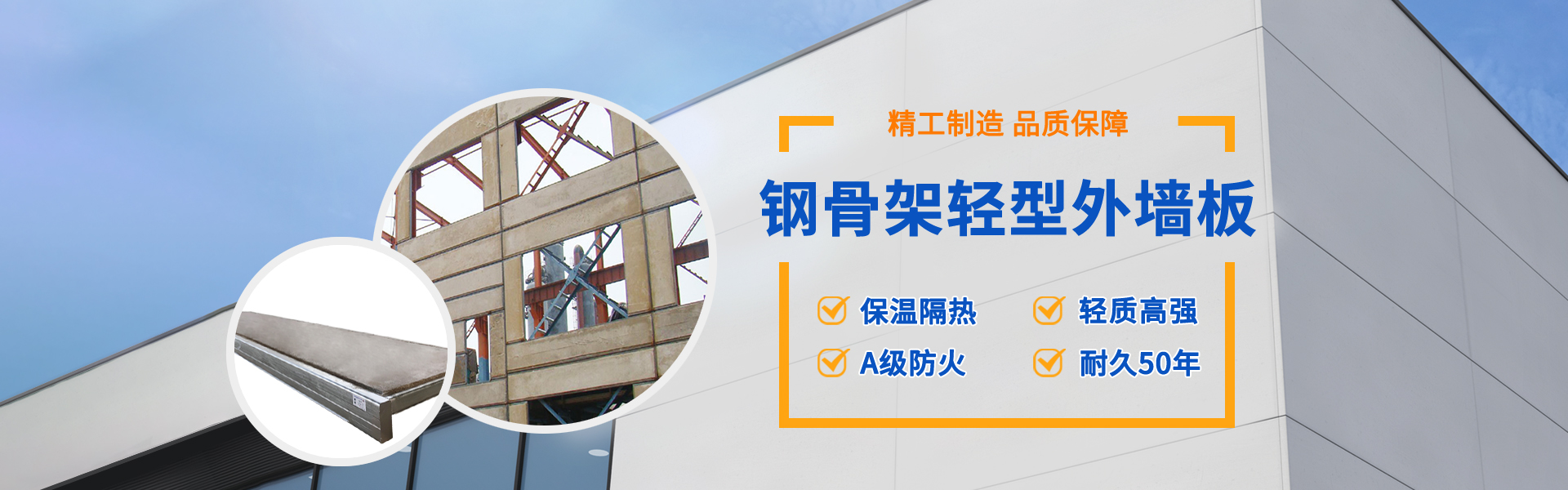

Steel structure lightweight boards possess excellent characteristics such as light weight, high strength, good impact resistance, waterproof and moisture-proof, noise reduction, heat insulation, and good seismic properties. Their surfaces are smooth and dimensions are accurate and uniform, which is conducive to shaping and mechanical production, leading to high production efficiency. With large sizes and good overall integrity, they are suitable for prefabricated construction, resulting in high construction efficiency. Therefore, promoting the use of such boards in future engineering projects is an inevitable trend. However, cracks may appear over long-term use. The following are the specific reasons for the cracks to occur:
1. High board shrinkage rate
Upon observation of the steel structure lightweight plate installation site, it was found that the plates arrived without packaging, displaying signs of moisture on the surface. Sample inspections revealed that the dry shrinkage of the plates transported to the site was approximately 1mm/m. The excessive dry shrinkage exceeded the required specifications. Analysis indicated that the dry shrinkage was a primary cause of cracking, with the overly high shrinkage being one of the key factors.

2. Inadequate construction techniques led to cracking.
Practical experience has shown that steel structure lightweight panels can crack in several ways: cracks along the column and beam edges; cracks due to the failure of mortar; and cracks along the panel edges. Analysis has revealed that during the construction phase, there is an abundance of dust and grease on the wall surfaces and at the edges of the panels; insufficient mortar strength; and cracks in the mortar. Analysis indicates that improper construction techniques lead to low mortar bonding strength, which is one of the main causes of cracking.
Improper maintenance can lead to cracking.
Upon on-site observation, it was found that some construction companies began the second phase of wall work 2-3 days after the installation of steel structure lightweight and strong plates. Analysis revealed that the mortar strength was significantly insufficient within the first 2-3 days, which made the second phase of wall work prone to mortar cracking. Therefore, improper construction and maintenance of the plates is also one of the reasons for their cracking.
