

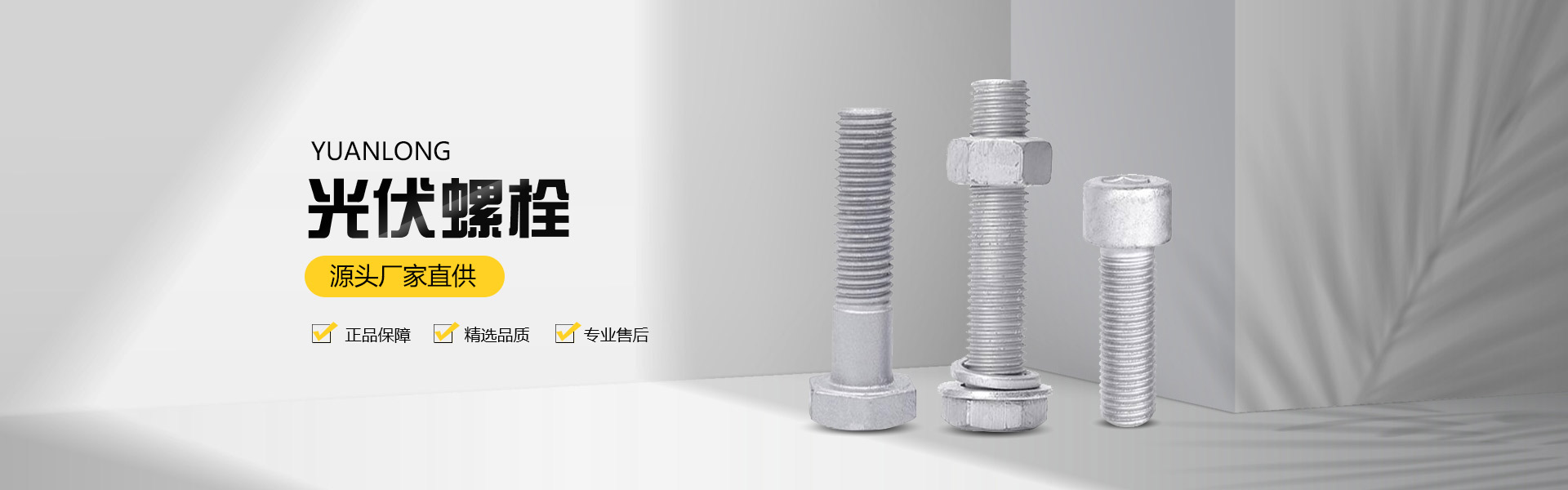
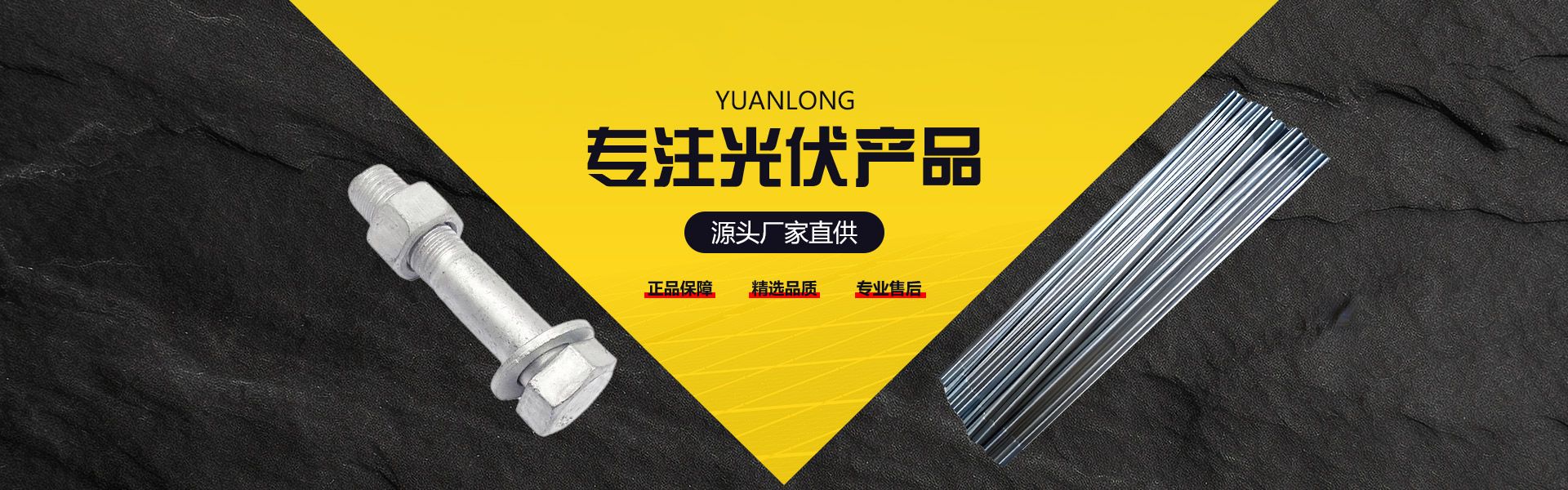


Photovoltaic bolts play a crucial role in photovoltaic systems. Their primary function is to secure and support photovoltaic panels, ensuring they are firmly installed on building roofs or ground support systems. Specifically, the roles of photovoltaic bolts include:
Connection Function: Photovoltaic bolts securely fasten solar panels to the supporting structure, ensuring a robust connection between the panels and the frame. This connection not only guarantees the stability of the system but also enhances the overall safety of the photovoltaic system.
Support Function: Photovoltaic bolts are designed to withstand the impact of strong winds and other weather conditions on photovoltaic panels, preventing displacement or damage to the panels in adverse environments.
Installation and Mounting: In addition to photovoltaic panels, bolts can be used for installing and securing other equipment and accessories, as well as for connecting cables, ensuring the smooth operation of the entire photovoltaic system.
Additionally, the specifications of photovoltaic bolts are diverse to accommodate various installation needs and environmental conditions. For instance, ST2.9 bolts are commonly used for securing insulating washers between photovoltaic components and aluminum alloy supports, while ST3.5 bolts are primarily utilized to fasten the connection between the photovoltaic component supports and the steel structures on the ground. Simultaneously, standard bolts such as GB1228 and GB3632 are widely applied in photovoltaic steel structures to meet different strength and precision requirements.
In summary, photovoltaic bolts play a crucial role in photovoltaic systems by providing fixation, support, installation, and connection, being a key component for the stable operation of photovoltaic systems.
