


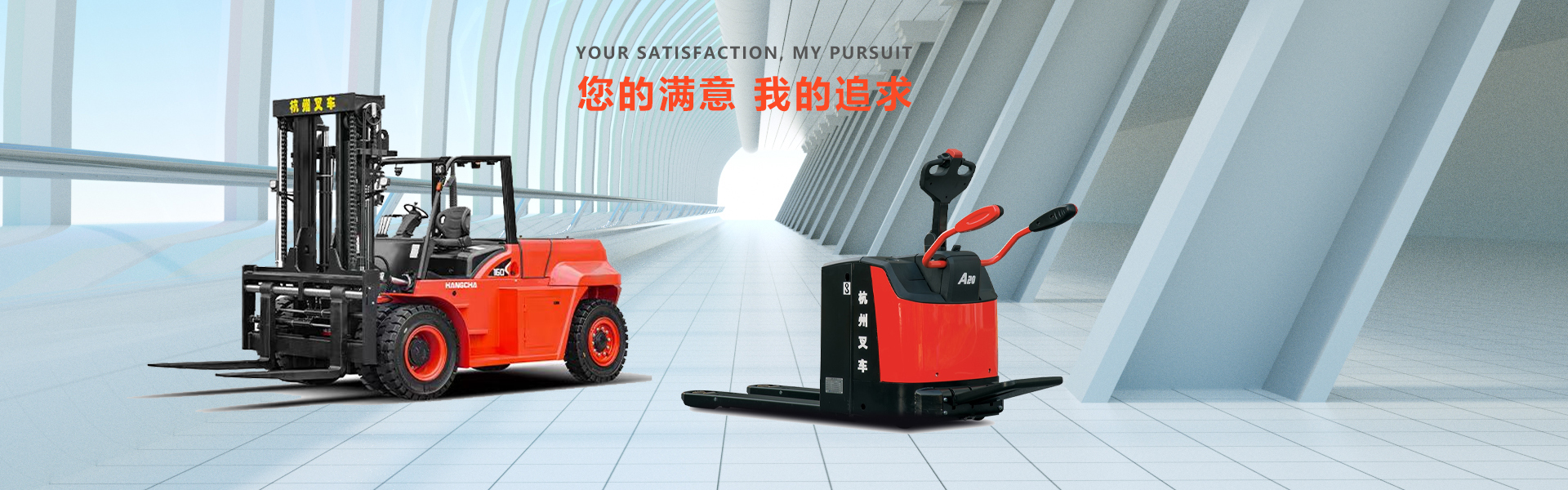

The Use of Forklifts
The forklift boasts high standardization and versatility, widely used in factories, mines, warehouses, stations, ports, airports, and loading yards. It can enter ship holds, railcars, and containers, performing operations such as loading, stacking, unstacking, and short-distance transportation on unitized goods, packaged items, pallets, and containers. It is an indispensable piece of equipment for pallet and container transportation.
The primary attachment for forklifts is the fork, which, after being fitted with other attachments, can be used for loading and unloading loose, unpackaged, and oversized cargo, as well as for short-distance transportation of these items. Forklifts are highly versatile, widely used not only in road, rail, and water transportation sectors but also in material storage and postal services.
Forklifts play a crucial role in the logistics system of enterprises, serving as the main force in material handling equipment. They are widely used in various sectors of the national economy, including stations, ports, airports, factories, and warehouses.
Benefits of Forklifts for Businesses
1. Enhance material handling efficiency, reduce labor intensity, and improve working conditions; conserve labor resources and boost productivity, as analyzed by foreign economic studies on forklift usage. A single forklift can replace the physical labor of 8 to 15 loaders. During forklift operations, the entire process of loading, stacking, and transporting goods can be mechanized solely through the driver's operation, eliminating the need for manual labor assistance. This not only ensures the safety of the enterprise but also significantly reduces the labor force required and the labor intensity, thereby greatly increasing operational efficiency and yielding substantial economic benefits.
2. Reduced operation time, accelerated material turnover, thereby enhancing vehicle and vessel utilization rates, and improving production efficiency.
3. Maximized space utilization, reducing warehouse area. With forklift operations, goods can be stacked higher, now exceeding 10 meters, significantly increasing the storage capacity by several times.
4. By utilizing pallets and containers for loading goods, we streamline packaging, reduce packaging materials, lower handling costs, enhance operational efficiency, and increase the safety of the cargo.
5. Utilizing forklift operations can alleviate cumbersome manual labor, reduce cargo damage and personnel injury incidents, and enhance the safety of operations.
6. Forklift operations can reduce cargo damage, enhance safety levels, and achieve secure loading and unloading.
7. Forklift operations offer the advantage of lower costs and reduced investment compared to large-scale loading and unloading machinery.
Therefore, forklifts should be prioritized in logistics handling operations. Forklifts play an extremely crucial role in the industrial logistics system; without them, courier services, logistics, warehousing, and even factories could grind to a halt. With the continuous rise in labor costs, the substitution of machinery for manual labor is an inevitable historical trend.
