



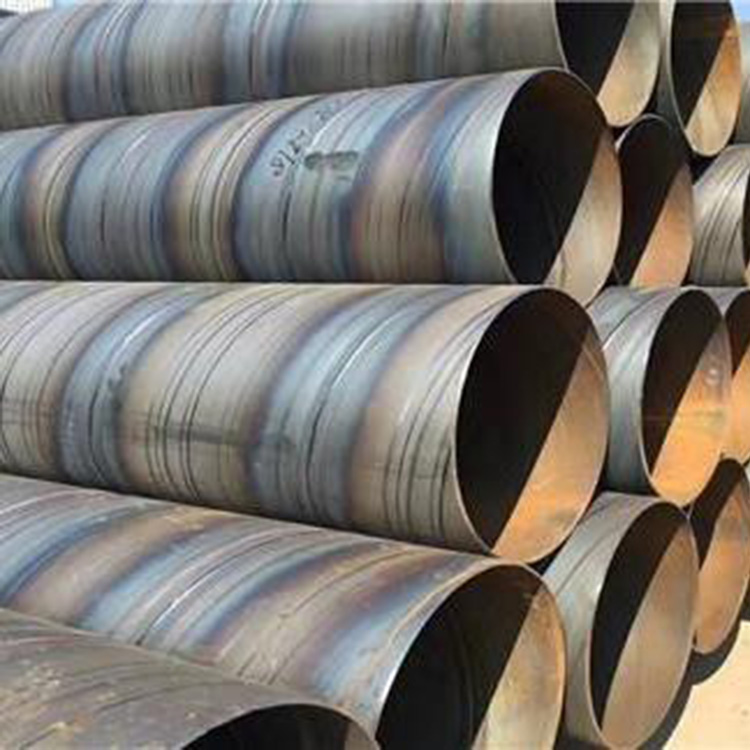
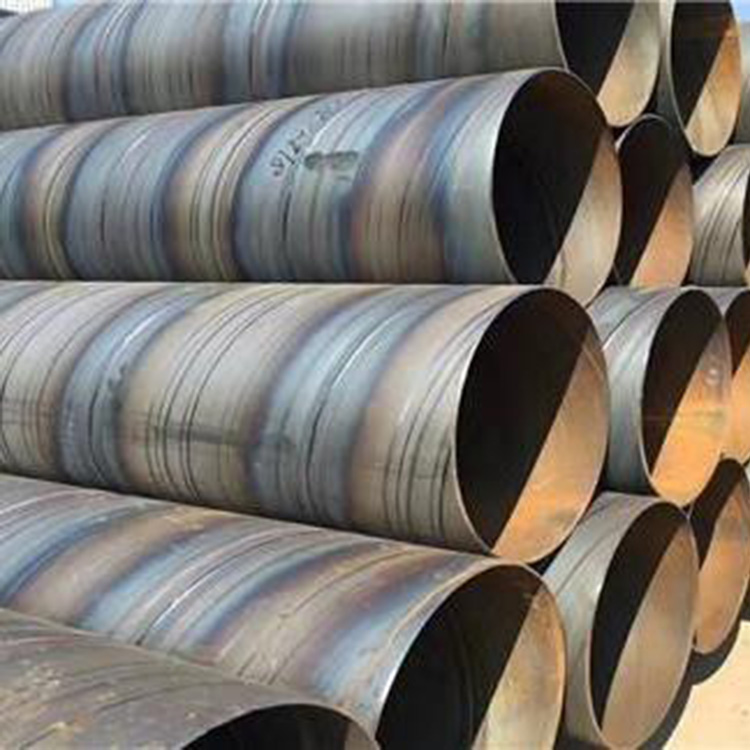
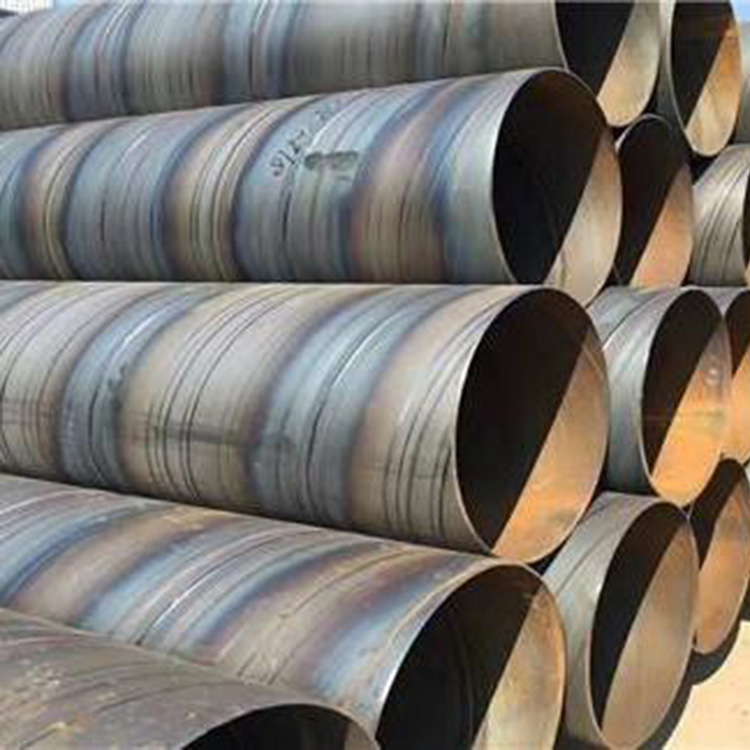
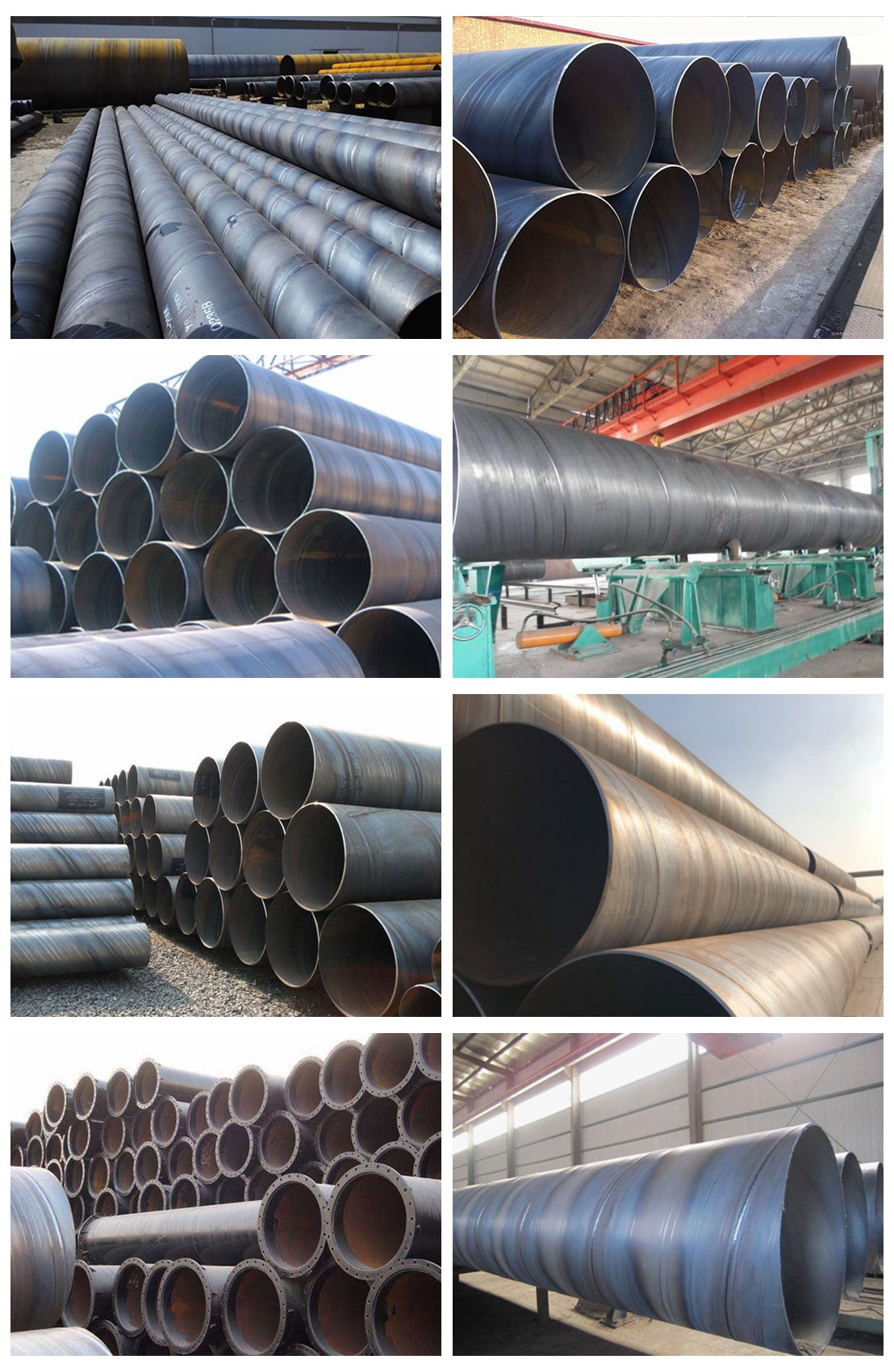

Spiral Welded Pipe Production Process:
(1) Raw materials include steel coils, welding wire, and welding flux. All must undergo rigorous physical and chemical inspections prior to use.
(2) Steel coil ends are joined using single or double wire submerged arc welding, followed by automatic submerged arc welding for reinforcement after the coils are rolled into steel pipes.
(3) Prior to forming, the strip steel undergoes leveling, trimming, edging, surface cleaning conveyance, and pre-bending treatment.
(4) The electric contact pressure gauge is used to control the pressure of the hydraulic cylinders on both sides of the conveyor, ensuring smooth steel strip transport.
(5) Utilize external or internal roller forming.
(6) The weld gap control device is used to ensure that the weld gap meets the welding requirements, with strict control over pipe diameter, misalignment, and weld gap.
(7) Both inner and outer welds are performed using Lincoln welding machines for single or double wire flux cored welding, ensuring consistent welding quality.
(8) All焊ed seams undergo online continuous ultrasonic automatic flaw detection, ensuring full coverage of non-destructive testing for spiral seams. In the event of any defects, an automatic alarm is triggered and marking is applied. Production workers adjust process parameters accordingly to promptly eliminate defects.
(9) Single steel pipes are cut using an air plasma cutting machine.
(10) After cutting into individual steel pipes, each batch must undergo a rigorous initial inspection system, checking the mechanical properties of the welds, chemical composition, fusion condition, surface quality of the pipes, and undergo non-destructive testing to ensure the pipe manufacturing process is qualified before being officially put into production.
(11) Areas with continuous ultrasonic flaw detection marks on the welds are subject to manual ultrasonic and X-ray re-inspection. If defects are confirmed, they are repaired and re-inspected non-destructively until the defects are eliminated.
(12) All pipes at the location of the butt welds on the strip steel and the T-joints intersecting the spiral welds have been subjected to X-ray television inspection or filming.
(13) Each steel pipe undergoes hydrostatic testing with radial sealing pressure. The test pressure and time are strictly controlled by the steel pipe hydraulic pressure computer detection device. Test parameters are automatically printed and recorded.
(14) Machining at the pipe end ensures precise control of the end face perpendicularity, bevel angle, and burr.
