

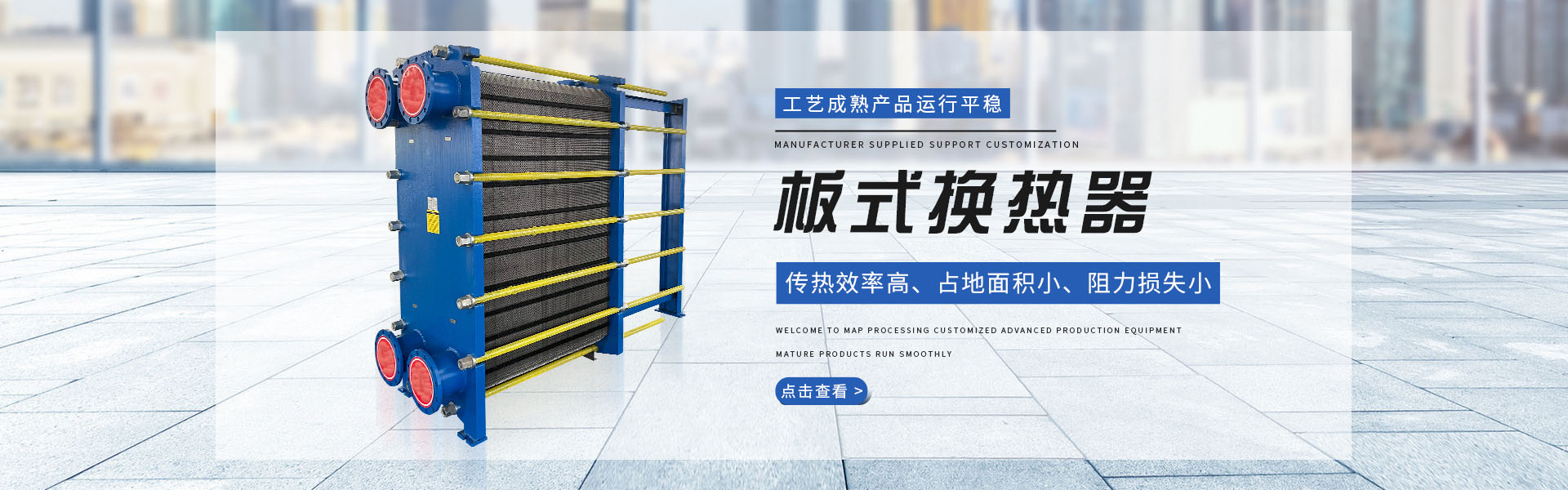




Plate heat exchanger plates require regular cleaning to prevent the accumulation of dirt inside, which can degrade the heat exchange efficiency of the plates.
Cleaning is a critical process in the chemical industry production, as for various reasons, fouling such as scale, oil deposits, lime, sediments, corrosion products, polymers, bacteria, algae, and slime can accumulate in heat exchangers and piping systems.
2. The accumulated dirt can render heat exchangers and piping systems inoperative, leading to reduced production, increased energy and material consumption, and other adverse situations. In severe cases of corrosion, it can even cause process disruptions, forcing the facility to shut down, directly resulting in economic losses and potentially leading to catastrophic production accidents.
In summary, prolonged use of heat exchangers can cause them to accumulate a significant amount of dust, and excessive dust buildup internally can affect their timely operation, thereby impacting their performance.
Currently, there are three methods for cleaning plates: chemical cleaning, mechanical cleaning, and integrated cleaning. These three cleaning methods have different operations and, accordingly, different effects. For instance:
Chemical Cleaning Method
This method involves circulating a chemical solution through a heat exchanger, which dissolves and removes dirt from the surface of the plates. This process eliminates the need to disassemble the heat exchanger, simplifying the cleaning procedure and reducing labor intensity. Due to the wavy surface of the plates creating intense turbulent flow, which aids in the dissolution of scale, chemical cleaning is an ideal method.
2. Mechanical (Physical) Cleaning Method
This method involves manually brushing the heat exchanger plates to remove dirt from their surfaces. While this approach is straightforward, it is not effective in cleaning off hard and thick deposits.
3. Comprehensive Cleaning Method
For cases where the dirt layer is both hard and thick, it is difficult to clean thoroughly with just one of the aforementioned methods. The integrated approach involves first softening the scale layer using chemical cleaning, followed by mechanical (physical) cleaning to remove the scale layer, thereby maintaining the cleanliness of the plates.
News Center Co., Ltd.
