

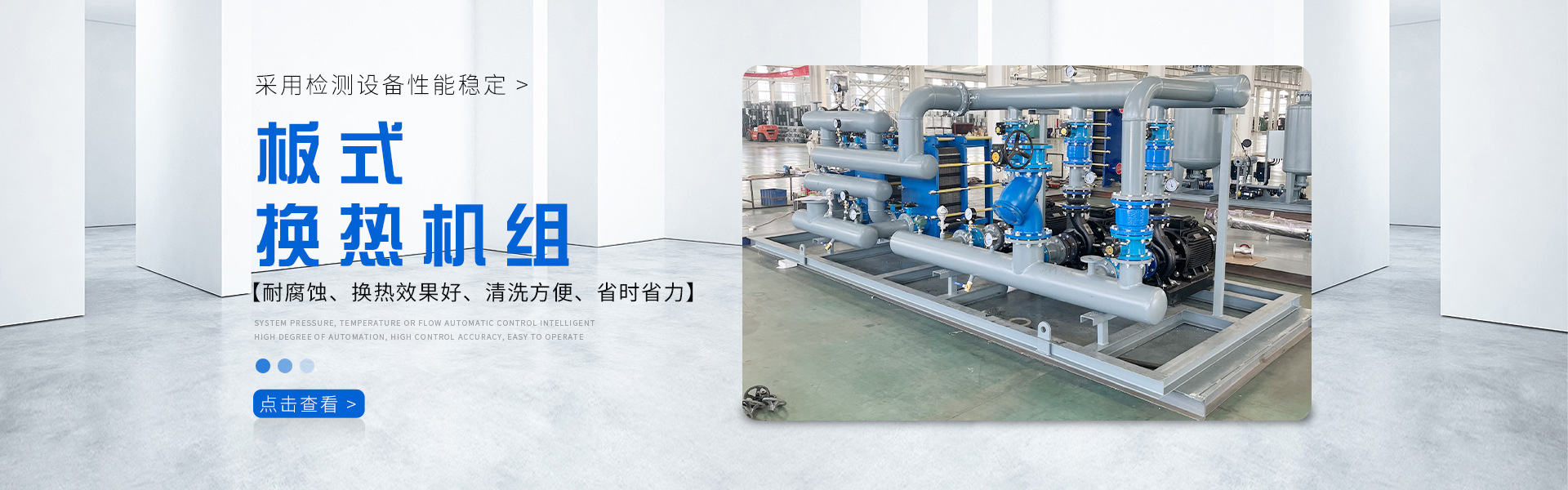

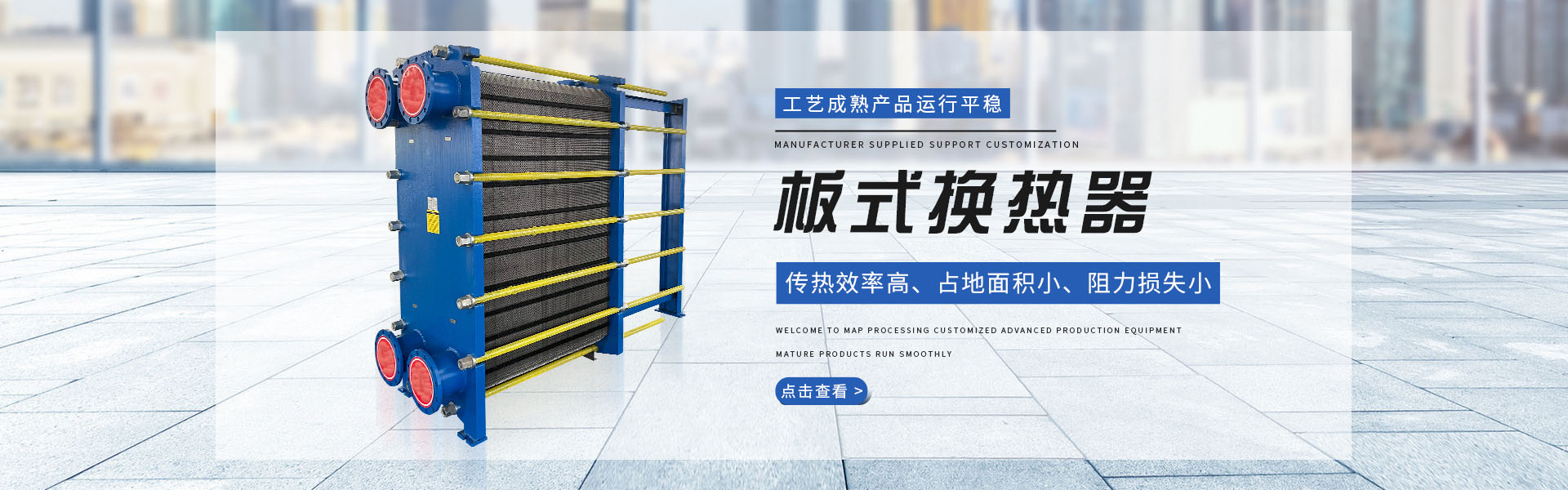





The working principle of plate heat exchangers is achieved through heat transfer mechanisms. According to thermodynamic laws, heat always spontaneously transfers from a high-temperature object to a low-temperature one. Two fluids with different temperatures flow in the separated space between walls, generating heat through thermal conduction through the walls and convection formed by the fluids on the wall surface. Under the same flow resistance and pump power consumption, the heat transfer coefficient is approximately three times higher than that of shell and tube heat exchangers, making it an important and innovative equipment for the rational utilization of effective resources, conservation, and the development of new energy sources.
When two fluids have a temperature difference, heat should be transferred. In the forced convection heat transfer process involving fluids with a temperature difference, the heat exchangers in a plate heat exchanger are composed of metal plates with a certain wave pattern. Therefore, the surface features an optimized vortex structure design, achieving a heat exchange rate of over 92%. Thin rectangular channels are formed between the plates. Even if the fluid flow rate is below the Reynolds standard, the fluid remains between the plates.
The working principle of plate heat exchangers features their high heat transfer efficiency, small land occupation, wide application range, and operational flexibility.
In addition to water and steam heat exchange, the medium in plate heat exchangers includes air plate heat exchangers, which differ from conventional plate heat exchangers. Below, we'll tell you all about air plate heat exchangers!
High-temperature Gas Plate Heat Exchangers meet the needs for heat exchange between high-temperature gases. The plate heat exchangers are made of stainless steel plates pressed into special wave patterns through molds, with the individual wave plates stacked and welded together. The smooth surface of the stainless steel is resistant to dirt and easy to clean, ensuring safe operation at temperatures over a thousand degrees. The wave-shaped plates enhance the heat exchange efficiency of the heat exchangers, offering benefits such as high heat exchange efficiency, lightweight, compact size, and resistance to high temperatures. They are suitable for applications in the boiler, dyeing, metallurgy, chemical, and environmental industries for coal gas recovery. The systems are designed and manufactured to meet the specific requirements of users, with technicians possessing extensive design experience. They have been designing suitable air plate heat exchangers for a wide range of users. Air heat exchangers have more stringent requirements for operating conditions. In industrial production, high-temperature machine heat exchange can be achieved with the use of optical motor heat exchangers.
Plate heat exchangers are a crucial component of the heat exchanger, and the design of the plates is a key task during the heat exchanger design process. The plates are composed of corrugated metal sheets, featuring four corner holes. Two fluids transfer heat through alternating flow paths, ensuring close arrangement, high precision, compact size, and high heat exchange efficiency, saving space. They are widely used in various industries as equipment for heating, cooling, and heat recovery.
