

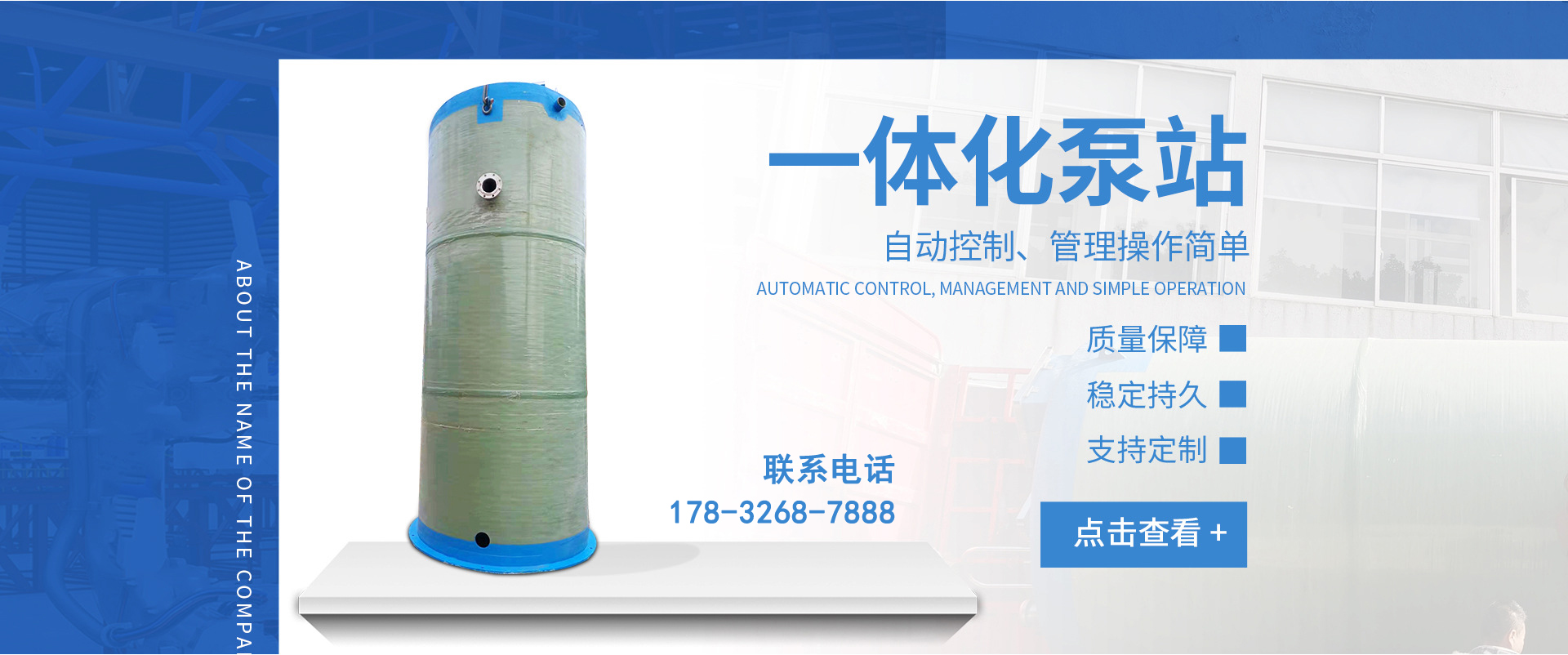

Integrated precast pump stations provide potential and pressure energy to wastewater, rainfall, and tap water, thereby achieving drainage, water supply, and water resource allocation without the need for natural flow. They are widely applied in various fields and play a crucial role in the construction of water conservancy infrastructure, closely related to our production and daily life. But what are the working principles of these integrated precast pump stations?
Integrated Pre-fabricated Pump Station
1. When the tap water pressure P1 is less than the required set pressure P2 by the user, the microcontroller will automatically control the variable frequency pump to start up softly, with the water in the booster acting as a compensator. The device increases pressure and flow to supply water to the user until the actual pipeline pressure P equals the set pressure P2. When the tap water pressure drops to a certain limit, the solenoid valve closes, and the equipment directly extracts water from the booster, increasing pressure to supply water to the user, thus avoiding negative pressure in the tap water network.
2. The lower the water pressure P1 for domestic use, the higher the speed of the variable frequency pump; conversely, the higher the pressure P1, the lower the speed of the pump. When the pressure of domestic water reaches or exceeds the set pressure P2, the variable frequency pump pauses operation, fully utilizing the existing water pressure. The microcomputer adjusts the pump to run at a constant speed, ensuring a steady water pressure to meet the customer's needs.
3. The equipment automatically shuts down when the supply of domestic water is suspended, and it resumes normal pressure water supply automatically once the supply of domestic water is restored.
4. The variable-frequency pump is connected to the inlet of the flow compensator. The microcomputer monitors the water pressure inside the flow compensator in real-time, stabilizing the pressure of both the flow compensator and the water intake by adjusting the vacuum suppressor, thus preventing negative pressure and ensuring the normal supply of tap water in the pipeline network.
