

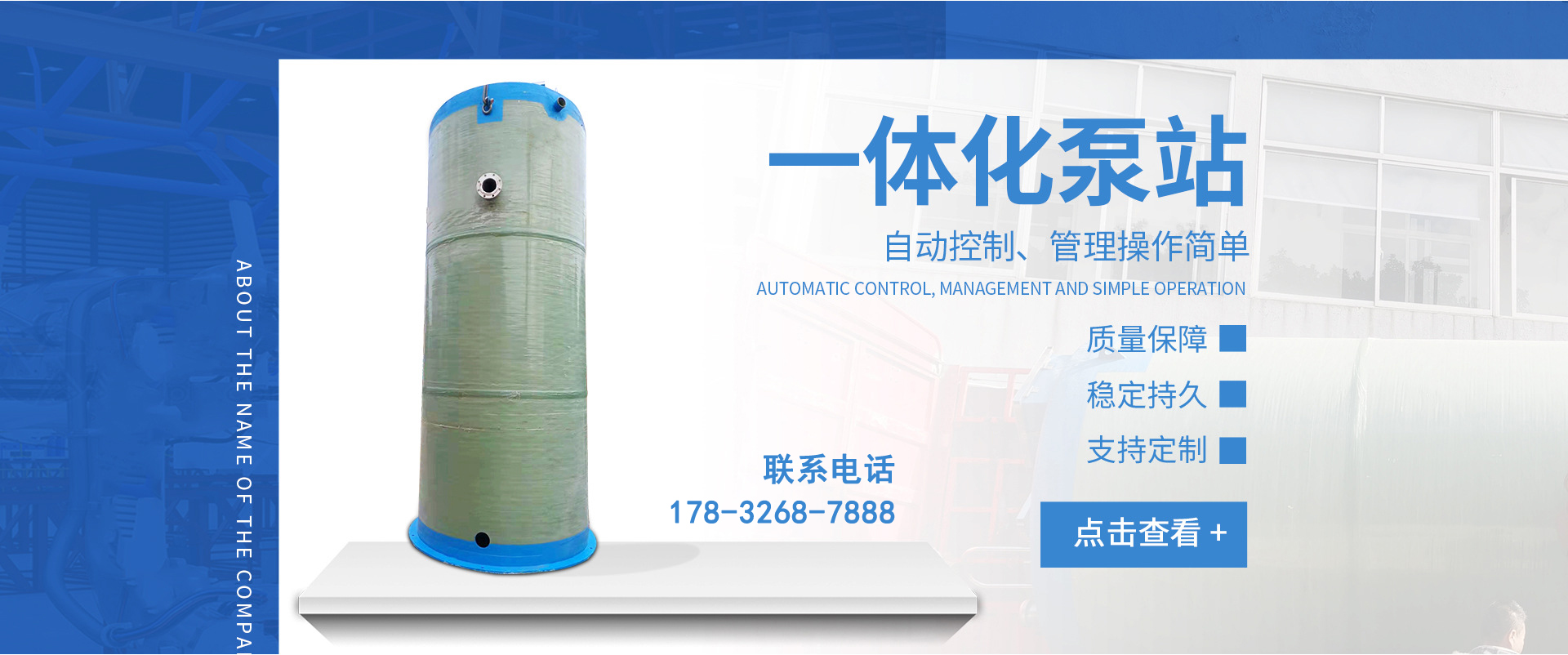

Integrated precast pumping stations differ from traditional concrete pumping stations in that the entire equipment is produced and assembled before shipment to the project site for installation, which shortens the construction cycle and also saves a significant amount of cost budget. Currently, integrated precast pumping stations in China are mainly used for wastewater lifting and treatment in municipal, residential, and rural areas. They can lift wastewater from low-lying or underground areas and transport it to municipal wastewater treatment plants for effective decomposition and removal of pollutants.
China is enhancing the construction of sponge cities, with integrated prefabricated pumping stations serving as the primary drainage equipment due to their shorter construction period, ease of maintenance, lower costs, and high drainage efficiency. The country has a strict set of manufacturing standards for integrated prefabricated pumping stations, and each manufacturer must adhere to these standards during production. Our factory's pumping station bodies are made of composite wound fiberglass, featuring a pressure-flowered aluminum alloy manhole cover, GRP grating, 304 stainless steel operating platform, 304 stainless steel ventilation pipes, 304 stainless steel ladder, 304 stainless steel access manhole, and an automatic sediment cleaning design at the bottom of the body.
In the manufacturing of glass fiber reinforced plastic (GFRP) cylinders, our factory employs mechanical winding and utilizes computer-controlled continuous winding processes to ensure the cylinder is stronger and more durable. Corrosion resistance strength tests are conducted on the cylinders to make them suitable for treating wastewater with varying pH levels. The production process of the integrated precast pump station cylinder primarily uses the fiber winding method, where impregnated continuous fibers are wound in a specific pattern onto the integrated pump station mold, achieving an effective resin synthesis ratio. Multiple mechanical winding layers are layered to the desired thickness, cured, and then demolded to form the finished pump station cylinder. The method's features include the ability to design the winding pattern of the fibers according to the stress-bearing capacity of the product, maximizing the tensile strength of the fibers, and facilitating mechanization and automation. The product quality is relatively stable, and by using different resin matrices and organic composites of fibers, technical and economic benefits can be obtained. The bottom of the pump station is enhanced with a molding process, ensuring no air bubbles or delamination during mechanical winding, with consistent strength. The design of the CFD base has similar pressing processes and equipment conditions; the former uses impregnated fabric as the molding material, while the latter uses sheet, pellet, and loose molding materials. First, a certain amount of molding material is placed in the metal mold, and then formed under specific temperatures and pressures to produce the required GFRP products. This production method yields products with precise dimensions, smooth surfaces, and high production efficiency, with stable product quality.
