
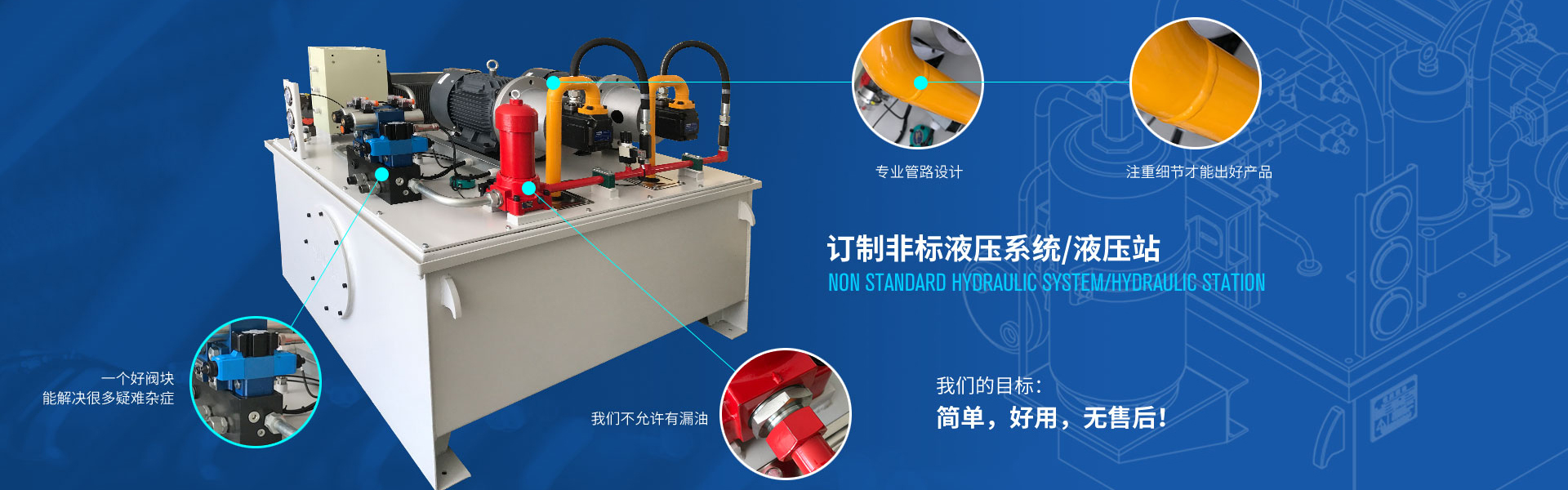


Geometric dimensions of pressure, flow, and hydraulic actuators are the three primary parameters of hydraulic systems, serving as the foundation for designing and selecting hydraulic components. The determination method typically involves first pre-selecting an appropriate system design pressure using the analogy method, followed by calculating and determining the geometric dimensions of the hydraulic actuators based on their large load capacity. Flow rates are then calculated and determined according to the speed requirements of the actuators.
1. Avoiding design pressure selection taboos, increasing system pressure can reduce the geometric size, weight, and flow rate of actuating elements. However, excessive pressure generally leads to increased costs, reduced component lifespan, increased internal leakage, and higher oil temperatures, among other practical issues. In actual design work, various factors should be comprehensively considered.
2. Cost (Price): The price of hydraulic components (including pumps, valves, actuators, and auxiliary items) generally depends on the pressure level. Since maintenance costs must also be considered when determining the pressure, it cannot be assumed that low pressure equals low cost, and high pressure equals high cost. The specific usage conditions should be taken into account.
