


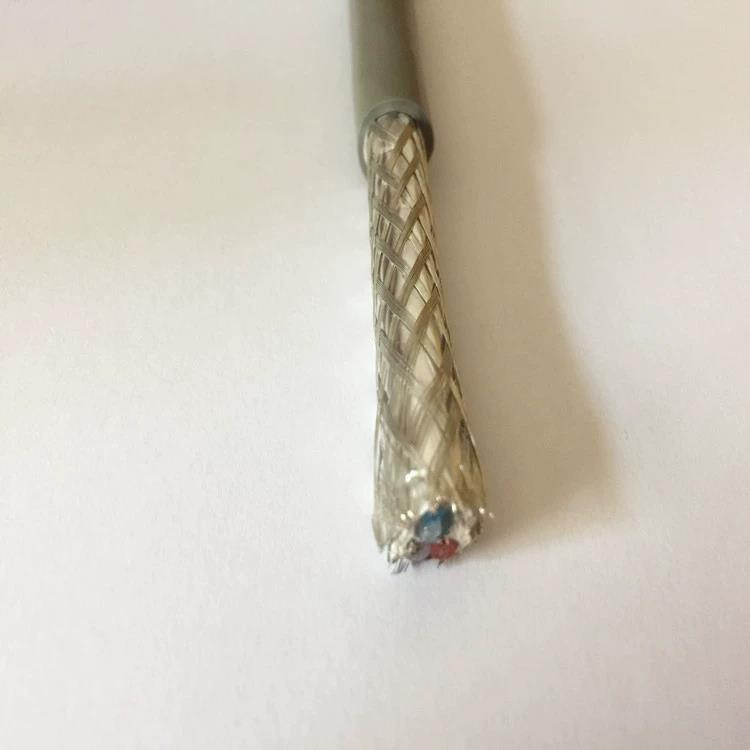
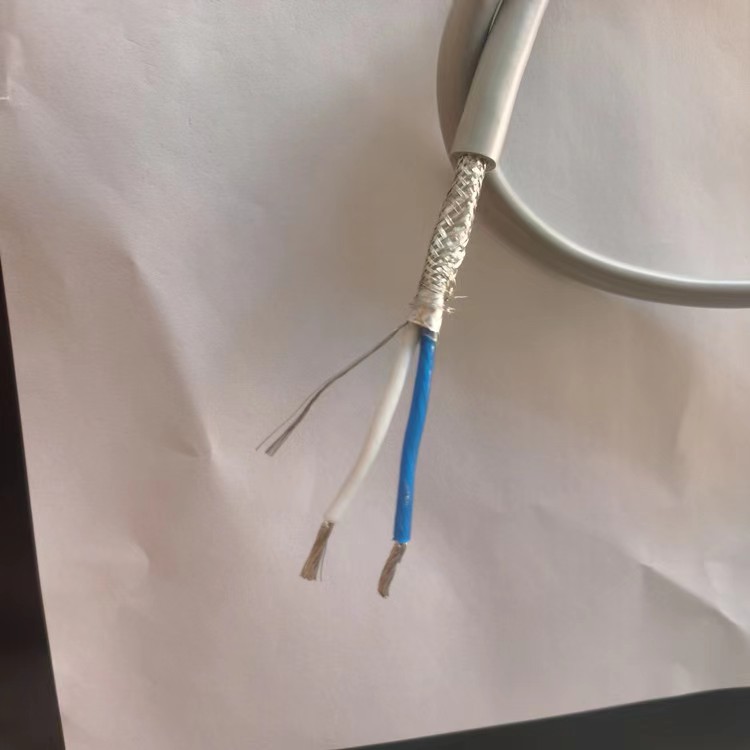

RS485-2x20AWG communication cable

RS-485 data cables are used for multi-point communication. Many devices can be connected via a single signal cable, much like early Ethernet used a coaxial cable. RS-485 data cables can be utilized in complex building automation, industrial control networks, power automation, and other communication networks.
Section II: RS485 Cable Product Specifications:
Standard 1st-line RS-485 communication cable, characteristic impedance of 120 ohms, conductor of 2*24AWG multi-strand tinned copper wire, PE insulated medium, double shielding with 100% aluminum foil/polyester composite tape and 90% tinned copper wire coverage, with an independent grounding wire, industrial gray PVC sheath, compliant with UL 2919 document. Exceptional product performance, suitable for complex industrial automation control network communication and building automation network communication.
Standard 2-pair RS-485 communication cable, characteristic impedance of 120 ohms, 2-pair 4-core (2x2x24AWG) multi-stranded tin-plated copper wire, PE insulated sheath; designed for complex industrial noise environments, features 100% shielding with aluminum foil/polyester composite tape and 90% shielding with tin-plated copper braid, plus an independent TC grounding conductor, industrial gray PVC outer sheath, in compliance with UL AWM 2919 specification.
9842 Communication Cable, a standard product designed and manufactured strictly according to the RS-485 communication protocol specifications, is not only the designated model for Rockwell Automation's (AB) DH-485 control network, but also a standard 2-pair CAN bus cable.
Section 3: RS485 Cable Application Range: RS-485 communication cables typically use twisted pairs in general environments, but shielded twisted pair cables are recommended in higher-demand situations. When using RS485 communication, the cable length between the host (polling device) and the instrument's 485 port is inversely proportional to the baud rate of the data signal transmission; this length is mainly affected by signal distortion and noise. Theoretically, at communication rates of 100Kbps and below, the maximum transmission distance for RS485 can reach 1200 meters, but in practical applications, the transmission distance can vary due to the transmission characteristics of the chip and cable. During transmission, signal amplification can be achieved by adding repeaters, with a maximum of eight repeaters, meaning the theoretical maximum transmission distance for RS485 can reach 9.6 kilometers.
Four, Usage Conditions: 1) No mechanical damage, laying temperature: 0~50℃. 2) Operating temperature: -20~60℃. 3) Minimum bending radius during laying: 8 times the cable diameter. 4) Minimum bending radius during laying: Main cable is 6 times the cable outer diameter; horizontal cable is 4 times the cable outer diameter.
(1 Pair) 2-core Model | (2 Sets) 4-core Model | (3 Sets) 6-core Model |
2x0.2 | 4x0.2 | 6x0.2 |
2x0.3 | 4x0.3 | 6x0.3 |
2x0.5 | 4x0.5 | 6x0.5 |
2x0.75 | 4x0.75 | 6x0.75 |
2x1.0 | 4x1.0 | 6x1.0 |
2x1.5 | 4x1.5 | 6x1.5 |
2x2.0 | 4x2.0 | 6x2.0 |
2x2.5 | 4x2.5 | 6x2.5 |
(4 Sets) 8-core Model | (5 Sets) 10-core Model | (6 Sets) 12-core Model |
8x0.2 | 10x0.2 | 12x0.2 |
8x0.3 | 10x0.3 | 12x0.3 |
8x0.5 | 10x0.5 | 12x0.5 |
8x0.75 | 10x0.75 | 12x0.75 |
8x1.0 | 10x1.0 | 12x1.0 |
8x1.5 | 10x1.5 | 12x1.5 |
8x2.0 | 10x2.0 | 2x2.0 |
8x2.5 | 10x2.5 | 12x2.5 |
