


Low-Power Bluetooth Module with Shielding Cap: Functions and Cleaning Methods
As technology advances rapidly, it has brought numerous conveniences to our lives. With the advent of the tech era, the application of intelligent technology is becoming increasingly widespread. The rise of the Internet of Things (IoT) and technological advancements are impacting us. In this era, there is a significant demand for intelligent science and technology talent, and the IoT Bluetooth modules are also finding broad application.
Bluetooth modules are widely used in industries such as wireless security, smart home, smart remote control, industrial control, and wireless remote control, etc. When a remote control sends data, the Bluetooth module receives the data, which is then translated by a microcontroller to control relays, either opening or disconnecting them, to achieve functions like forward/reverse motor rotation, acceleration/deceleration, and more. During this process, the motor's coil generates various electromagnetic interferences, resulting in remote control intervals not meeting customer requirements. To reduce the impact of electromagnetic interference, it is necessary to choose wireless transceiver modules with a shielding cover, which have strong resistance to electromagnetic interference. Next, let's delve into the role of the shielding cover on Bluetooth modules.
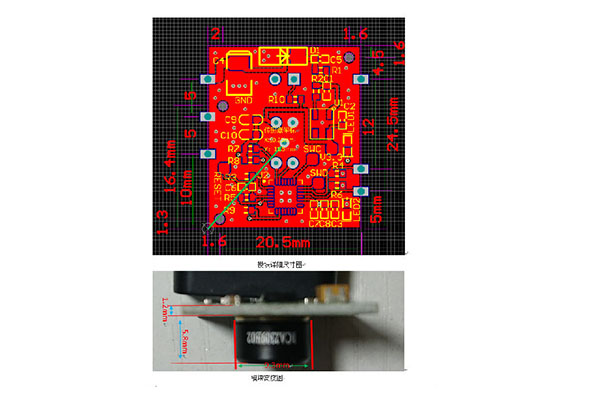
The role of shielding covers: Many components on the mainboards of electronic products like mobile phones, GPS, and wireless modules are covered with shielding covers made of a combination of metal brackets and metal lids, which serve as a shielding function. Currently, integrated shielding covers are widely used on Bluetooth modules, offering a simple and cost-effective solution. These covers provide protection for electronic components by shielding static electricity on PCB boards.
Principle of Shielding: Enclose interference sources such as components, circuits, assemblies, cables, or entire systems with a shielding body to prevent the spread of electromagnetic fields; encase receiving circuits, equipment, or systems within a shielding body to safeguard them from external electromagnetic field influences.
To enhance wireless control range, merely pursuing high flexibility or increasing the transmission power at the transmitter is not sufficient to fully increase the control range. Due to factors such as power supply, electromagnetic interference in the working environment, or power ripple interference in practical applications, it is necessary to consider the anti-interference capabilities of the RF receiver comprehensively. Our company has launched the low-power Bluetooth module MS50SFA with a shielding cover, which can transmit up to 10-60 meters and is equipped with the nRF52832 chip, suitable for various electronic devices.
