


Shunrui Core Introduces the Features of Low-Power Bluetooth Modules:
Bluetooth technology has become a part of our lives, and low-power Bluetooth, with its advantages of low power consumption and cost-effectiveness, has been applied in various Bluetooth smart products. So, what are the characteristics of low-power Bluetooth?
Low power consumption
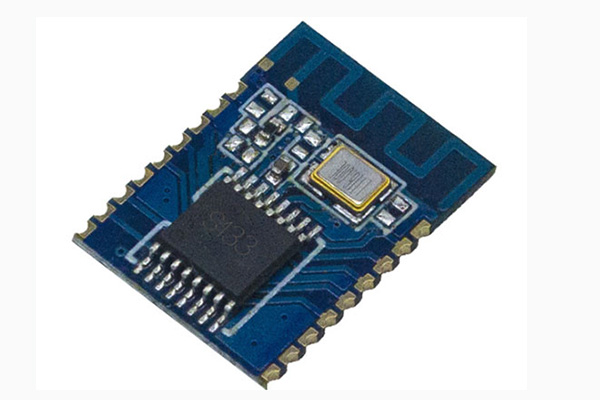
Low-power Bluetooth, from its design to its application methods, aims to reduce power consumption. To minimize power usage, most low-power Bluetooth devices are in a sleep mode, waking up to operate when activity occurs, and then returning to sleep once the task is completed, thus consuming less power than traditional Bluetooth. The innovative micro-developed low-power Bluetooth 4.0/4.2/5.0 modules utilize high-quality chips from Nordic and others, featuring low power consumption, interference resistance, compact size, long range, and low cost.
2. Stability, safety, and reliability
Low-power Bluetooth technology employs the same adaptive frequency hopping (AFH) technology as traditional Bluetooth, but to minimize the cost and power consumption of using AFH to the greatest extent, the technology has reduced the number of channels from the 79 1-MHz wide channels of traditional Bluetooth to 40 2-MHz wide channels.
3. Wireless coexistence allows for the use of the 2.4GHz ISM band without certification approval for Bluetooth technology. Due to the numerous technologies sharing this radio frequency space, wireless performance can degrade due to errors caused by interference and repeated transmissions (such as increased latency and reduced throughput, etc.). In stringent applications, interference can be minimized through frequency planning and specialized antenna design. Since both traditional Bluetooth and low-power Bluetooth utilize AFH, a technology that can maximize reduction of interference from other radio technologies, Bluetooth transmission boasts excellent stability and reliability.
4. Scope of Connectivity
The modulation of low-power Bluetooth technology differs slightly from traditional Bluetooth technology. This unique modulation achieves a connection range of up to 300 meters using a wireless chip set of 10 milliwatts (the maximum power for low-power Bluetooth).
5. Usability and Integration
Low-power Bluetooth operates with a primary device connected to multiple slave devices. The primary device controls the communication frequency of the slave devices, while the slave devices can only cease communication upon the primary device's request. A new feature added to low-power Bluetooth technology compared to traditional Bluetooth is the "broadcast" function. With this feature, slave devices can inform the primary device of their need to send data (broadcast messages include activities or measurement values).
