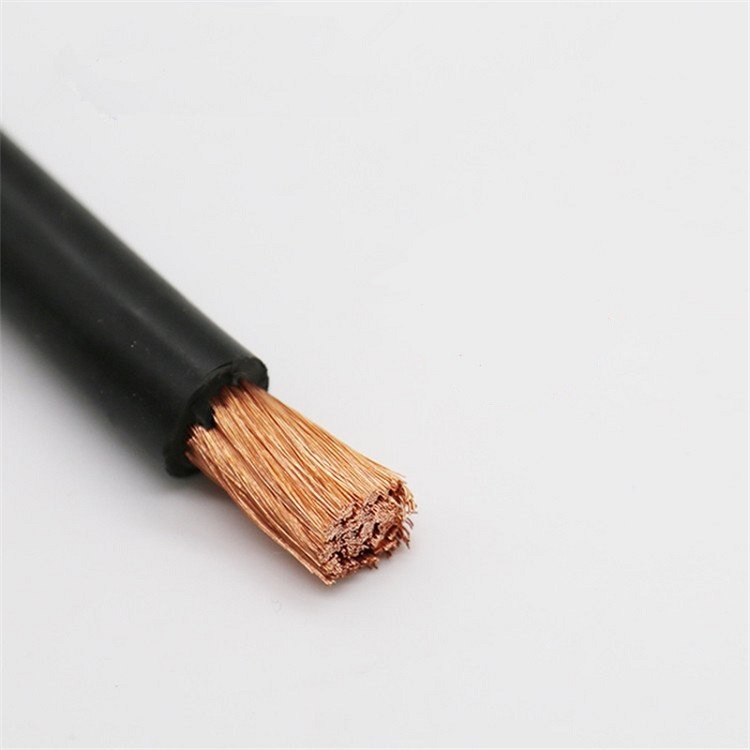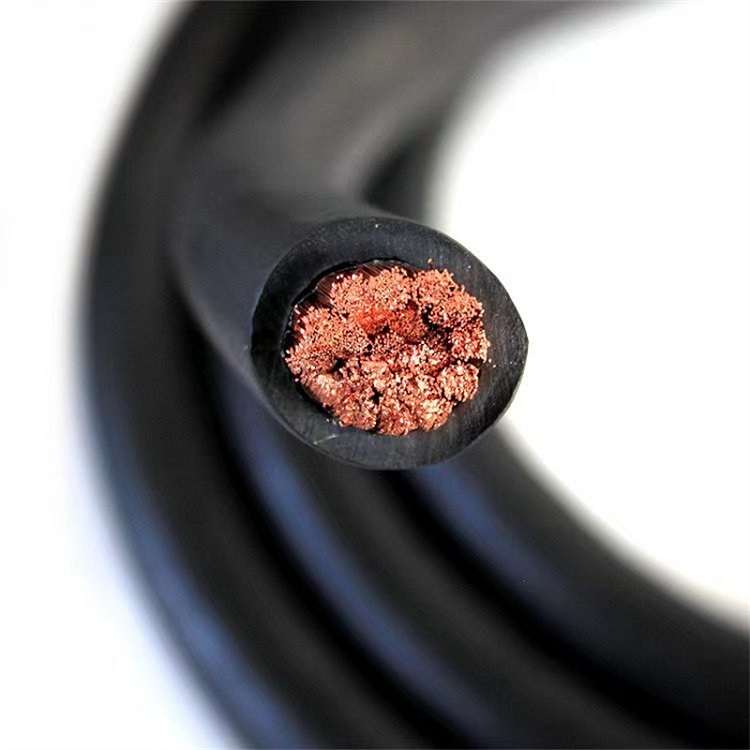
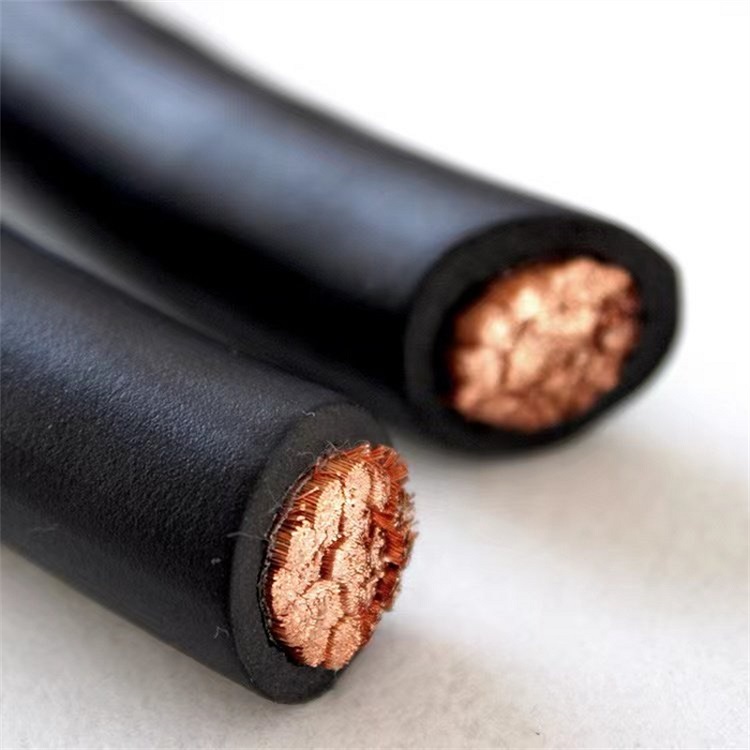
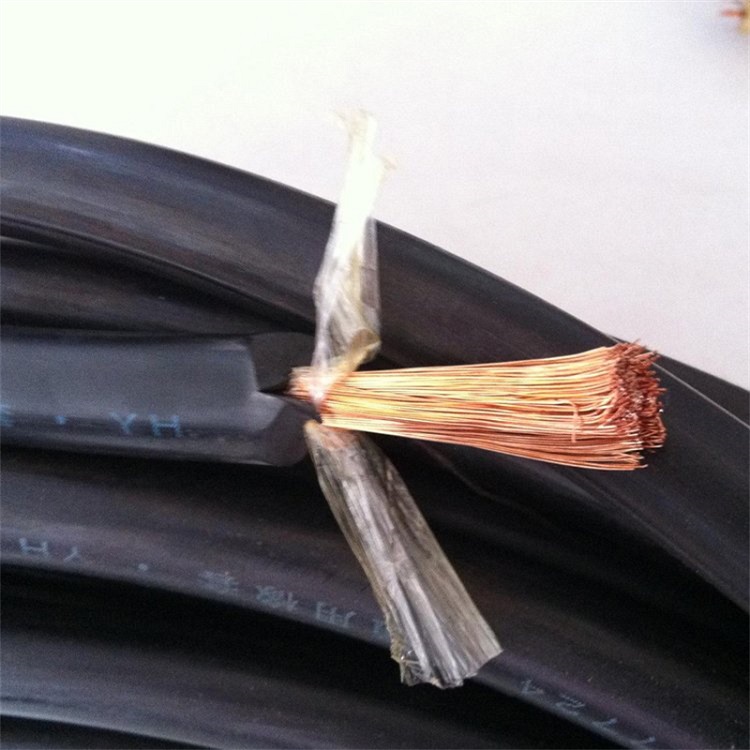
YH Welding Cable, also known as high-tensile rubber sheathed electric welding machine cable, is a type of YC general-purpose rubber sheathed flexible cable. It is primarily used for wiring and connecting the welding clamp and cables for DC welding machines on the secondary side, characterized by high resistance and low working voltage.
The construction of the welding cable consists of a single-core design, typically composed of multiple copper wires forming a copper core group. Multiple copper wire groups make up part of the electrical conductor in welding cables, hence the YH cable is thicker with hundreds of copper wires. The periphery of the multiple copper wires is encapsulated with a high-temperature-resistant PVC insulation layer. The cable sheath is usually made of natural sulfurized rubber, and the copper wires are oxygen-free copper to ensure excellent conductivity of the core and a high safety factor for the cable.
Common specifications and models of electric welding machine cables include 16 sqmm, 25 sqmm, 35 sqmm, 50 sqmm, 70 sqmm, 95 sqmm, and so on.
Characteristics of YH Welding Cable
(1) The YH cable wire operates under the standard conditions of high current at working voltages of 450/750V, and requires a certain degree of patience.
(2) The allowable operating temperature for welding cables must not exceed 65℃ over a long period.
(3) The motor lead wire cable is frequently moved, twisted, and released, with规定 softness and good flexibility.
(4) Prone to scratches and abrasions from sharp steel prefabricated components during release, therefore, it is specified that the cable's insulation layer has good physical properties such as tear resistance and wear resistance.
(5) Complex natural environment standards apply, such as sun exposure, contact with mud, etc., requiring a certain degree of climate resistance.
(6) Occasionally, we encounter heat-welded parts with specified high-temperature resistance.
(7) Often moved, specified with a small diameter and lighter weight. Since the electrical performance specifications for such cables are not high and the application environmental standards are complex, it is not suitable to specify structural types to meet various complex environmental factors. When in use, pay attention to improving the application standards and avoiding external damage.