



 通过中商114认证

Quartz sand is often said to purify water, but have you also mistakenly believed that quartz sand filter media吸附impurities like activated carbon filter media? In fact, quartz sand filter media primarily intercepts particulate or flocculent substances in water through the gaps between the angular and granular particles, rather than through actual adsorption. One very important influencing factor is the wear rate and breakage rate. So, what are the wear rate and breakage rate specifications as stated in the filter material standard CJ/T44-2005? A small sample needs to be tested to ensure the content of silicon dioxide, Mohs hardness, and the solubility in hydrochloric acid, etc., all meet the national standard GB/T 43-2005 "Filter Media for Water Treatment."
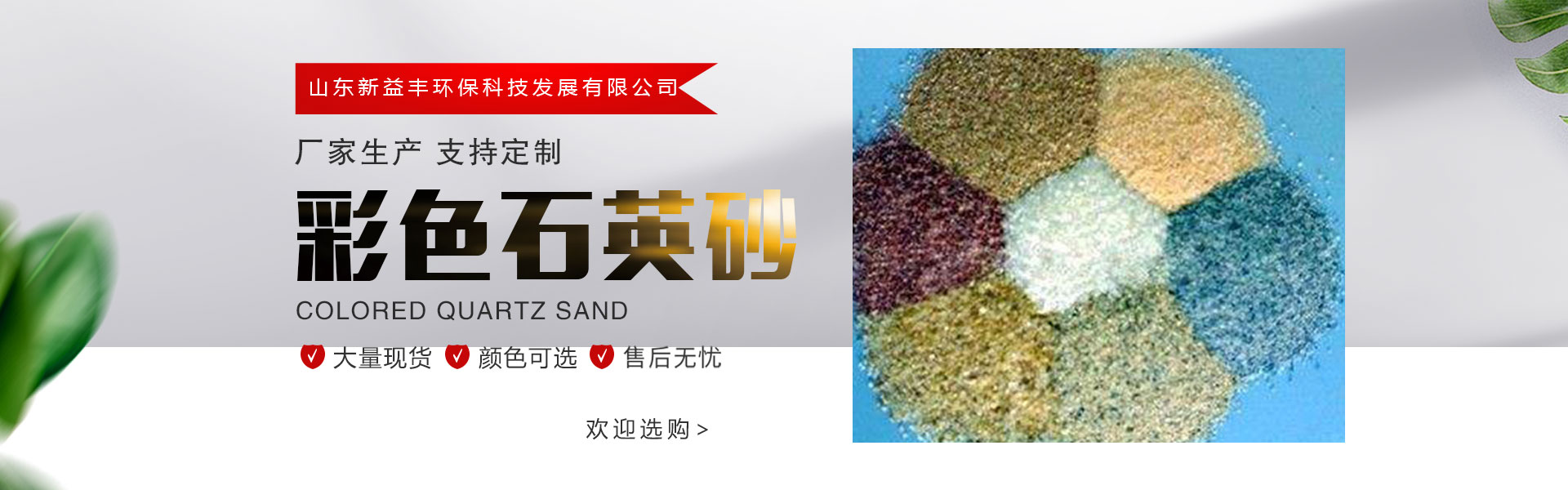
The choice of quartz sand is also crucial to sensory perception. Pure white quartz sand without impurities or discoloration, and some with high transparency, are all considered high-quality quartz sand. Quartz sand with discoloration and lower whiteness is classified as common quartz sand. The purity of quartz sand after acid washing.
Thirdly, the grain size of quartz sand should be uniform with a minimal difference in the range of fineness and coarseness. Moreover, quartz sand should be relatively regular in particle shape and should not be flaky.
Fourth, quartz sand should have a surface without pores; any presence of pores renders it不合格. Concerning the gaps at the joints of quartz sand, those that are not visibly prominent are considered good quality. If scratches are deep and noticeable when scraped with a key or a pencil knife, it is不合格. For sandpaper with a grit below 200, if the stone powder easily falls off, it is不合格. Regarding the upper and lower edges of the cutting surface, any chipping is不合格. The regulation states that the total should not exceed three percent; if it does, the impact on the function of the quartz sand filter material will only be negative, affecting its effectiveness.
