

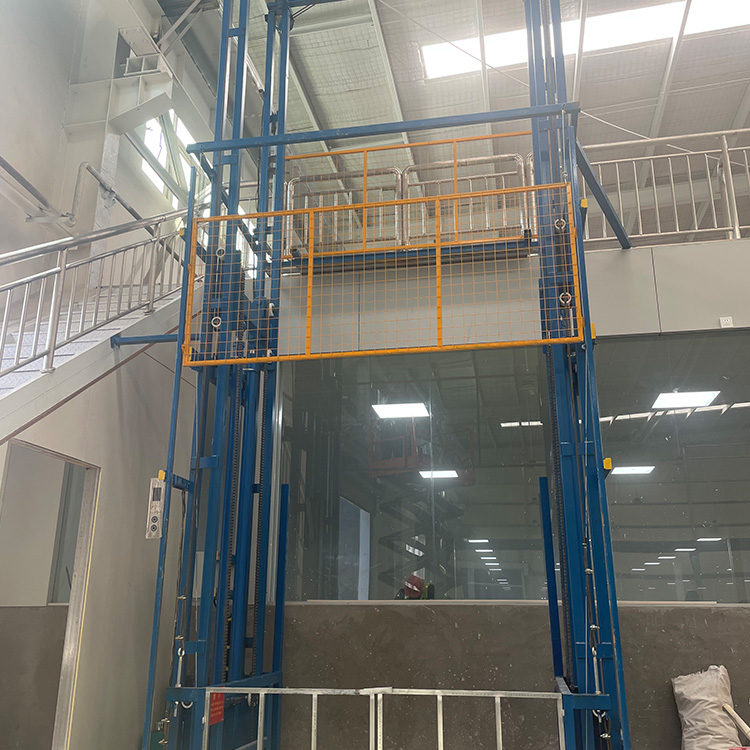
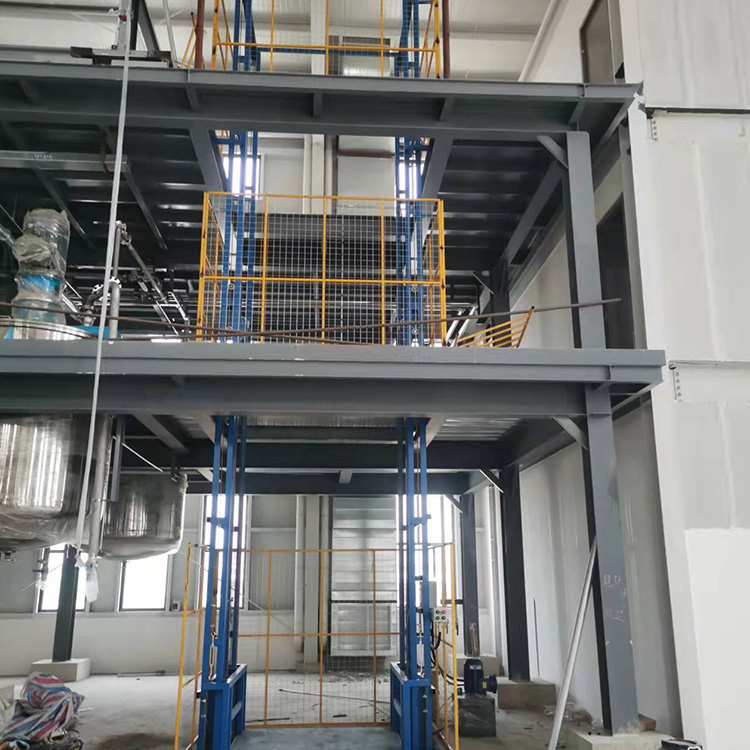
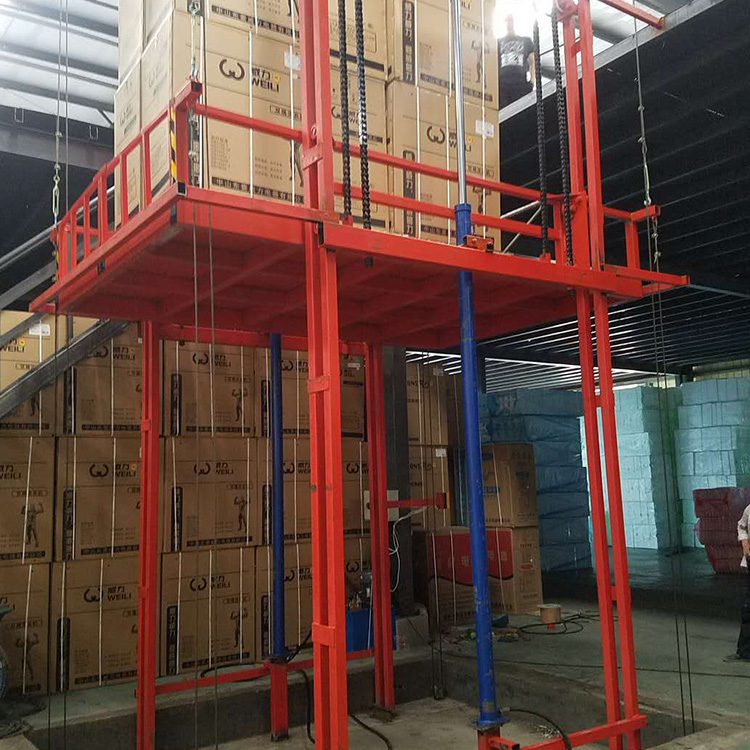
A track-mounted lift is a lifting equipment with a lifting system that requires a hydraulic pump station to operate, hence also known as a hydraulic lift. It is used for transporting goods in high-rise buildings and can also be applied for vehicle hoisting between flat and underground parking lots.
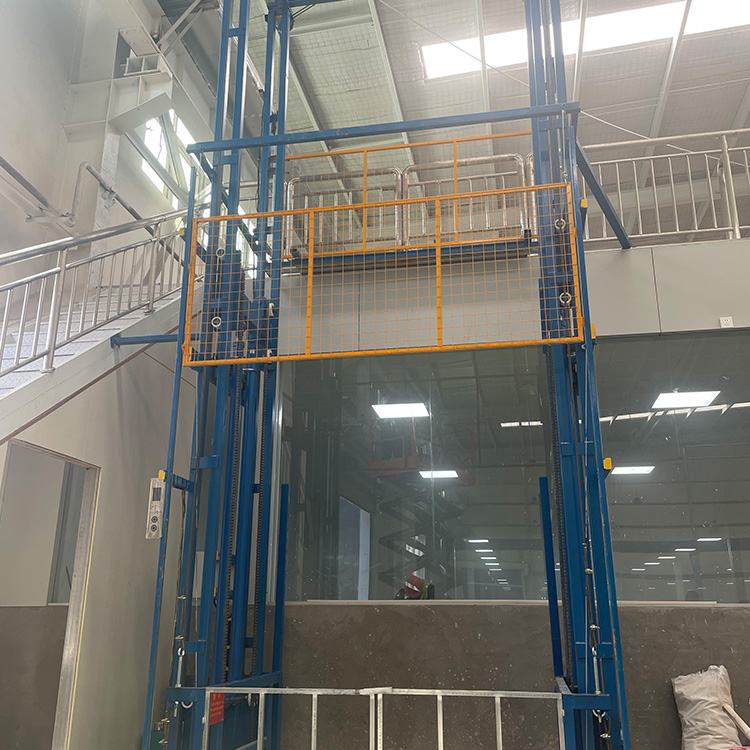
It is widely used across various categories due to its ability to reduce falls, along with overload protection features. This allows for more operation buttons on high-rise and lift platforms, enabling multi-point control and ease of use.
When the guided hoist has mechanical movement, there will be conflicts, which must be attacked and worn away. The wear follows three rules: the volume wear is inversely proportional to the sliding distance corresponding to the conflict; inversely proportional to the load; and directly proportional to the yield strength or hardness. Mechanical practice and experiments show that the correlation between the wear rate and the conflict factors is small, the conflict factors usually differ by an order of magnitude, and the wear rate can differ by three orders of magnitude, so the changes in the conflict factors can be ignored.
Many customers opt for rail-mounted lift tables instead of elevators for various reasons. For instance, in situations where the transport space is narrow and elevators cannot meet the requirements, or when it's impossible to dig an elevator shaft in the operational state, rail-mounted lift tables can be used.
