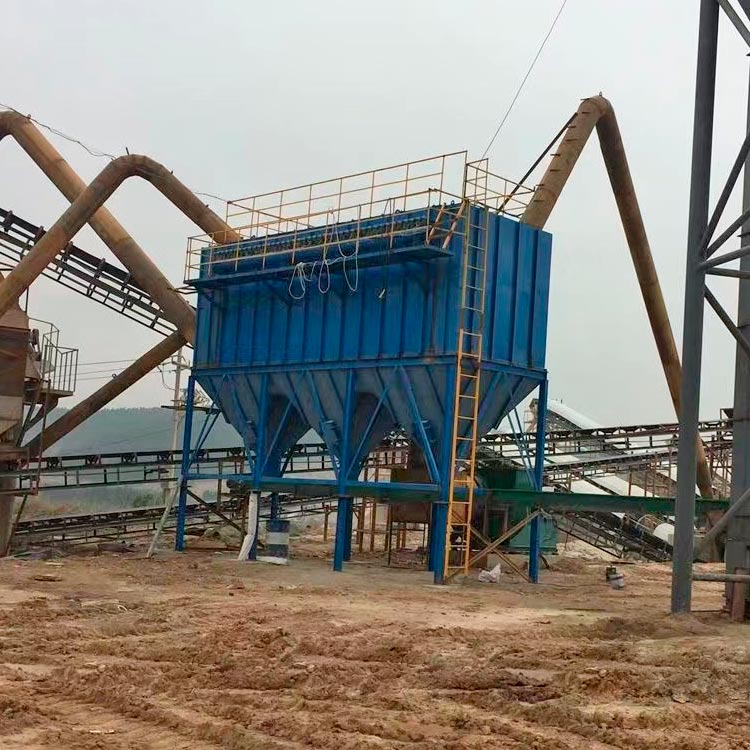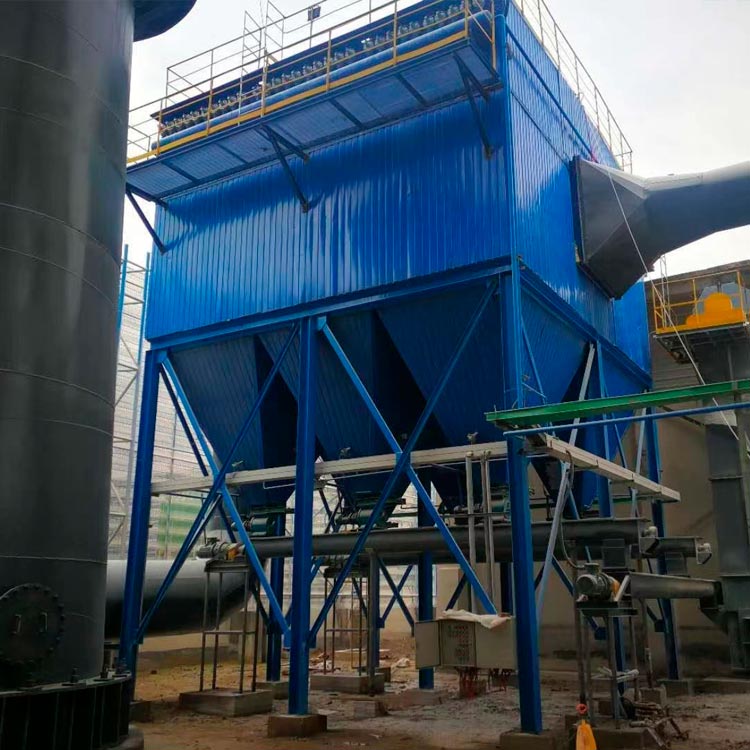


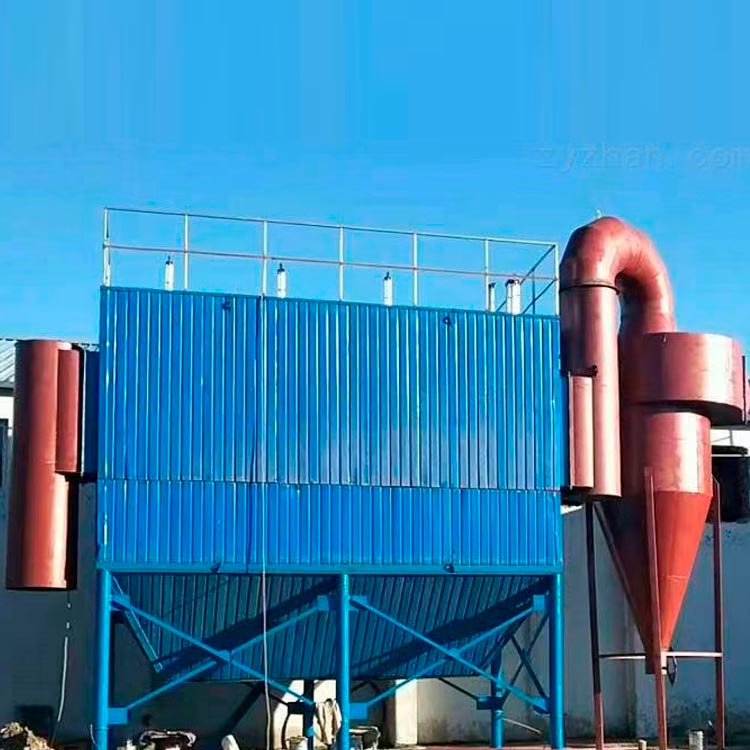
The mining dust collector is mainly composed of upper and lower housing bodies, ash hopper, ash discharge unit, filtering equipment, jet blowing unit, induced draft fan, and other key components. It boasts advantages such as high dust handling capacity, good purification effect, stable operation, space-saving installation, and easy daily maintenance. It is compatible with hammer crushers, jaw crushers, and impact crushers.
The dust collector in the mine utilizes a centrifugal fan to create a negative pressure zone at the dust-sealed cover, drawing the dust into the dust removal equipment. Inside the pulse bag dust collector, there are dust removal bags. As the dusty gas passes through the filter bags, the dust is blocked and separated, and the purified gas is then discharged by the fan. The dust on the surface of the filter bags is blown off by an electromagnetic pulse valve, causing it to fall off the bags. The compressed air blowing is automatically controlled by a PLC, eliminating the need for manual control—this is one of its major features. The pulse bag dust collector is not only applied in crushing but also in dust control for various industries, achieving excellent dust removal results. All meet the design requirements and is currently an ideal dust removal equipment.
Dust collectors for mines are used in the crushing system of mining factories to address the issue of excessive dust pollution during the crushing, separation, and conveying of ore. Dust extraction devices are installed at dust emission points on the crushers, which draw the dust through negative pressure into the dust collector's housing for purification. This separates the dust particles from clean air.
Operation of Mining Dust Collectors:
1. During normal operation, the dust removal unit must not cease functioning, as otherwise, the hopper will quickly fill with dust, spilling into the bag house and forcing the dust removal accessories to stop working.
2. In case of a fault in an electromagnetic pulse valve, it should be addressed promptly. If there are impurities or moisture inside, they should be cleaned, and if the diaphragm is damaged, it should be replaced immediately.
3. Managers should be familiar with the principles, performance, and operating conditions of dust removal accessories, and should master the methods of adjustment and maintenance.
4. Upon startup, connect compressed air to the air tank first, then power up the control supply, activate the dust removal unit, and if there are other equipment in the system, start the downstream units first.
5. During shutdown, after the process system has stopped, the dust removal accessories and exhaust fans should continue to operate for a period of time to remove moisture and dust from the dust removal equipment. Note that when the dust removal accessories are turned off, repeatedly clean the dust (manual cleaning is available) from the dust removal filters to prevent them from sticking due to moisture.
Key Features of Mining Dust Collector:
1. The advantages of dust collectors such as reverse吹扫 and pulse-jet types include a high air volume handled per unit volume, low system resistance, and high dust removal efficiency.
2. Can handle dust concentrations up to 200g/nm3, with the treated emissions concentration below 50mg/nm3. Also, can meet more stringent emission requirements based on specific customer needs.
3. Dust removal for coal powder systems, utilizing electrostatic dust bags and measures tailored to the coal powder characteristics.