


Installation Methods and Requirements for Sacrificial Anodes
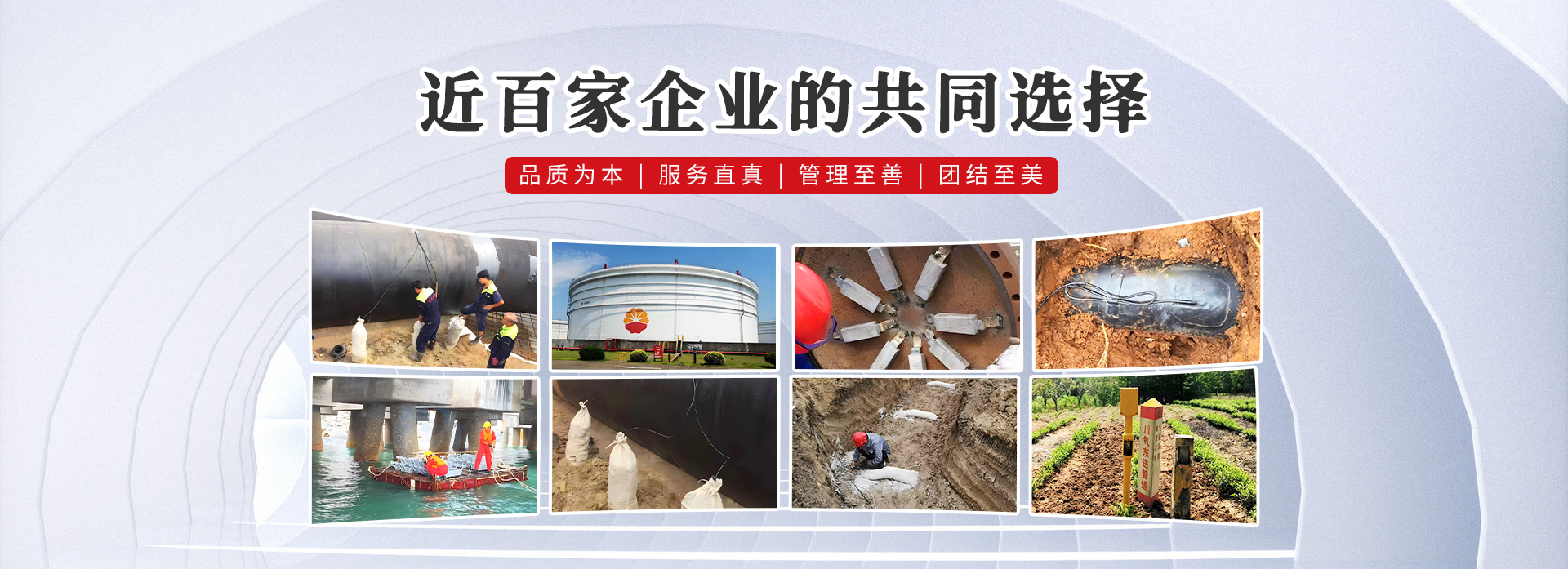
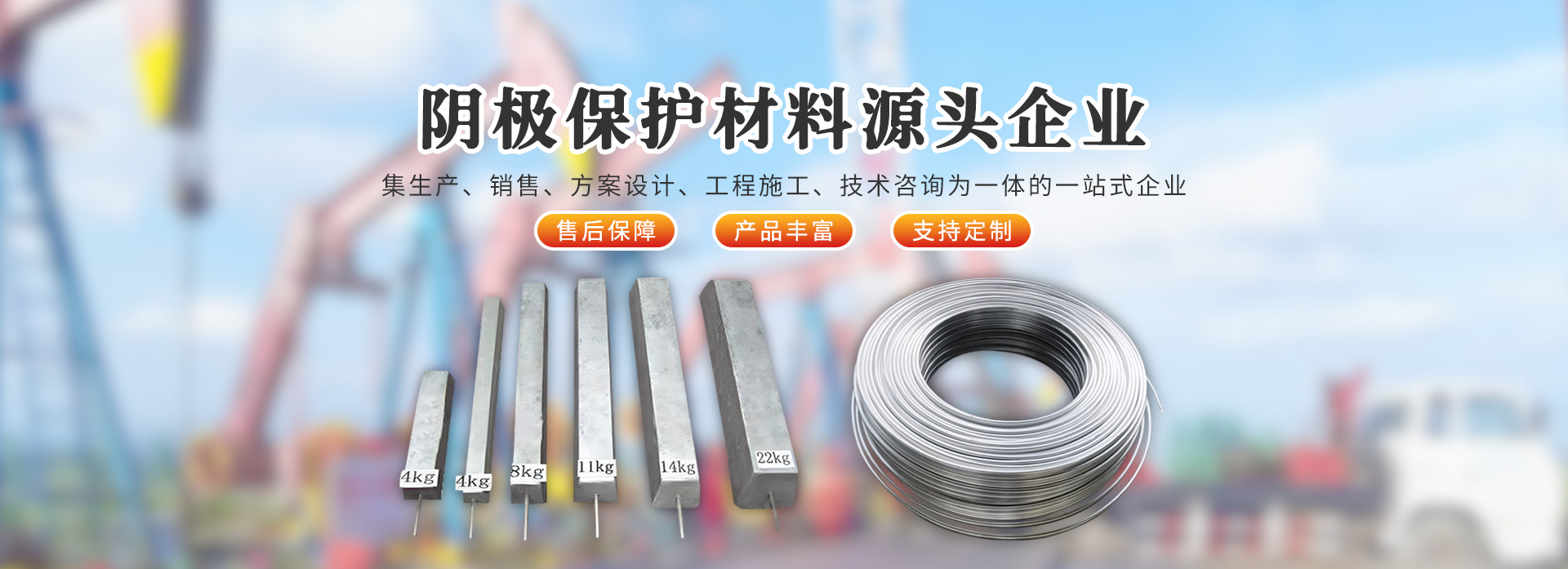
1、 The burial depth of the cable connecting the sacrificial anodes (hereinafter referred to as anodes) in the kit should not be less than0.7Ensure there is an allowance for the cable length when laying the rice.
2、 Anode cable joints should be connected to pipelines using aluminum thermite welding technology.
3、 Before welding, the pipe welding points should be cleaned to expose the metal surface.
4、 Upon completion of welding, the weld points should be re-treated for corrosion resistance and strictly adhered to the specifications outlined in the drawings.
5、 The anode bags should be thoroughly soaked after being buried in the anode pit.
6、 Anode placement is not less than the distance from the pipe.0.3Millimeters.
7、 The anode should be buried below the frost line.
8、 At the installation of the anode assembly (where it is connected simultaneously at a single point on the pipeline)1When the anodes above are grouped together (referred to as an anode assembly), the distance between the anodes is2Miller's Choice.
9、 After anode installation, during the backfilling process, each backfill20~30CMPerform one tamping and watering, then continue with backfilling and compaction after the water has seeped through. Ensure the filling material reaches saturation, level it out, and restore the original landform.
10、 Anode burial at a high position does not permit any metallic structures between it and the pipeline.
11、 If a longer section of the protected pipeline is encased in concrete, it can cause a decrease in potential for that segment. To compensate, an additional anode should be added at both ends of the concrete-encased section of the pipeline.
12、 The correct installation method for anodes is to alternate their placement on both sides of the pipe, with each set or group being installed individually. If geographical conditions necessitate that adjacent sets of anodes be placed on the same side of the pipe, they should be installed as per the requirements for anodes set on both sides.
Installation Methods and Requirements for Test Piles
Cathodic protection test piles are an indispensable tool in pipeline management and maintenance. As per their testing functions and along the pipeline, these test piles can be used for detecting potential and current in pipelines, insulation performance, as well as for leak detection of the coating and AC interference.
1、 Test Pile Installation: The installation location of test piles is generally chosen along the roadside, embankments, and沟边, etc., to minimize the occupation of farmland. For the installation of long-distance pipelines, the test piles are typically positioned on the left side of the medium flow direction, relative to the pipeline centerline.1.5Meters away.SYG36-89Standard specifications state that the principle for setting test piles is: one current collection point for potential test piles per kilometer, and one current test pile per...5-8Establish a rig at a kilometer./Each set of potential testing piles has one pipe higher, cross-testing piles intersect with other pipelines at one point higher, and station-type testing piles are set as needed. Two potential testing piles are set in the middle of the two anode piles, and one is set at the anode burial point. The interference area is appropriately increased based on the degree of interference, generally not exceeding...500M. Large river, when the transverse diameter is greater than200At each crossing point of the railway and highway, a test pile should be installed at each rock.
2、 The Construction of Test Piles: Test piles are composed of pile bodies, plug-in terminal blocks, test wires, and labels. The pile bodies of test piles with various functions are unified, such as cement test piles, steel pipe test piles, fiberglass test piles, and plastic test piles. The test terminal block within the test pile is the core, which distinguishes functions based on changes on the terminal posts. The terminal connectors on the terminal block can be distinguished by various colors, and can be categorized according to the number of test wires.4Column6Column8Column10Various types of test wires are used. The test wires are introduced into the test pile and connected to the structure being tested, allowing the testing work to be conveniently conducted on the ground. Test wires are typically available in various options.DVV-1*2.52Our copper-core plastic wires can also sometimes be selected to enhance the wire's strength.VVType Cable. The label on the test pile provides information on the mileage position, function, and the manager's details (such as pipeline, phone, pipeline name, owner's name, etc.).
3、 Pile Type Test
①Potential Test Rod: Used to measure the potential of the pipeline being tested, it emerges from the pipeline via a lead wire.
②Current Test Piles: Used to measure the direction and magnitude of the current within pipelines.
③Casing Test Piles: Used for testing the potential of casings and conveyance pipes, they can also detect electrical insulation of the pipes and conveyance pipes.
④Insulation Connection Test Pile: Used for testing the insulation performance of insulation flanges and insulation joints.
⑤Sacrificial anode test piles are installed at the burial points of the sacrificial anodes to measure their parameters. Due to the connection of the sacrificial anode to the pipeline, it is difficult to measure the natural potential of the pipeline after production. Therefore, high corrosion-resistant sheets and long-lasting reference electrodes can be buried at this pile.
