

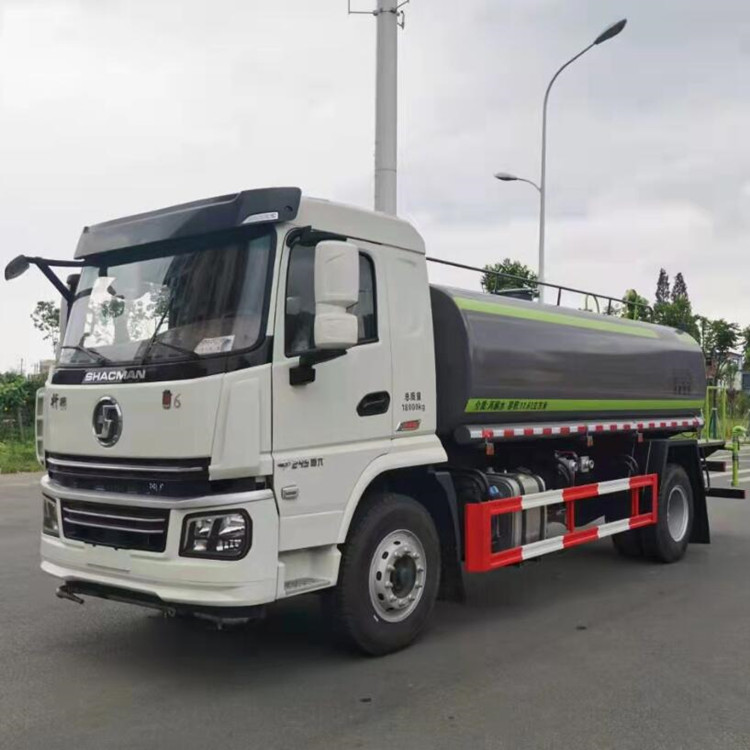


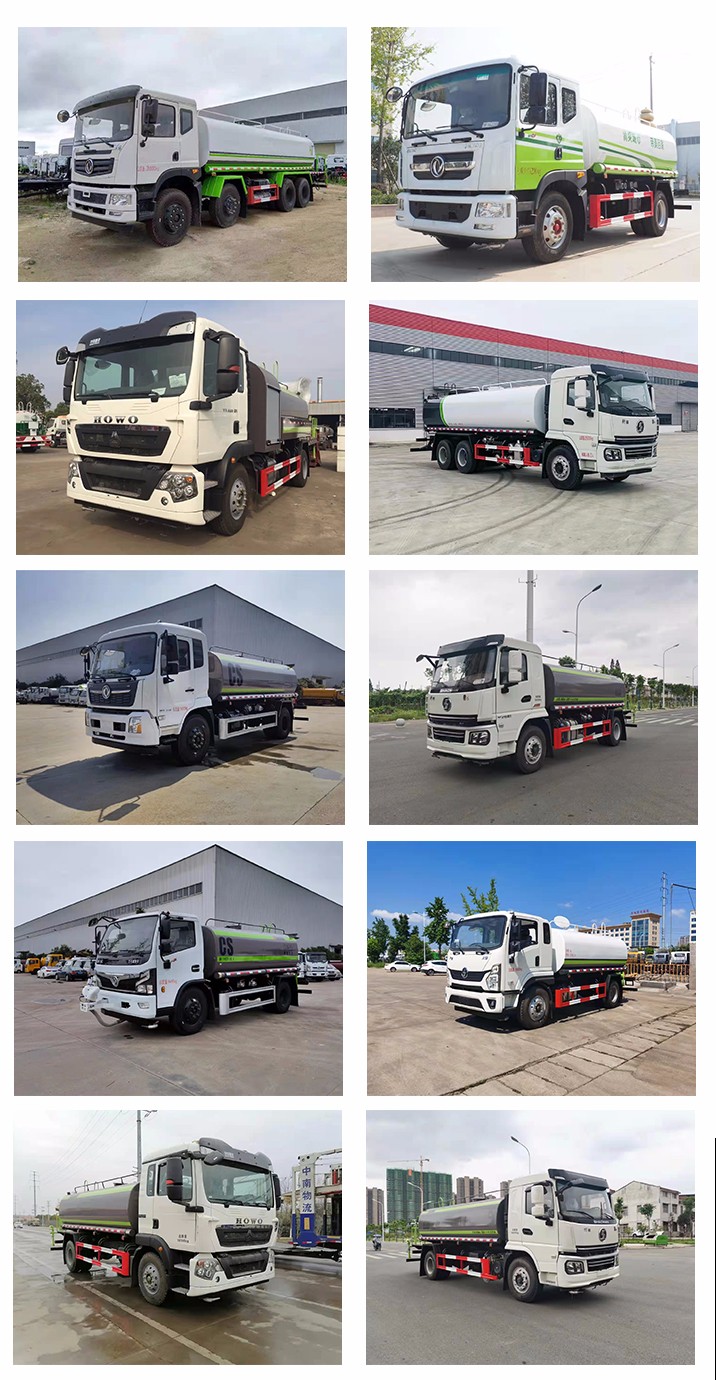
Buy a sprinkler truck and pay attention to the following: pay attention to the selection of the pump, pay attention to the selection of the chassis, and pay attention to the selection of the water tank.
1. For the chassis part, pay attention to the engine horsepower and tire quality. According to the usage location of the water truck and the road conditions, choose engines with different horsepower and different chassis.
2. Tank Volume - Choose the tank volume based on the watering intensity; options range from 3 to 3 cubic meters.
3. The material of the drum is usually Q235 carbon steel plate used by manufacturers. The main plate thickness, some small factories use plates of 3.5mm or less to gain profit. For plates thicker than 4 points, automatic welding drums are recommended for the welding process.
4. Pumps are crucial as they are used for a long time, and it's important to use high-quality pumps. Generally, high-power spray pumps are chosen. The water truck's pump selection can be matched according to the engine's torque. It's not that the larger the pump power, the better the sprinkling function. Using a high-power pump with a small engine is like a small horse pulling a heavy cart, which doesn't utilize the pump's capabilities and strains the engine. Conversely, using a low-power pump with a high-power engine leads to energy loss and can damage both the pump and the engine.
Sprinkler Function Description for Water Spraying Truck
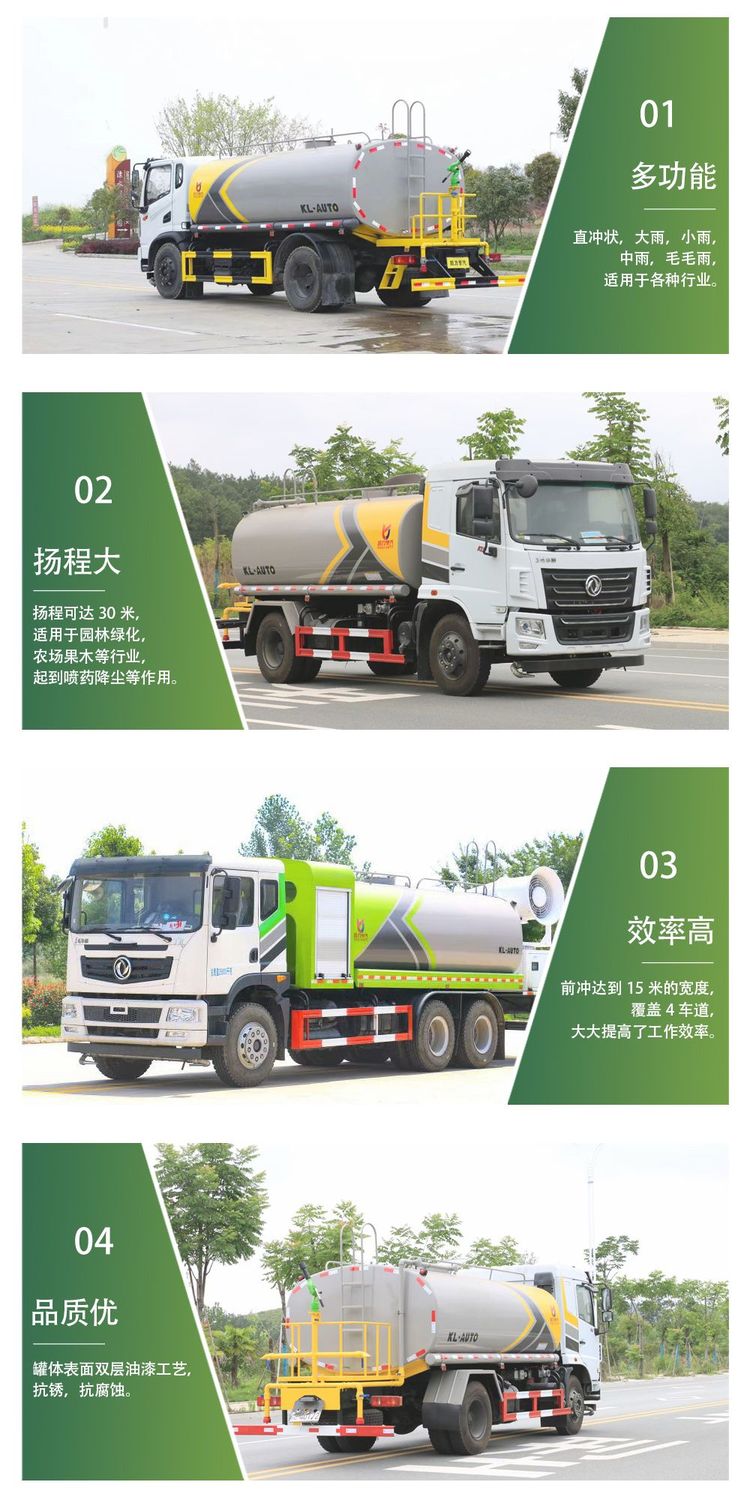
1. The sprinkler truck is equipped with a duck-shaped nozzle or round head jet in the front, cylindrical sprinkler nozzles or rose nozzle nozzles in the rear. The rear features a work platform with a water cannon. Additionally, up to 8 nozzles can be installed (optional).
2. Sprinklers are commonly used for street cleaning, serving both dust suppression and cooling purposes. The sprinkler's spray direction and angle can be adjusted by modifying the nozzle thread, while high-pressure water cannons are suitable for rural and urban landscaping as well as emergency extinguishing. Rosebuds can help settle dust stirred up by the middle road sprinklers, contributing to cleaner air.
Before each opening of the feed port cover on the sprinkler truck, the pressure relief valve should be opened first to exhaust any remaining air in the tank to prevent injury accidents. Regularly check if the pressure gauge on the sprinkler truck is functioning properly; if the high-pressure gauge fails, it may cause the tank to burst. Frequently inspect the valves, start exhausting air at 0.196 MPa and ensure the tank pressure does not exceed 0.196 MPa. Regularly check if the sprinkler truck's RPM gauge is working correctly to prevent damage to the air compressor and power take-off box. Also, regularly clean the RPM gauge probe (this probe is located at the flywheel of the air compressor). Frequently listen to the sounds of the sprinkler truck's power take-off box and air compressor. If any unusual noises are heard, the machine should be stopped to eliminate the fault.
Before purchasing a sprinkler truck, users should understand the specific functions and uses they need from the truck. Generally, in enterprises, institutions, and areas with few fire brigades nearby, it is advisable to equip the sprinkler truck with emergency firefighting capabilities based on individual needs. This way, it can be used for operational requirements on a daily basis, and in the event of a fire, it can provide emergency firefighting, potentially extinguishing the fire in its early stages, and at the same time, minimizing the threat to people's lives and property.
The vehicle company has passed: ISO 91-28 Quality Management, ISO 141 Environmental Management, OHSAS 18001 Occupational Health and Safety Management systems, mandatory certifications, including vehicles, exempted vehicles, U.S. Mechanical ASME, and EU Agreement ADR. Special vehicle production licenses include: A2, C2, C3 pressure vessels, truck-mounted cranes, vehicles, and fire trucks. The company has multiple self-developed products, among which "On-Board Wastewater Purification and Treatment Equipment" and "Gas and Lighting Fire Trucks" projects have won the Third Prize of Science and Technology Progress, and over 84 "Wei" brand products are listed.
(1) Park the sprinkler truck as close to the work point as possible. (2) Open the access door of the platform box, remove the suction hose, ensuring it is not bent. (3) Draw the suction hose as deep into the water as possible, keeping the hose tip below 300mm from the liquid surface during operation. (4) Push the four-way valve handle perpendicular to the ground. (5) Shift the transmission to neutral, start the engine, disengage the clutch, pull the power take-off switch back to engage and start the pump. (6) The operator can use the observation mirror on the top of the rear closure. When the liquid level reaches the middle of the mirror, notify the driver. Also, quickly pull the suction hose out of the water or close the four-way valve. (7) After retracting the hose, place it back in the platform box and close the access door. (8) Drive the sprinkler truck away from the water extraction site. Spraying operation (1) Pull the handle of the four-way valve parallel to the ground, open the ball valve for the desired spraying (front冲洗, rear洒, side喷, spray), then start the engine, shift the transmission into gear, pull the power take-off switch back to engage and start the pump, then disengage the clutch to begin spraying. (2) After the water in the tank is used up, quickly push the power take-off lever forward to disengage, stopping the pump.

.jpg)
