






- AllProduct Category
-
Programmable Exchange Switch
IP PBX
Multimedia Scheduling System
Mine Safety Standard Products
Touchscreen Dispatch Console
Voice Gateway
Transmission Access Products
Industrial Explosion-proof Telephone
IP Phone
Accessories



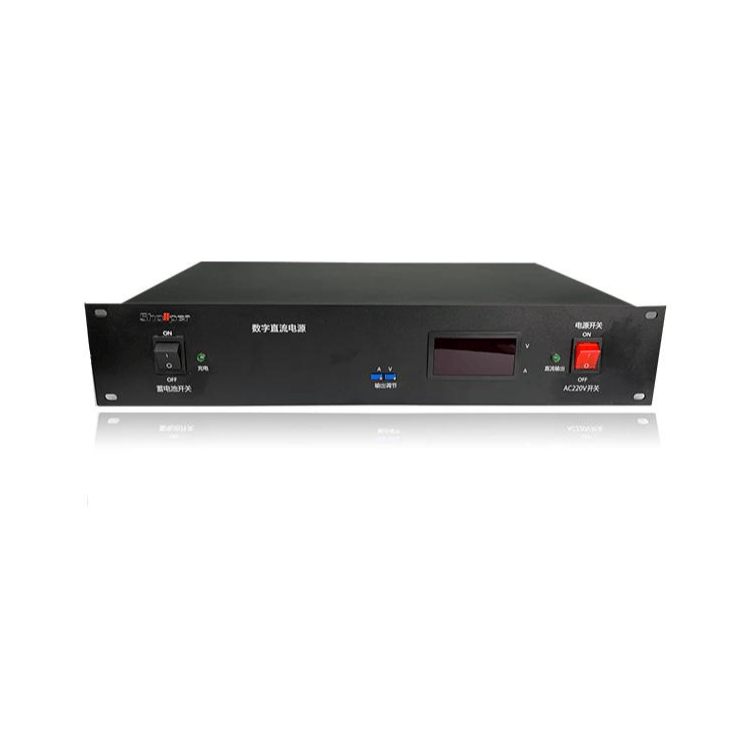




详情描述
The KTJ132 intrinsically safe digital dispatching machine is a new-generation intelligent multi-layer integrated communication dispatching system developed by Hangzhou Xiaobeng Technology Co., Ltd. Serving as the core equipment for emergency dispatching and command management, its purpose is to build a modernized emergency command system for mines, strengthen the safe and efficient production of mines, enhance the quick response capability to sudden corporate events, improve the efficiency of emergency response to sudden events, and allocate emergency resources efficiently during emergency situations, and to coordinate the collaborative disaster relief tasks between production and relief departments in a timely manner.
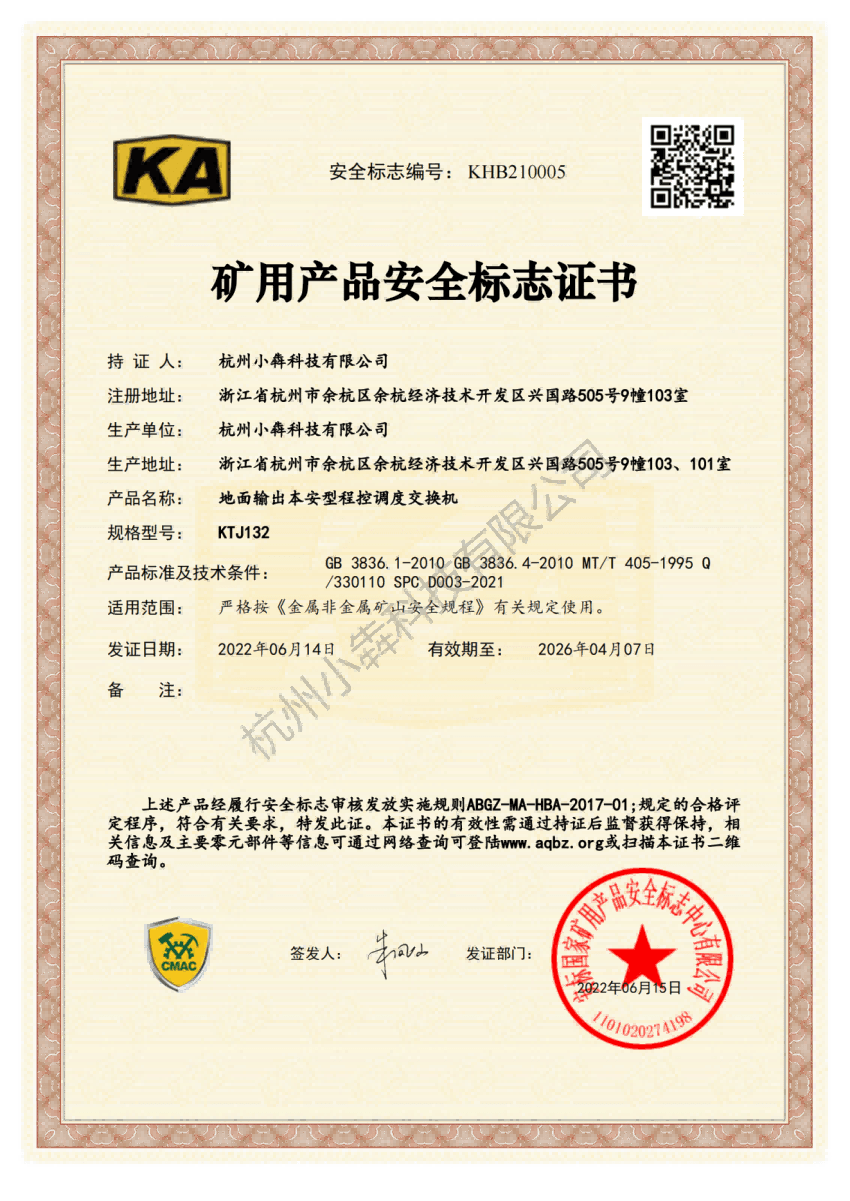
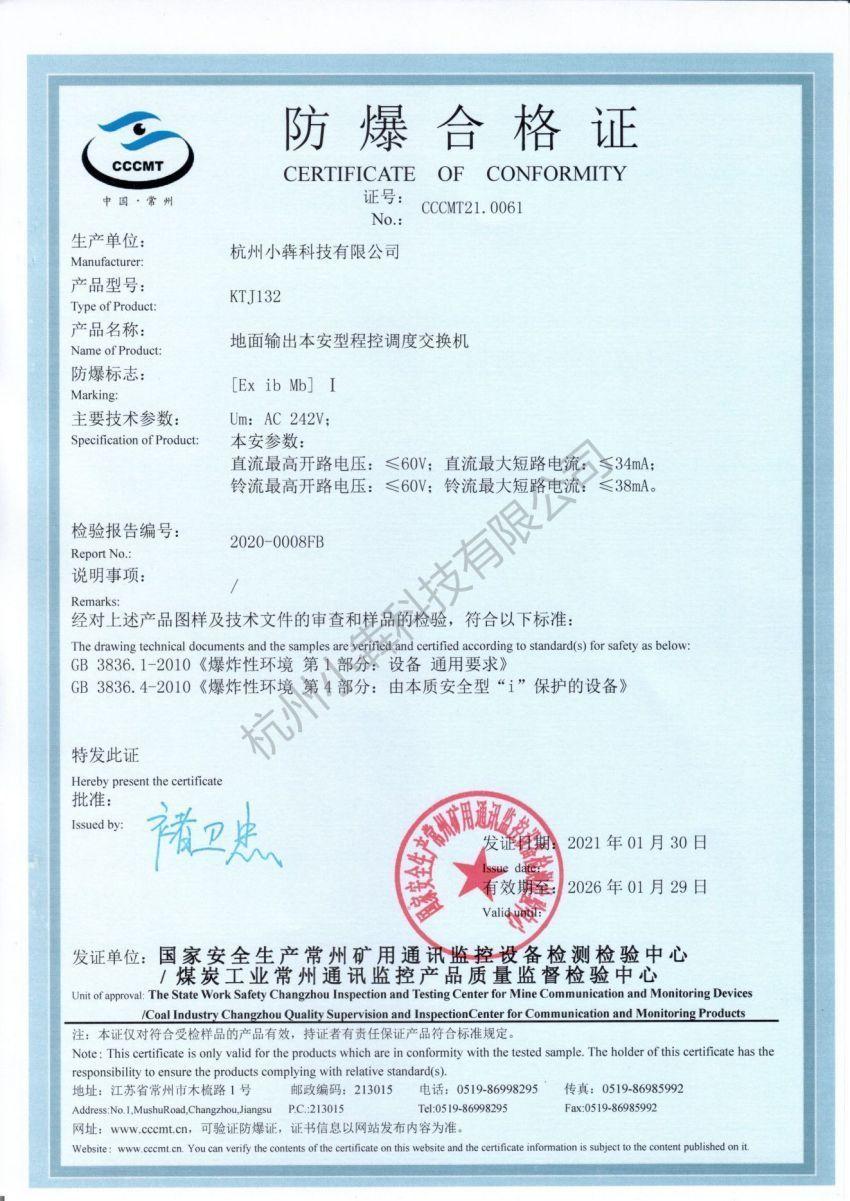
The KTJ132 intrinsically safe programmable dispatching machine can provide multi-level dispatching, telephone calls, production command, and work coordination for coal mine systems. It is suitable for the establishment of safety dispatching systems in coal, metal mining, and other mining production industries, meeting the requirements and standards for safe mining production. The dispatching center can directly dispatch underground explosion-proof telephones and surface ordinary telephones, with underground explosion-proof telephones able to make priority hot-line calls to the dispatching center.
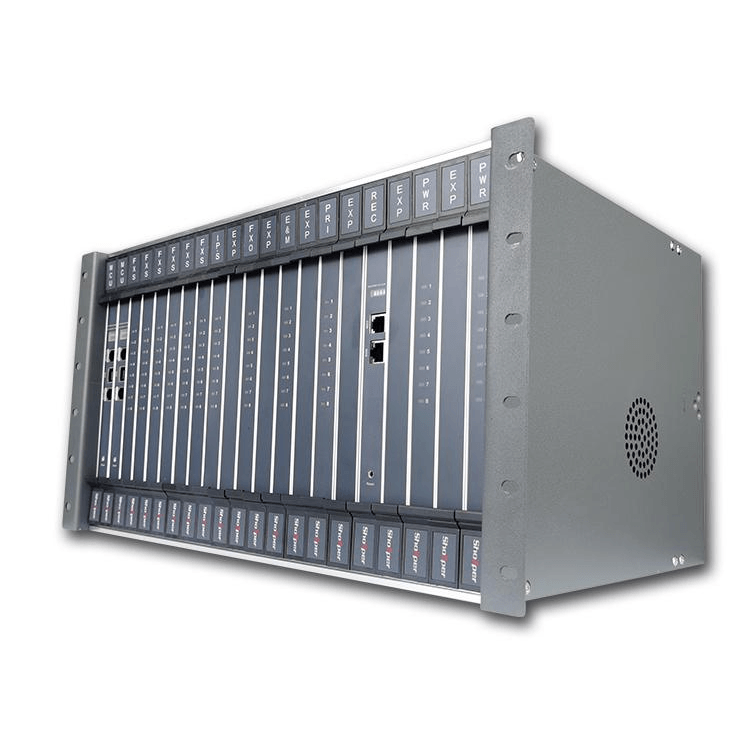
The KTJ132 features a 19-inch 6U standard chassis structure, supporting expansion from 16 to 1792 channels, with a maximum of 56 E1 ports. It also offers联动 functions for video, voice, radio stations, broadcasting, and alarm systems. It utilizes a more powerful and flexible ARM control core, with a modular design that ensures easy deployment, installation, management, and maintenance, as well as smooth upgrades and expansion capabilities.
The KTJ132 features a non-distributed control board design, allowing a single MCU master board to control and manage up to seven frame devices, even when cascaded. Its powerful integrated modular and functional design supports a wide range of business card types: FXS, FXO, IPS, IPO, E1, EM, carrier relay, magneto relay, REC recording board, HF trunking gateway board, AUD audio interface board, DMB broadcasting system board, ALM dry contact alarm board, and RLD integrated联动 system board, catering to various user application needs.
Feature Highlights:
> Maximum capacity of 1792 channels. > Utilizes a 19-inch 6U standard chassis structure.
> Supports hot-plugging and mixed insertion > Main control board, secondary power board, primary power box, and recording module support redundant hot standby
> Rich business category types > Fault detection and automatic isolation of unit boards
> Relay Routing with Redundant Backup > MCU Main Control Board with 32-bit ARM Processor, Integrated Non-blocking Ultra Large Scale Digital Switching Network
> The IPO board supports IP phone registration in addition to relay functions > Lightning protection, overcurrent and overvoltage protection
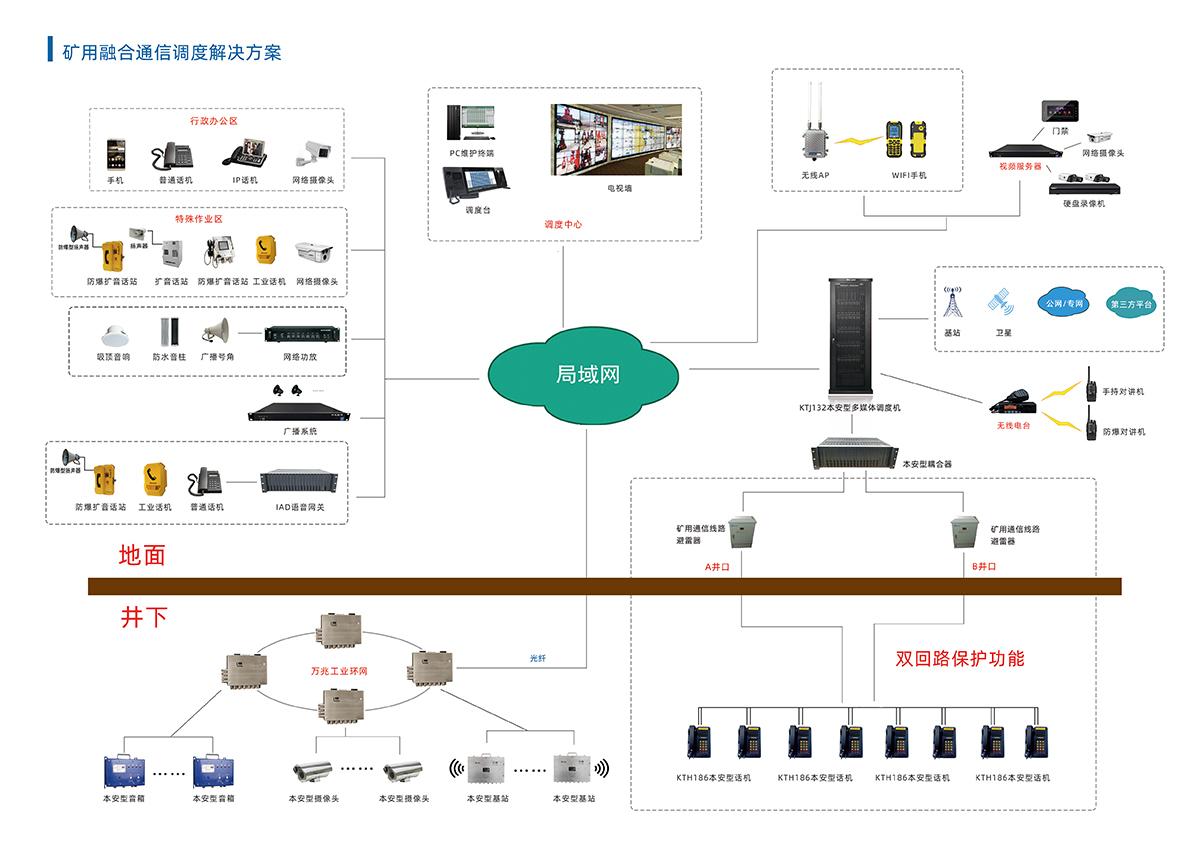
Comprehensive Integrated Architecture > Supports corporate network, multi-level networking, and multi-level scheduling management
> Supports robust broadcasting capabilities > Supports powerful teleconferencing features
> Supports video surveillance system interconnection > Supports cluster intercom access
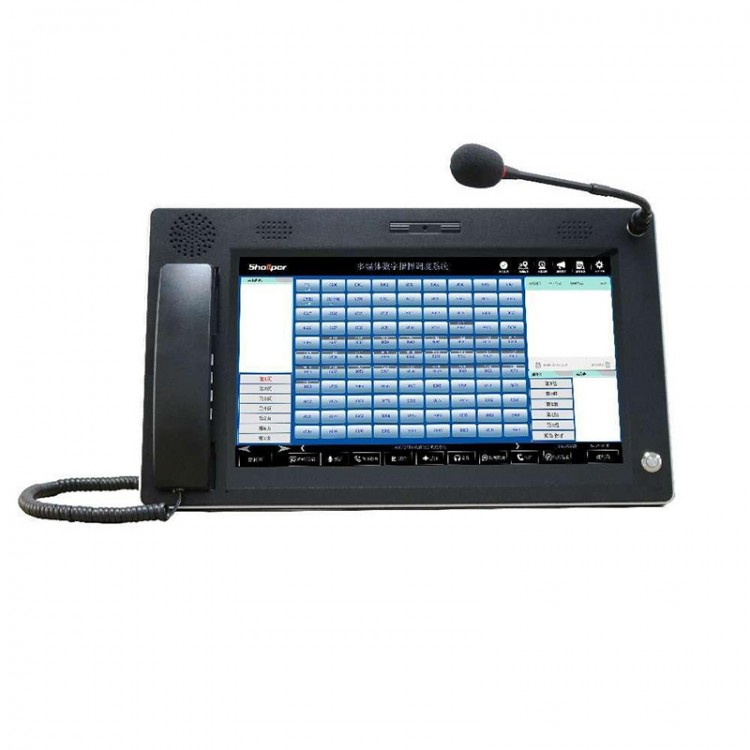
> Full-channel built-in recording supported > Touchscreen dispatch console supported
> Supports linkage with gas alarm system > Supports linkage with personnel positioning system
Support for bulk deployment of IP telephony
Product Advantages:
1. System architecture and hardware reliability
● Distributed modular structure, fully decentralized load-sharing operation, each module is relatively independent, with low fault correlation and impact scope, and faults between same-level modules do not affect each other.
● Public hot backup redundancy design ensures high availability of the main CPU, switching network, clock, signaling equipment, power supply, and communication links. The main and backup motherboards, as well as power switching, do not affect other components. The switching process will not interrupt the current call lines.
Low power consumption and energy-saving, the entire unit is composed of high-integration, low-power integrated circuits and electronic components. The unit operates in low-power mode under normal circumstances, and only the corresponding extension will enter working state during off-hook calls, achieving energy-saving and power-saving effects.
● Utilizes ultra-large-scale communication dedicated chips, dedicated DSP digital signal processing chips, FPGA programmable logic chips, etc., ensuring the system's low power consumption, high efficiency, long lifespan, and high reliability.
● Messages are never lost, as the system utilizes a high-capacity Flash message storage system, capable of storing an extensive amount of messages.
● Enclosures, back panels, and various circuit boards are designed with standardized, universal specifications to enhance compatibility and anti-interference capabilities.
All circuit boards support hot swapping.
● Reasonable component derating design and strict aging screening.
● The user repeater unit strictly employs a three-level lightning protection circuit.
2. Highly integrated and scalable
The system boasts high integration capabilities:
1) Voice communication supported: Basic program controlled voice exchange scheduling technology.
2) Supports video interlinking: Real-time video interlinking for multimedia dispatching.
3) Supports built-in broadcasting system: enables scheduled broadcasting, group broadcasting, task process broadcasting, and MIC broadcasting announcements, etc.
4) Built-in alarm system supported: one-touch alarm, central station forced alarm, etc.
5) Supports built-in full-channel recording system: Records all types of communication channels, including internal and external lines, conferences, broadcasts, and all other communication channels.
6) Supports built-in cluster gateway system: Access different frequency radio stations, allowing the dispatch center to easily schedule radio intercom functions for each station.
3. Real-time monitoring ensures system stability
Robust self-diagnostic card monitoring with fault alert and graded fault handling capabilities.
● Comprehensive centralized monitoring and maintenance features, with graphical, user-friendly maintenance operations.
Complete monitoring of in-line and off-line communication status, with real-time recording of information.
● Real-time engineer online remote assistance.
4. Software Reliability
● Hierarchical distributed modular software architecture.
Developed graphical software and WEB-based convenient management backend with multiple maintenance platforms based on Windows.
● All important data is protected with access control and tiered protection. Additionally, backups are in place for critical programs and data.
● Standardize communication messages and conduct rigorous rule checks and error verification.
5. Redundant design
(1) The mainboard CPU system supports both master and backup operation modes.
(2) Both the primary and backup parties can monitor each other, as well as the current working status of each motherboard. Should a motherboard fail, the backup (standby) party will automatically switch to the primary (active) status, and the motherboard in active status will continue to operate.
(3) The switching network employs a non-blocking fourth-generation ultra-large-scale digital switching network.
(4) The clock/sync circuit operates in a master and standby mode as well. It can automatically switch during faults and also features manual switching capabilities.
(5) Power supply is implemented using dual parallel supplies by frame, with both primary and secondary power sources operating in a 1+1 dual hot standby mode.
6. Advanced circuit design philosophy
(1) To enhance the system's anti-interference capability, measures taken in electromagnetic compatibility design include: separating power and ground lines, segregating high-speed and low-speed signal lines, matching input/output impedance, and strengthening grounding, filtering, and shielding.
(2) To enhance the system's adaptability to the environment, the following measures have been taken in terms of environmental resistance design: The user circuit is equipped with primary overvoltage and overcurrent protection, as well as secondary protection, and features an overvoltage automatic recovery function. Both overvoltage and overcurrent protection designs comply with ITU-T Recommendation K20 requirements. Corresponding measures have also been implemented for anti-corrosion, anti-high temperature, and vibration resistance.
(3) Choose ARM and DSP chips with large-scale and ultra-large-scale integration and strong voice processing capabilities.
(4) Individual circuit boards are interconnected via connectors with the rear panel of the frame.
(5) Employed multi-layer common backplanes; the single board bus interfaces are designed with the same dedicated chip.
Capacity Configuration:
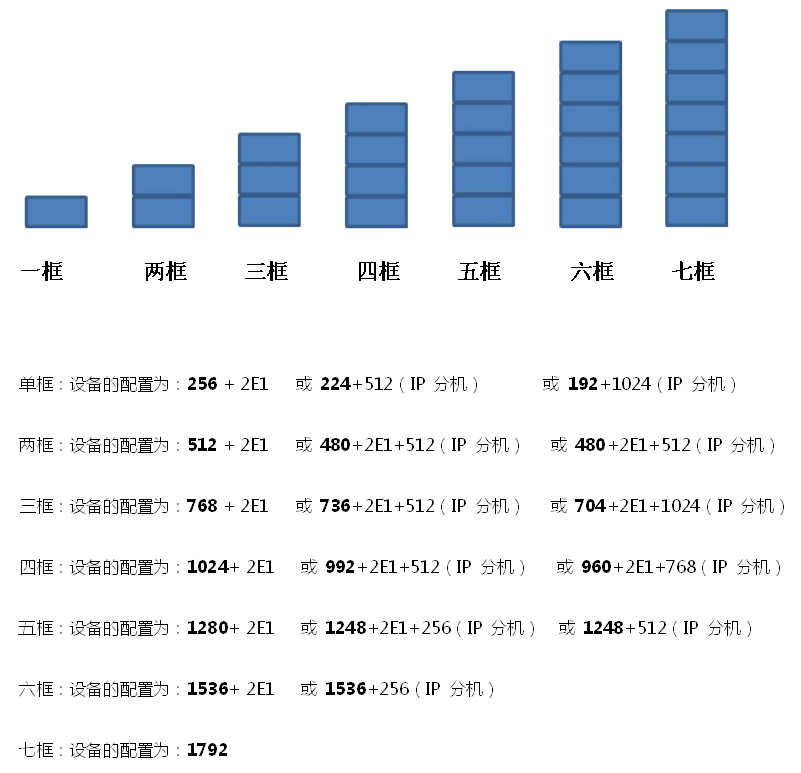
Note: The configurations above are mostly the maximum configurations. The bold numbers at the beginning represent the total of all business boards, and users can flexibly match them according to their own needs.
Supported business cards and slot numbers: FXO/FXS card (1), IPS card (2), IPO card (2), PCM card (2), E/M card (1), REC recording card (2), HF cluster gateway card (1), AUD audio interface card (1), DMB broadcast card (2), ALM dry contact alarm card (1), RLD fusion联动 board (2).
Coal mine group application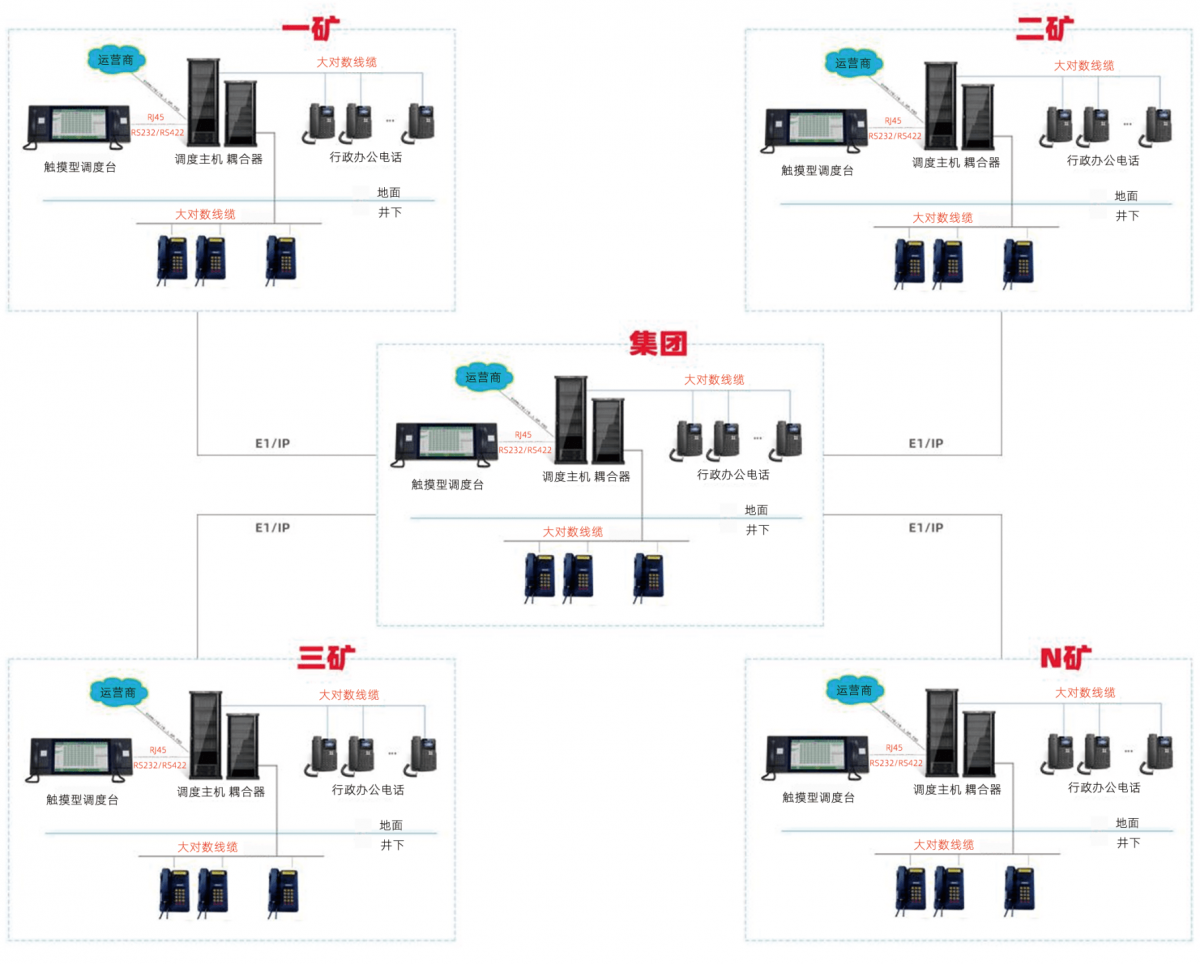
Small and Medium Coal Mines Application

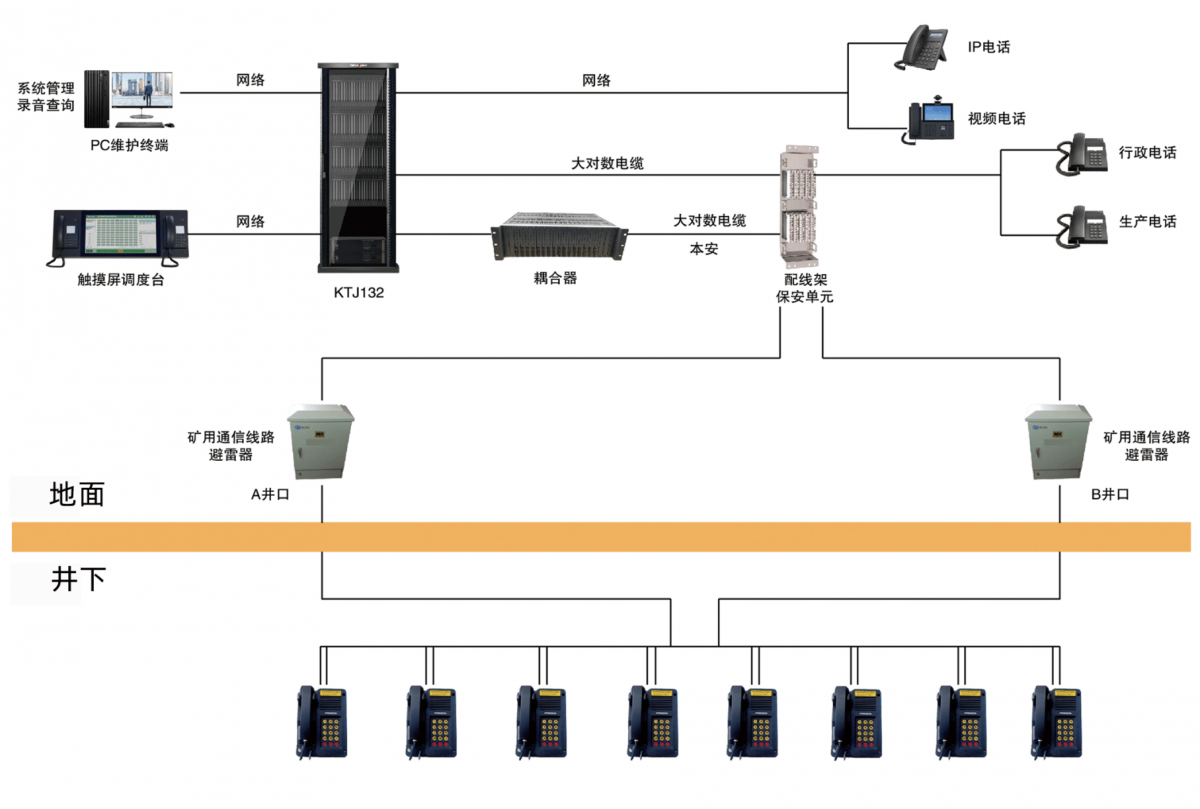
Dual-circuit mining dispatching system
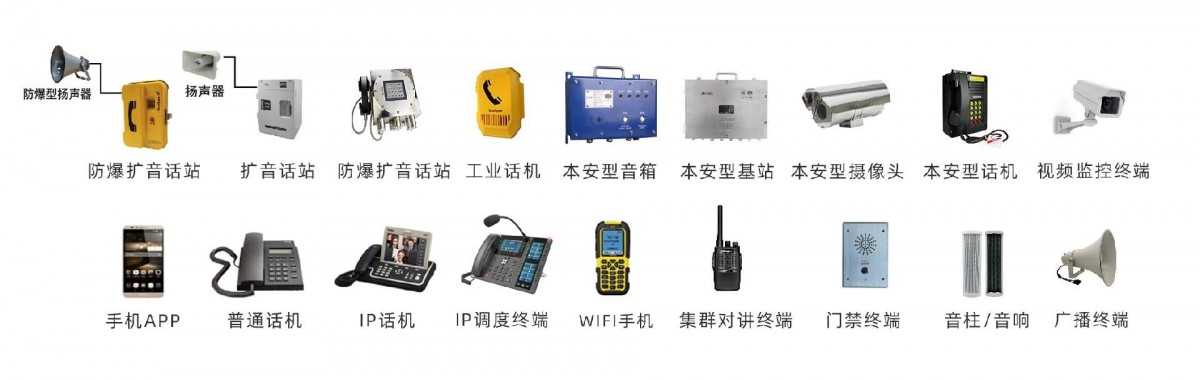
Diverse terminal support
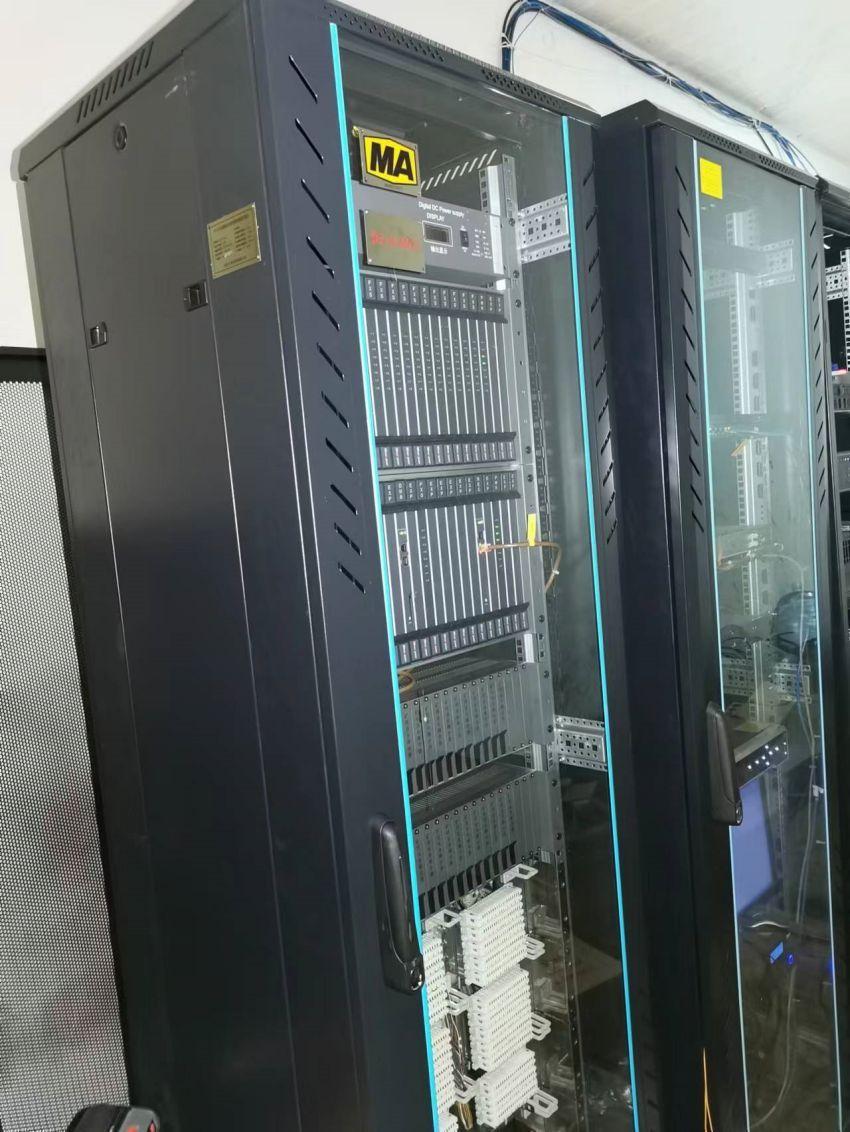
Partial Customer Cases
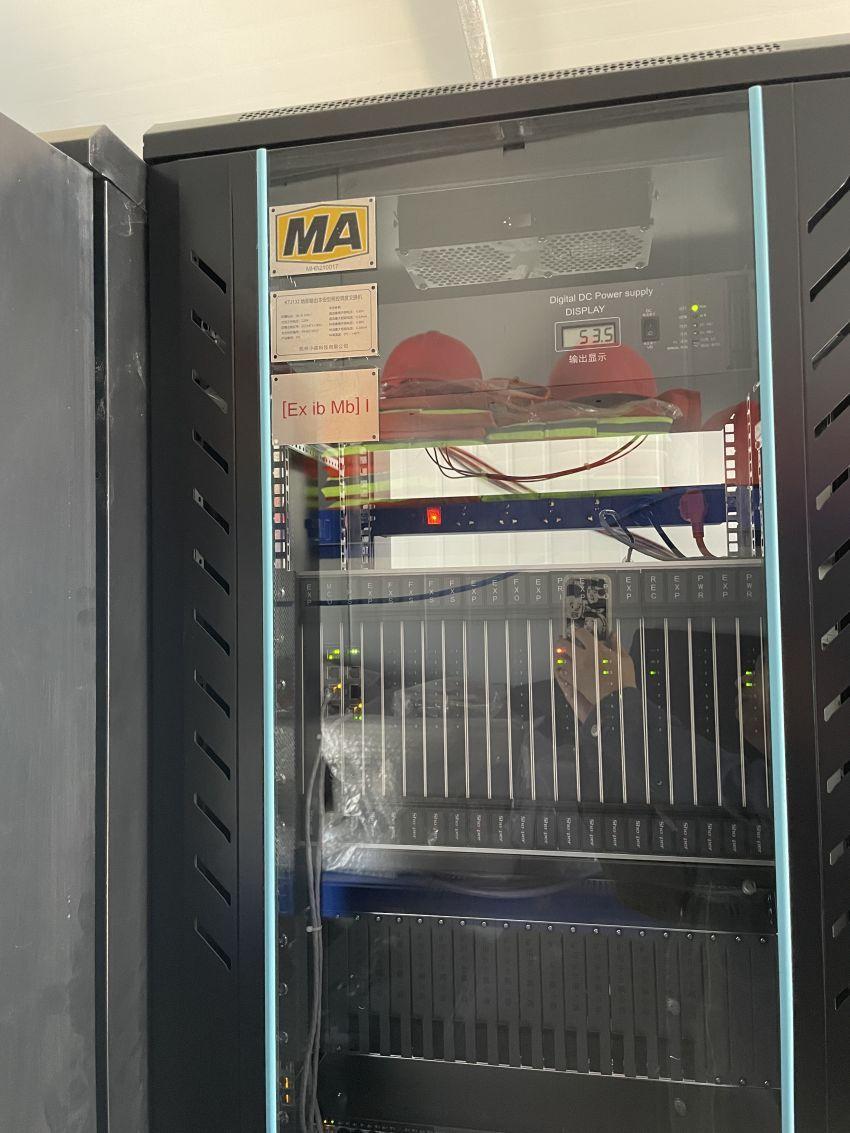
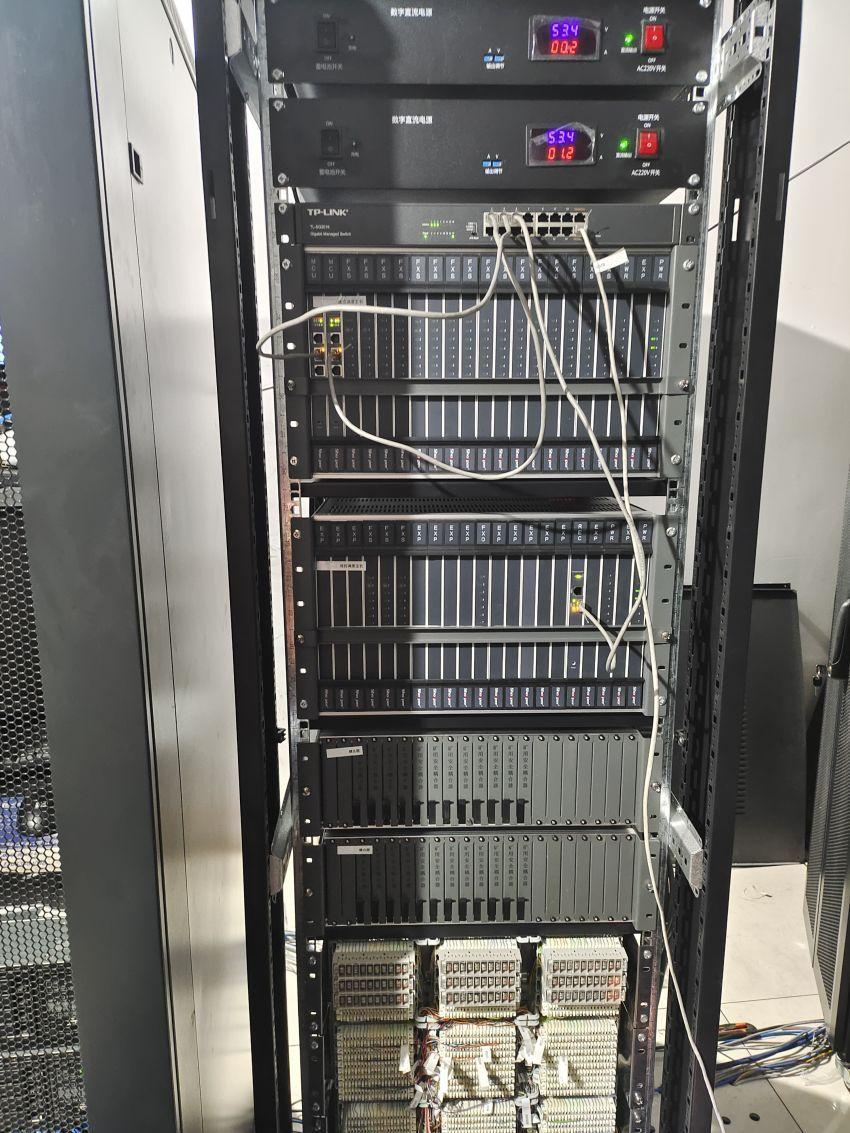
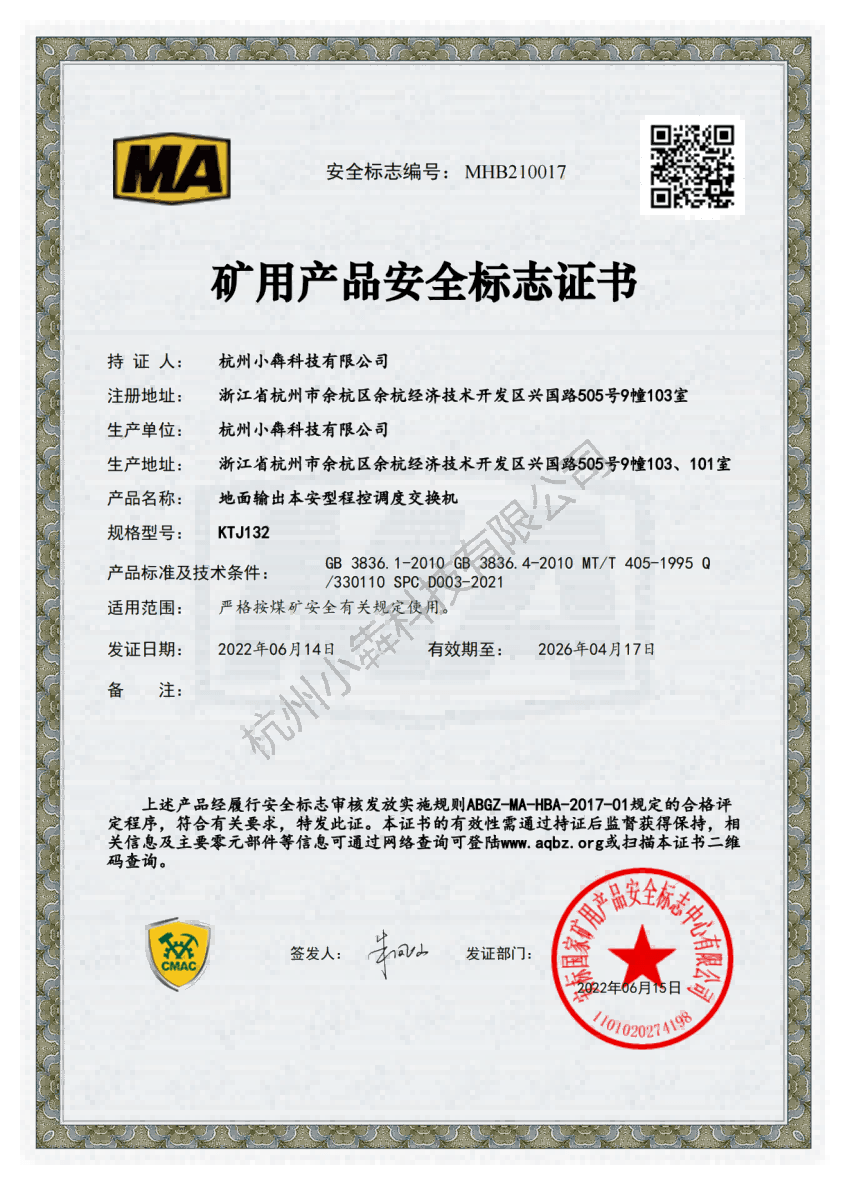
Technical Specifications:
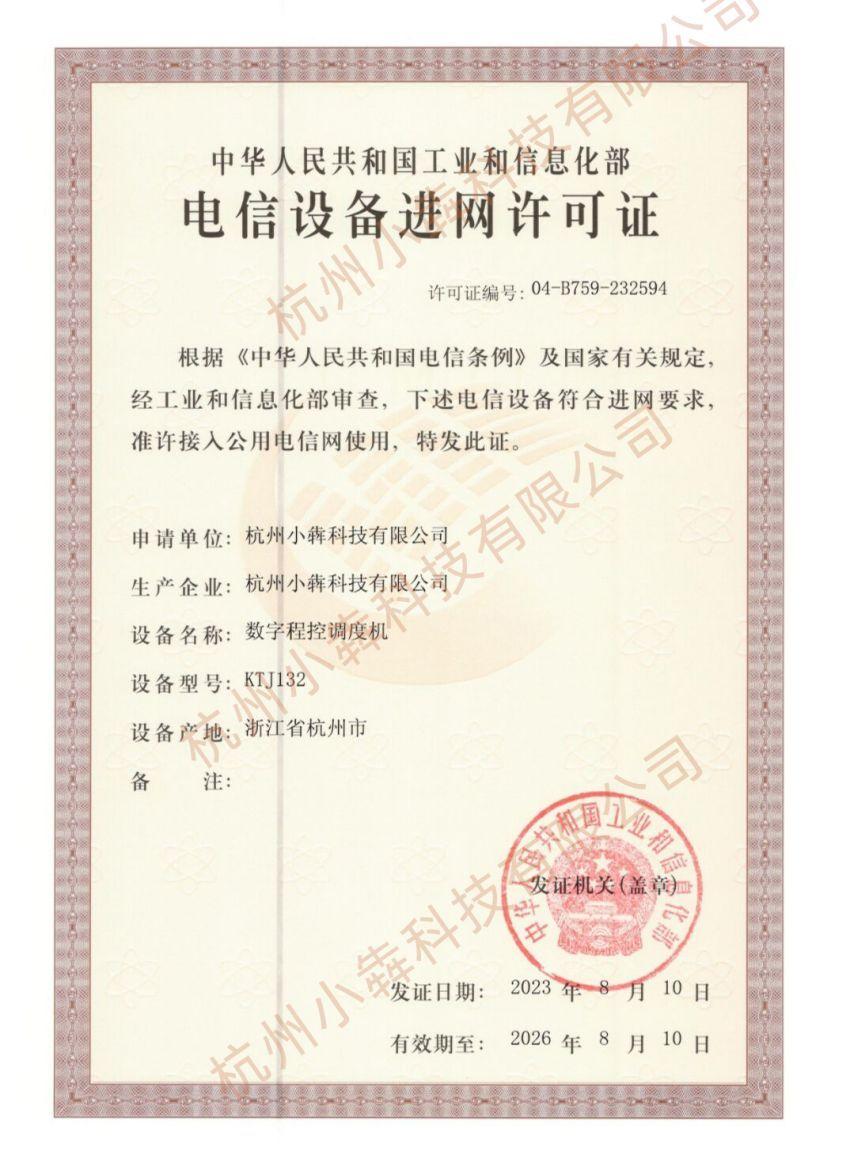
The system adheres to the specifications and standards of the International Telecommunication Union (ITU-T); complies with the Recommendations G.712 and G.732 of the International Telegraph and Telephone Consultative Committee (CCITT); meets the technical specifications and testing methods for ringback tones and signal sounds in Automatic Telephone Exchange Networks as specified in GB/T5443-1985; meets the technical specifications and testing methods for user signals in Automatic Telephone Exchange Networks as specified in GB/T5443-1985; meets the general technical conditions for programmable digital subscriber automatic telephone switching equipment as specified in GB/T14381-1993; holds a telecommunications equipment access permit approved by the Ministry of Industry and Information Technology of the People's Republic of China.
Digital Format:Digital Time-Division Multiplexing A Rate 2.048Mb/s PCM System
Exchange Network:Un阻塞 2048x2048 Single T Network Interface
Transmission Characteristics:Extension—Extension 2~7dB, Extension—Trunk 2~7dB
Dialing Method:Pulse, Audio
Pulse Receiver:Pulse speed: 8-14 pulses per second, pulse interval ≤ 350ms.
Pulse Transmission:Pulse speed: 10 ± 1 pulses per second, pulse duty cycle ratio (1.6 ± 0.2): 1
Repeat dialing for relay users:Pulse speed: 10-12 pulses per second, acceleration <10%.
Receiving Level:
Single audio reception level range is -4 to 23 dBm during dual audio input, with a dual audio level difference of ≤6 dB.
Crosstalk Attenuation > 70dB (at 1100Hz)
Steady noise ≤-65dBm, Non-steady noise ≤-40dBm
Call Volume:User 0.2Erl Relay, 0.7Erl
Call Loss Rate:This office <1% out <0.5%
Ground Imbalance Degree:
300~600Hz≥40dB 600~3400Hz≥46dB
User feed current ≥ 18mA Loop resistance R ≤ 1KΩ
Insulation Resistance R ≥ 20KΩ Between-wire Capacitance C ≤ 0.5µF
Power noise ≤ 2.4 mV
Power Supply:AC:220V±20% 50Hz±2Hz
External connection:48V 20-100AH battery
Power Consumption:50W to 1000W (depending on system configuration)
Application Environment:Temperature: 0~36℃ Relative Humidity: 35%~75%
Host size:480mm x 336mm x 264mm (W x D x H)
Weight:6U Single Frame (Common Unit): 11kg, + 0.3kg per business unit with an additional board cardg


