





- AllProduct Category
-
Programmable Exchange Switch
IP PBX
Multimedia Scheduling System
Mine Safety Standard Products
Touchscreen Dispatch Console
Voice Gateway
Transmission Access Products
Industrial Explosion-proof Telephone
IP Phone
Accessories







详情描述
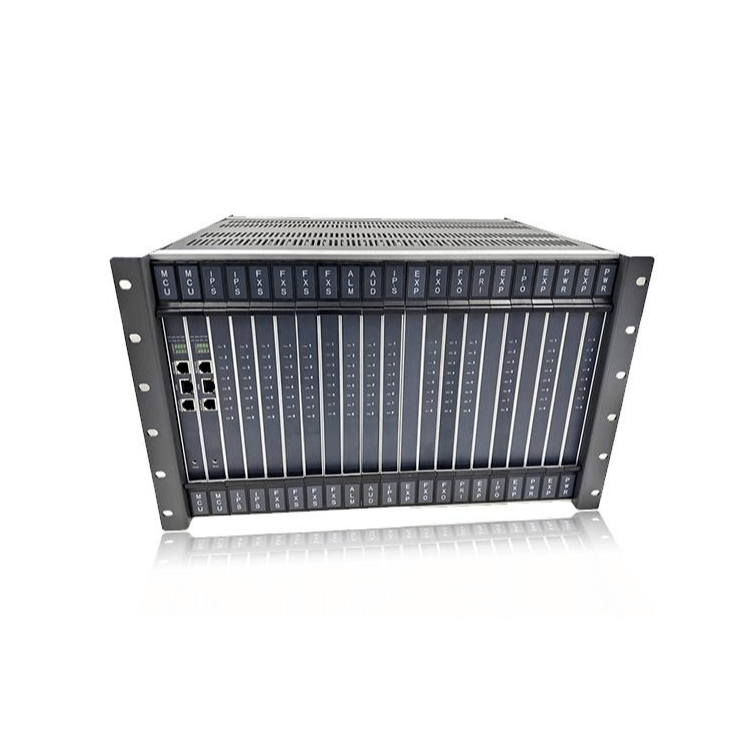
The SPC8000-D6 Digital Programmed Dispatching Machine is a new-generation intelligent multi-layer integrated communication dispatching system developed by Hangzhou Xiaobeng Technology Co., Ltd. It features a 19-inch 6U standard rackmount structure, supporting expansion from 16 to 1792 channels, with a maximum capacity to support 56 E1 lines. It also offers联动 functions for video, voice, radio stations, broadcasting, and alarm systems. Utilizing a more powerful and flexible ARM control core, its modular design allows for easy deployment, installation, management, maintenance, and seamless upgrade and expansion.
The SPC8000-D6 features a non-distributed control panel design, allowing a single MCU master board to control and manage up to seven frame devices, even when cascaded. Its powerful integrated modular and functional design supports a variety of business card types: FXS, FXO, IPS, IPO, E1, EM, carrier relay, magnet stone relay, REC recording board, HF trunking gateway board, AUD audio interface board, DMB broadcasting system board, ALM dry contact alarm board, RLD integrated联动 system board, catering to diverse application needs. It is widely applicable in various medium to large-scale scenarios, such as industrial and mining enterprises, government agencies, military units, police, power, coal mines, petrochemicals, railways, banks, hotels, office buildings, and schools.
Product Features:
● Large capacity and scalable: Supports expansion up to 1792 ports (total of IPS/IPO/FXS/FXO multi-service cards), with a maximum of 56 E1 supported.
● Powerful Functionality: No need for a separate control panel design; a single MCU main control board can control up to seven frames of equipment.
● Utilizing an ARM control core, it offers faster instruction processing speed, enabling better centralized management of various business cards and ensuring system stability.
● Features dual-circuit functionality, ensuring uninterrupted communication line connectivity.
● Robust Network Functionality: Offers interfaces for E1, Ring Relay, E&M Relay, Carrier Relay, Magnet Wire Relay, and SIP Relay, supporting interconnection functions.
Supports unit board fault detection and automatic isolation.
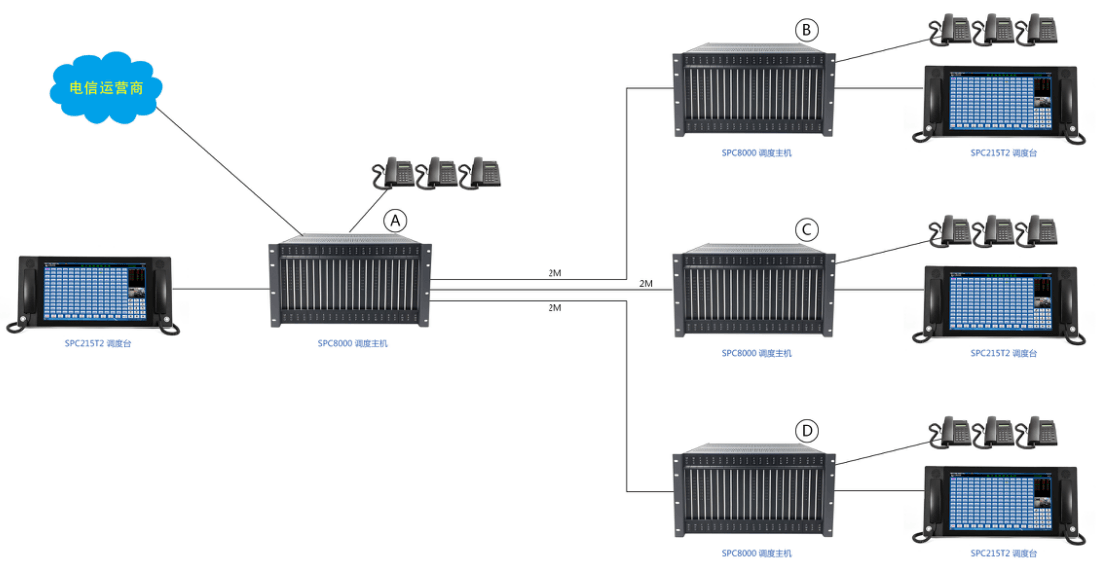
Supports corporate network grouping, multi-level networking, and multi-level scheduling management.
● Robust Integrated联动Function: Supports integration with video, voice, broadcast systems, radio stations, and distress alarms across multiple systems.
● Centralized Network Management: Various business cards such as MCU, REC, IPS, IPO, etc., can be connected to the network via RJ45 cables, allowing users to manage remotely through WEB or client software.
● Supports full-channel recording.
● Supports unlimited dispatch console connections.
● In addition to the repeater function, the IPO board supports IP phone registration.
● Modular design allows flexible configuration of the overall capacity based on customer requirements, while supporting hot-swappable of all cards.
● The long-distance user board can connect to terminals up to 10KM away.
● The MCU main control board, recording module, primary power box, and secondary power supply all support redundant hot standby.
Capacity Configuration:
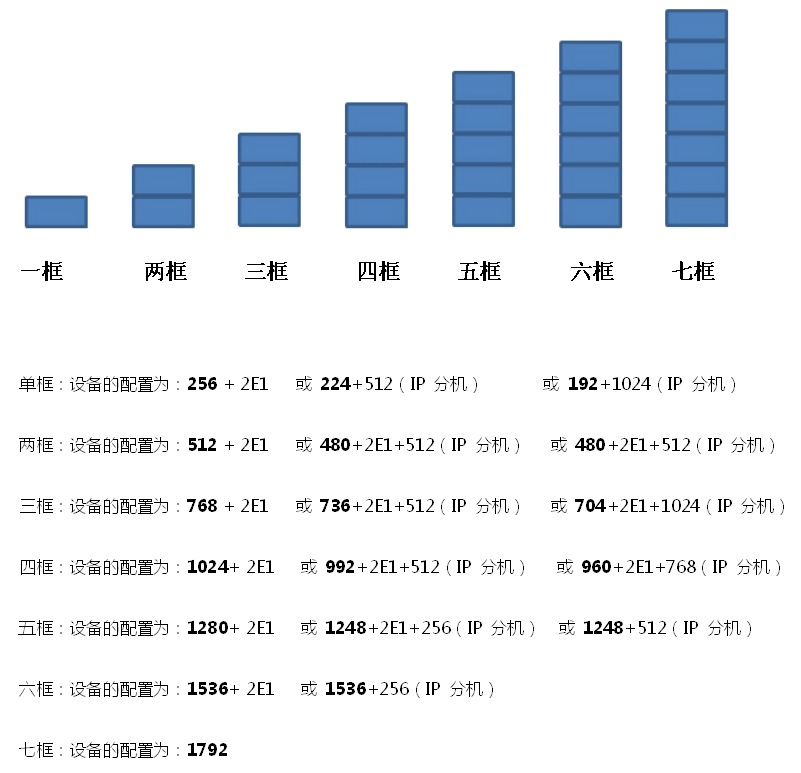
Note: The configurations above are mostly the maximum configurations. The bold numbers at the beginning represent the total of all business boards, and users can flexibly match them according to their own needs.
Supported Service Cards and Slots: FXO/FXS Card (1), IPS Card (2), IPO Card (2), PCM Card (2), E/M Card (1), REC Recording Card (2), HF Cluster Gateway Card (1), AUD Audio Interface Card (1), DMB Broadcasting Card (2), ALM Dry Contact Alarm Card (1), RLD Integrated联动 Card (2).
System Advantages
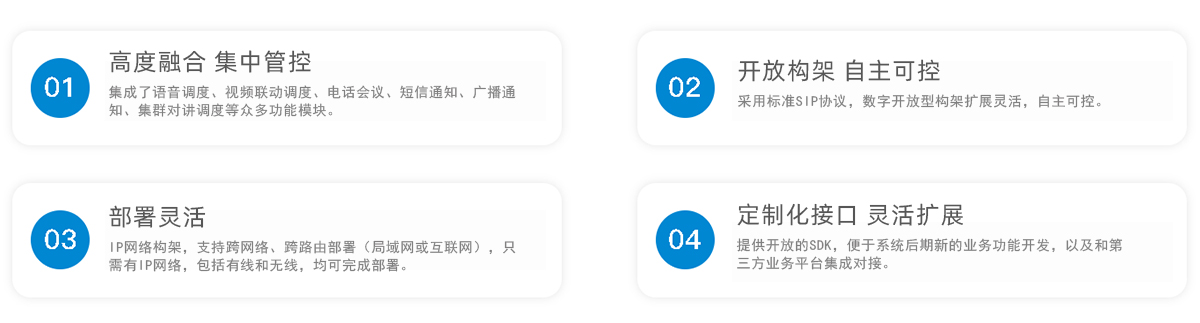
Robust scheduling and integration capabilities
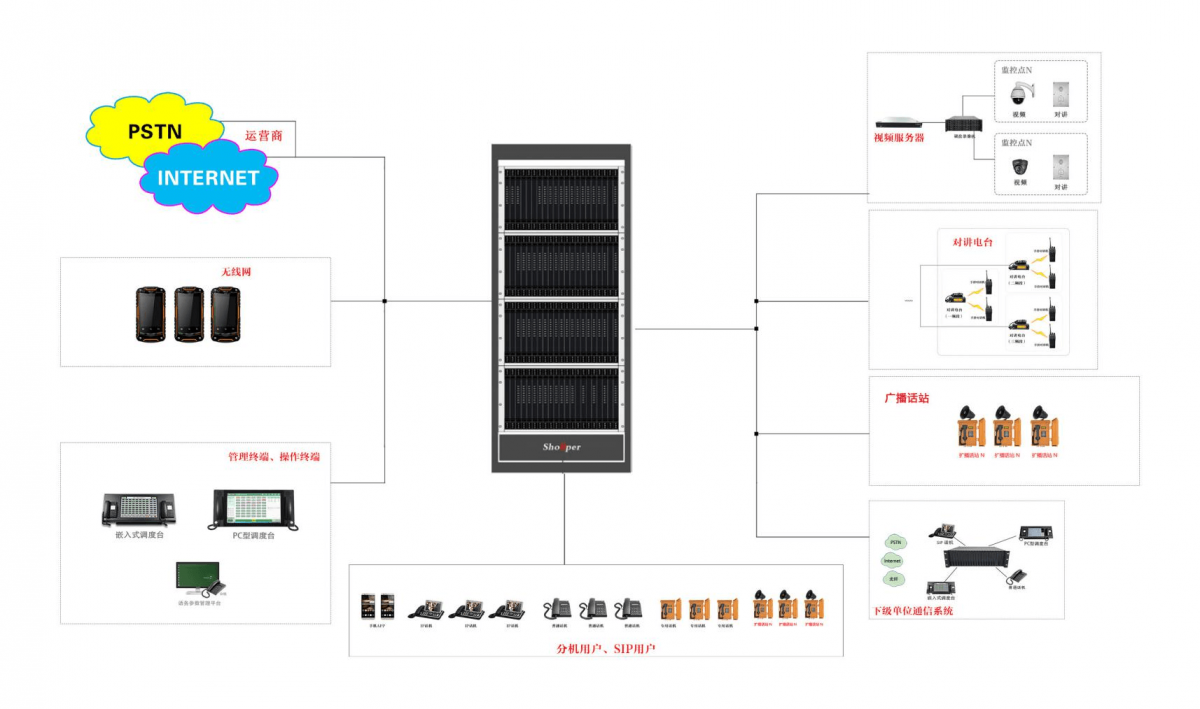
The Xiaobeng Integrated Communication Dispatch System is a fusion of TDM architecture and IP networks, offering an integrated solution that includes voice dispatch, video联动 scheduling, teleconferences, SMS notifications, broadcast alerts, trunking dispatch, gas alarm联动, and more multimedia dispatch services. It supports integration and development with third-party data services, security alarms, emergency response plans, GIS systems, and forms a powerful multimedia communication platform.
Voice Scheduling
Through the dispatch console, various communication terminals such as analog/IP phones, mobile phones, two-way radios, and more can be scheduled, offering features including individual call, group call, rotation call, teleconference, force insertion, force disconnect, automatic answering, monitoring, mute, transfer, roll call, and proxy response.
Video Scheduling
One-Click Dispatching: Allows for binding network cameras or analog cameras with fixed-line or mobile communication terminals. When the dispatching console calls the terminal, the system will transmit the corresponding surveillance video to the console, achieving a unified command and dispatching function of audio and video integration, enabling real-time voice and visual monitoring.
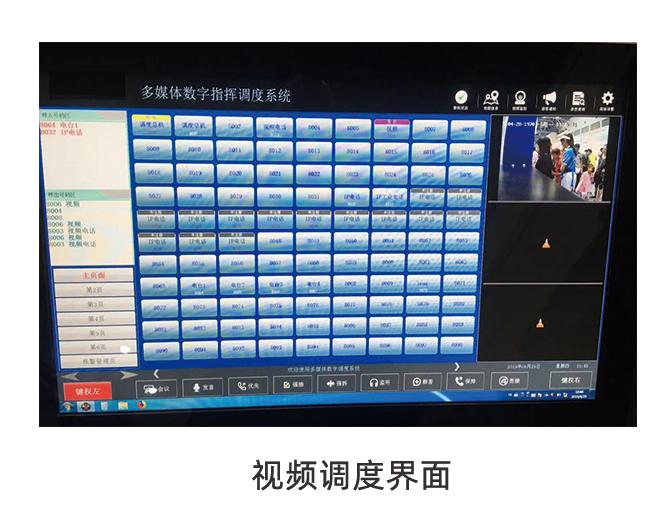
Broadcast Scheduling
Supports features such as voice notifications, public announcements, call-out announcements, TTS text-to-speech broadcasting, level broadcasting, command broadcasting, scheduled broadcasting, and task process broadcasting.
In the event of an emergency, an emergency broadcast can be manually or automatically initiated with a single click. Video linkage is also supported.
You can pre-set multiple scheduling broadcast plans with different time periods, areas, and broadcast content.
Leaders or dispatchers can broadcast announcements through landlines, cell phones, or dispatch desks, etc. The system supports concurrent broadcasting from multiple sources and microphones.
SMS Scheduling
Under normal circumstances, dispatchers can manually send SMS messages to the mobile terminals of relevant personnel through the dispatch console. In emergency situations, following the procedures set by the contingency plan, the dispatch system will automatically carry out individual or mass SMS distribution.
Cluster Scheduling
Supports mixed networking of wired and wireless intercom groups. Compatible with various terminals such as landlines and mobile phones for intercom communication. Features dial-up interconnectivity and one-touch intercom calling. Supports various models and formats of intercom vehicle and handheld transceivers. Compatible with intercom call-to-broadcast system, triggering preset broadcast audio.
Alarm Dispatch
Upon detection of danger, the alarm system automatically sends the alarm signal to the command and dispatch platform (or triggers manual one-button alarm), where the dispatch desk automatically activates audio-visual alarms to alert relevant personnel, while the broadcast system automatically issues a danger warning broadcast for the affected area.

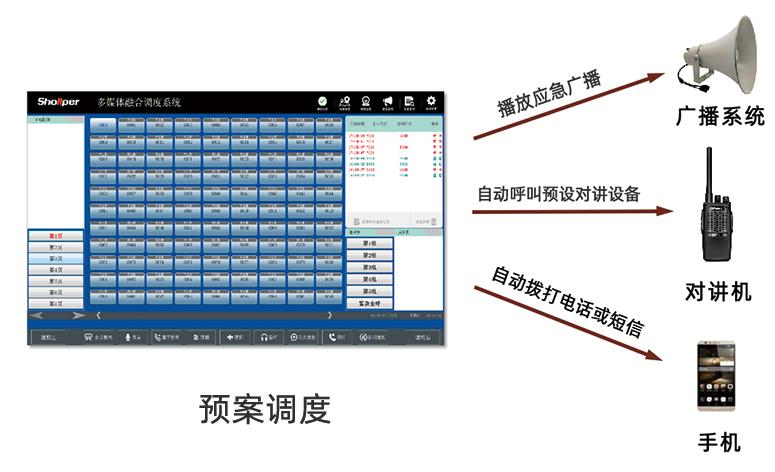
Contingency Scheduling
Upon receiving emergency alerts or fire alarm notifications, the system activates pre-set response plans, such as: automatically dialing the fixed lines or mobile phones of relevant personnel or supervisors; sending reminder SMS messages to them; and playing emergency broadcasts, etc.
GIS Geographic Information System
Utilize the GIS positioning feature to mark the locations of various information terminals. On the dispatch console, you can make a one-touch call to communication terminals at specific points, and also access video surveillance linked to those points.

Integrated Market Research
Supports unified and hierarchical scheduling. Responsible for daily administrative office communication, production scheduling, emergency scheduling during unexpected events, and monitoring and scheduling of communication terminals for various positions.
Standard IP Networking
Internally: All communication devices or terminals supporting IP protocols can be deployed in any area covered by IP and wireless networks.
Internally: Accessible via IP protocol to the IMS platform or connect to external communication devices through IPO. The IP protocol supports centralized and distributed system deployment.
Zone Management
Through zonal management, the dispatch console can categorize terminals by region, facilitating management and control. Zonal management offers greater flexibility, allowing for dynamic adjustments based on actual conditions.
A wide range of card types available:
Special Function Boards: REC Recording Board, HF Cluster Gateway Board, AUD Audio Interface Board, DMB Broadcast System Board, ALM Dry Contact Alarm Board, RLD Integrated联动 System Board...
Repeater Cards: FXO Loop Repeater Card, IPO Repeater Card, PCM Digital Repeater Card, E/M Repeater Card, Carrier Repeater Card, Magnet Stone Repeater Card...
User Sections: FXS Simulated User Board, IPS User Board, LFXS Long-Distance User Board, QFXS All-Call User Board, AFXS Long-Distance All-Call User Board...
Phone Conference
Supports various ways to initiate meetings, including ad-hoc and fixed group calls. Compatible with various terminals for simultaneous meetings, such as internal/external line IP phones, landline phones, walkie-talkies, and mobile phones. Capable of initiating meetings at different levels, with dispatch consoles enabling one-touch conference calling. Up to 128 participants, with full-duplex speaking for over 64 participants.
Monitor and Record
The system offers real-time monitoring capabilities. It also supports configurable high-performance recording cards, enabling real-time recording of all communication terminals within the system, including phone calls, meetings, and interconnect recordings. Recording can be accessed and operated via recording software or web, supporting online playback and download functions.
Diverse terminal connectivity
Dispatch Console, Analog/SIP/Stone Telephone, WIFI Mobile Phone, IP/Analog Camera, Microphone, Headset, Analog/Network Amplifier, Network Speaker Column, Speaker, Explosion-proof Telephone, Walkie-Talkie, SOS Alarm, Access Control, etc.
Industry Application: Power Industry
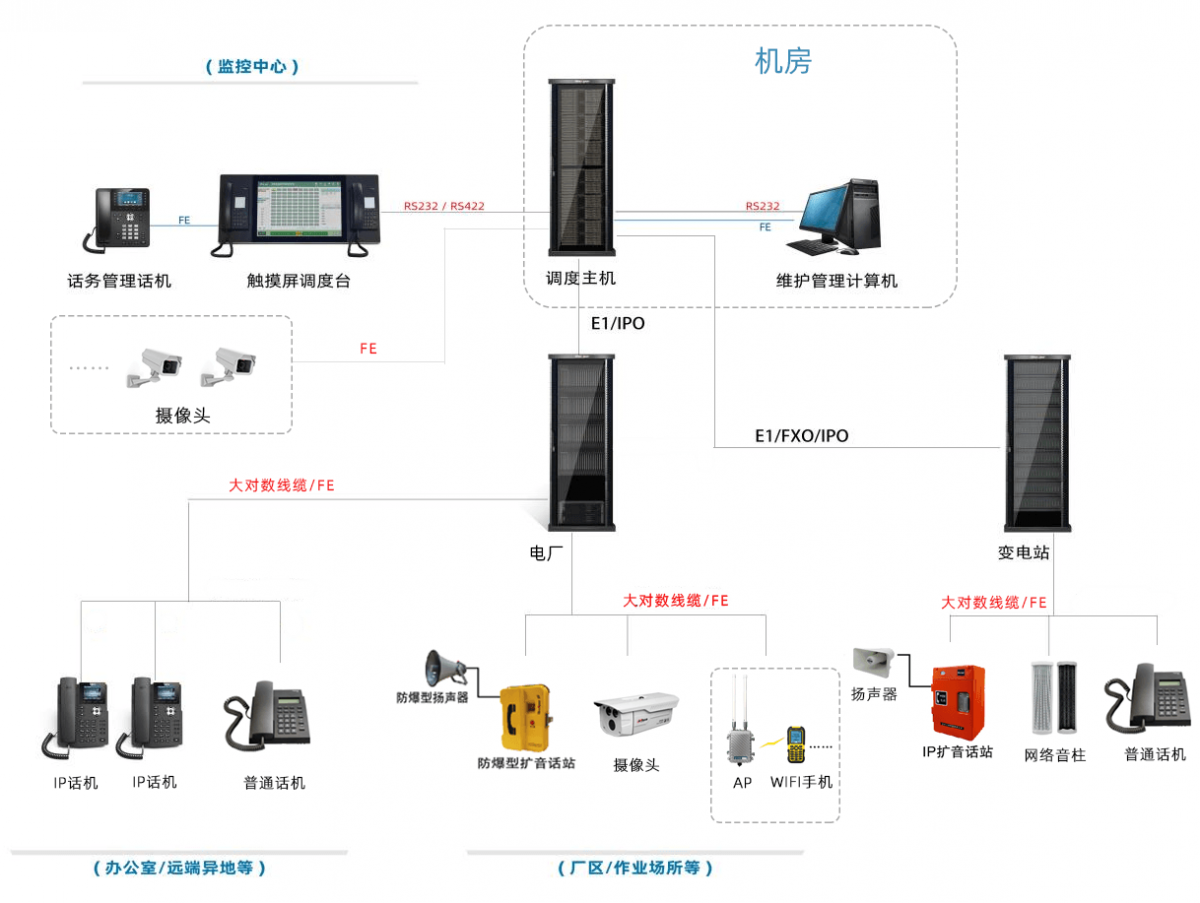
Industry Application: Factory Safety Production
Industry Application: Shipbuilding Industry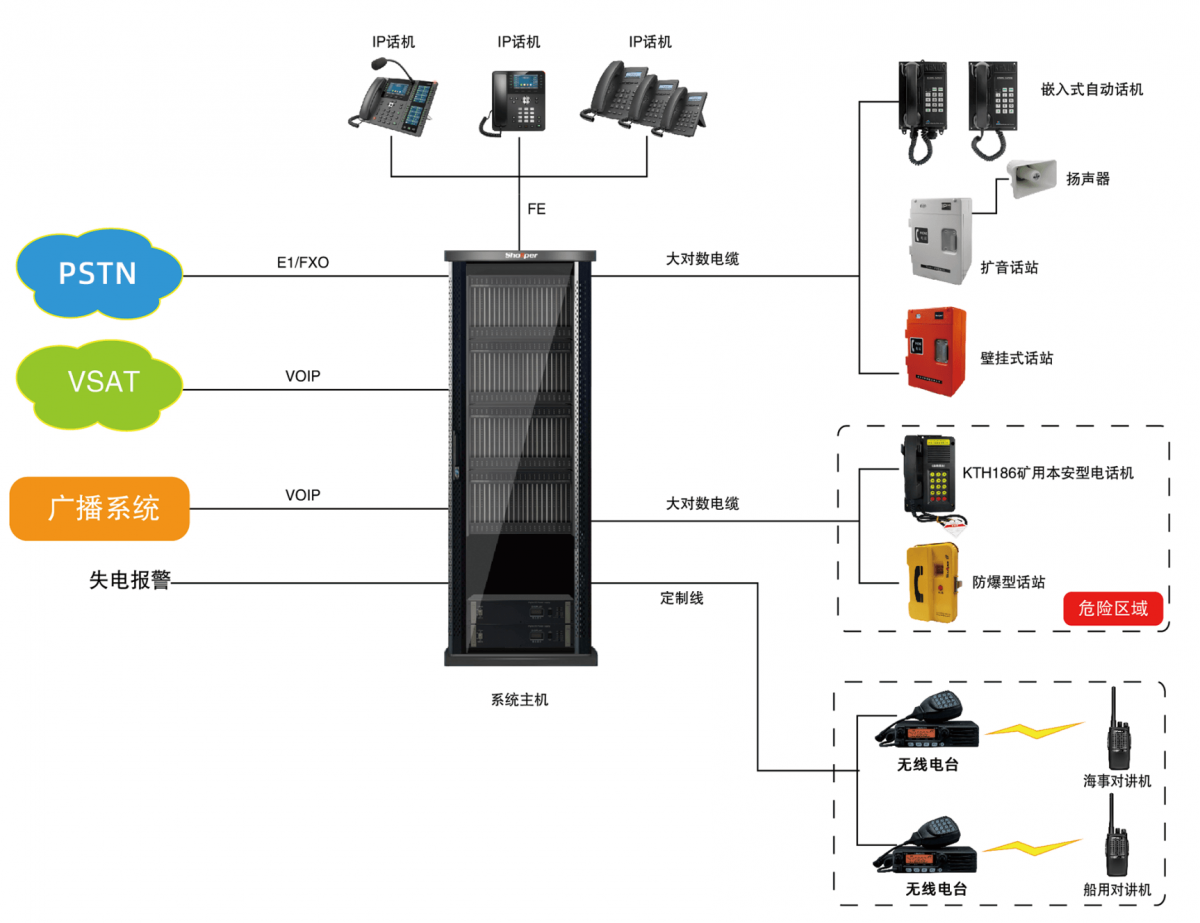
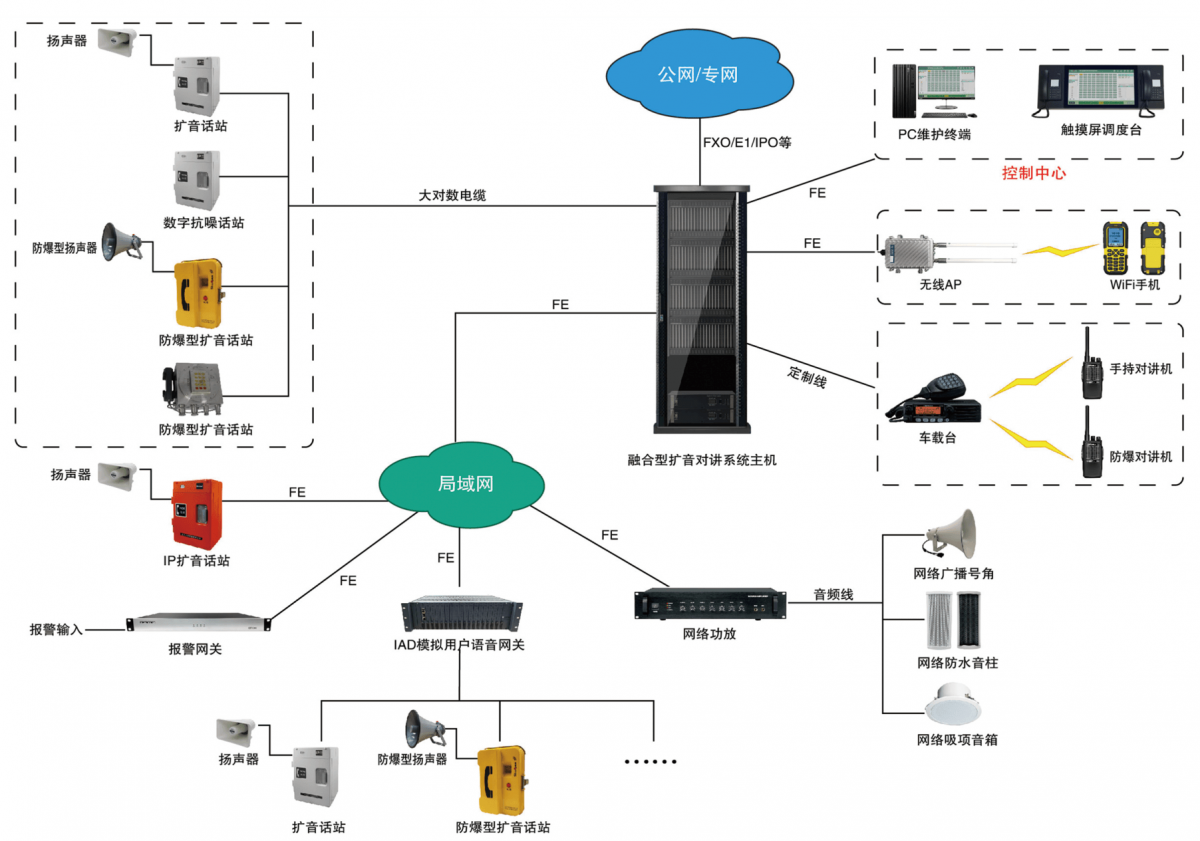
Industry Application: Chemical Industry
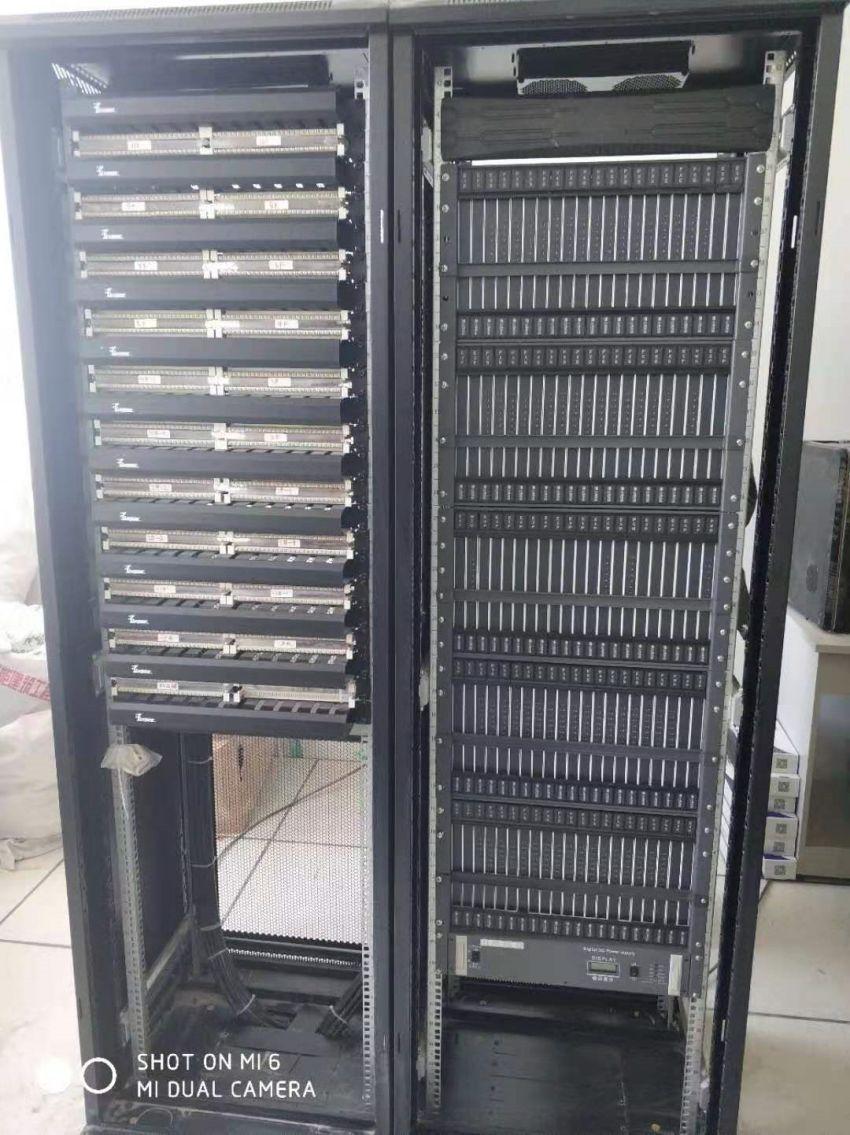
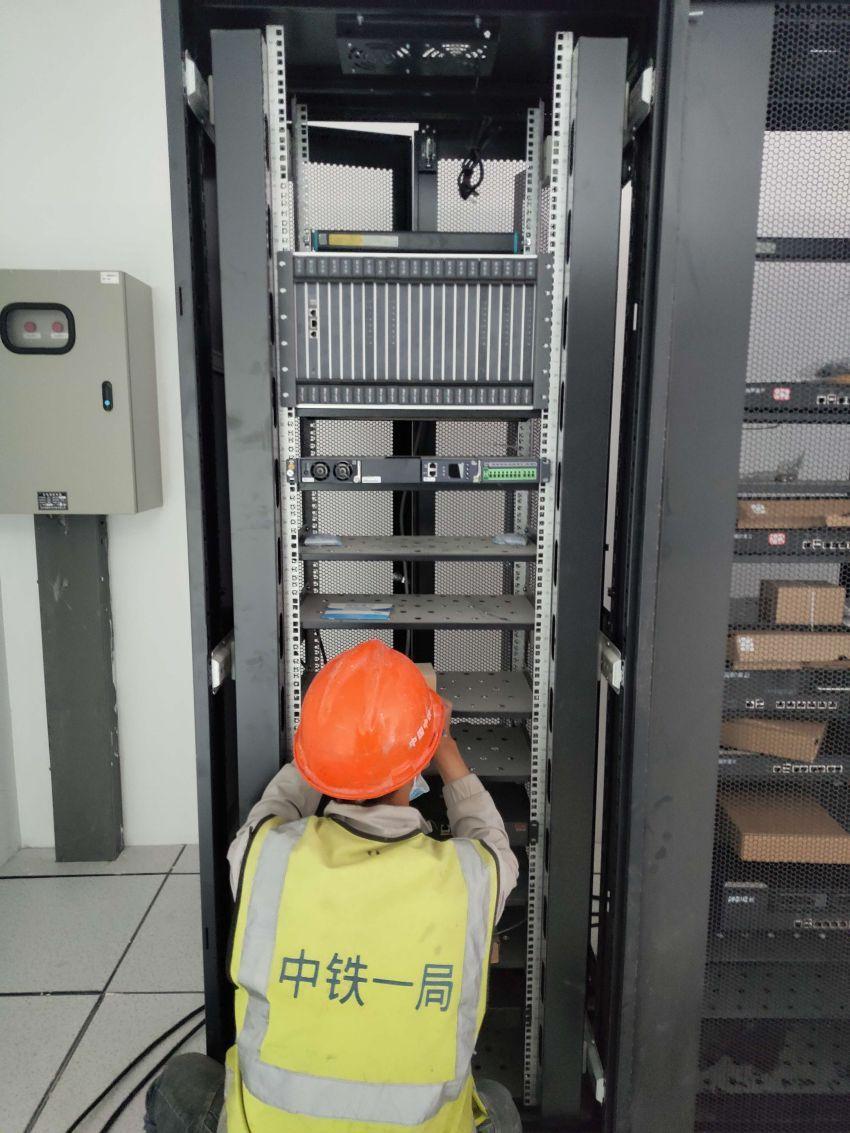
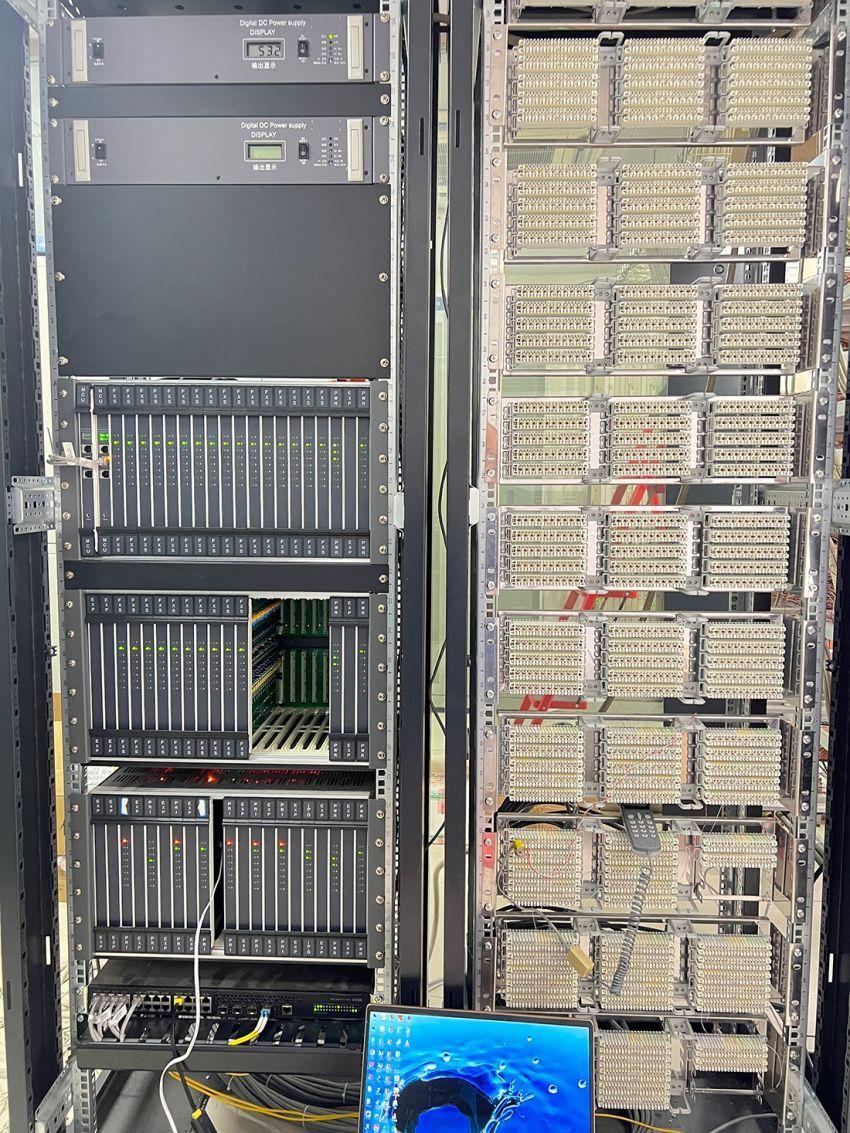
Interconnection Function:

Technical Specifications:
The system adheres to the specifications and standards of the International Telecommunication Union (ITU-T); complies with the CCITT Recommendations G.712 and G.732; meets the technical indicators testing methods for ringback and signaling tones in automatic telephone exchange networks as specified in GB/T5443-1985; meets the technical indicators testing methods for user signals in automatic telephone exchange networks as specified in GB/T5443-1985; meets the general technical requirements for programmed digital user automatic telephone switching equipment as specified in GB/T14381-1993; and holds a telecommunications equipment entry permit approved by the Ministry of Industry and Information Technology of the People's Republic of China.
Digital Format: Digital Time-Division Multiplexing, A Rate 2.048Mb/s PCM System
Switch Network: 2048x2048 Un阻塞 Single T Network Interface (for Inbound/Outbound Lines)
Transmission Characteristics: Extension-to-Extension 2-7dB, Extension-to-Trunk 2-7dB
Dialing Method: Pulse, Audio
Pulse Reception: Pulse rate 8-14 pulses/second, pulse interval ≤ 350ms.
Pulse Transmission: Pulse speed 10±1 pulses/second, pulse duty cycle (1.6±0.2):1
Repeat dialing for relay users: Pulse rate 10-12 pulses per second, acceleration <10%.
Receiving Level:
Single audio receive level range is -4 to 23 dBm during dual audio input, with dual audio level difference ≤ 6 dB.
Crosstalk Attenuation > 70dB (at 1100Hz)
Steady noise ≤-65dBm, Non-steady noise ≤-40dBm
Call Volume: User 0.2 Erlang, Relay 0.7 Erlang
Call Drop Rate: Our local rate <1%, outgoing rate <0.5%
Ground Imbalance:
300~600Hz≥40dB 600~3400Hz≥46dB
User feed current ≥ 18mA, Loop resistance R ≤ 1KΩ
Insulation Resistance R ≥ 20KΩ Inter-winding Capacitance C ≤ 0.5µF
Power noise ≤ 2.4mV
Power Supply: AC 220V ±20%, 50Hz ±2Hz
External: 48V 20~100AH rechargeable battery
Power Consumption: 50W - 1000W (depending on system configuration)
Operating Environment: Temperature 0~36℃; Relative Humidity 35%~75%
Main Unit Dimensions: 480mm x 336mm x 264mm (W x D x H)
Weight: 6U single frame (common unit): 11kg, +0.3kg for each additional business unit board card


