


 通过中商114认证
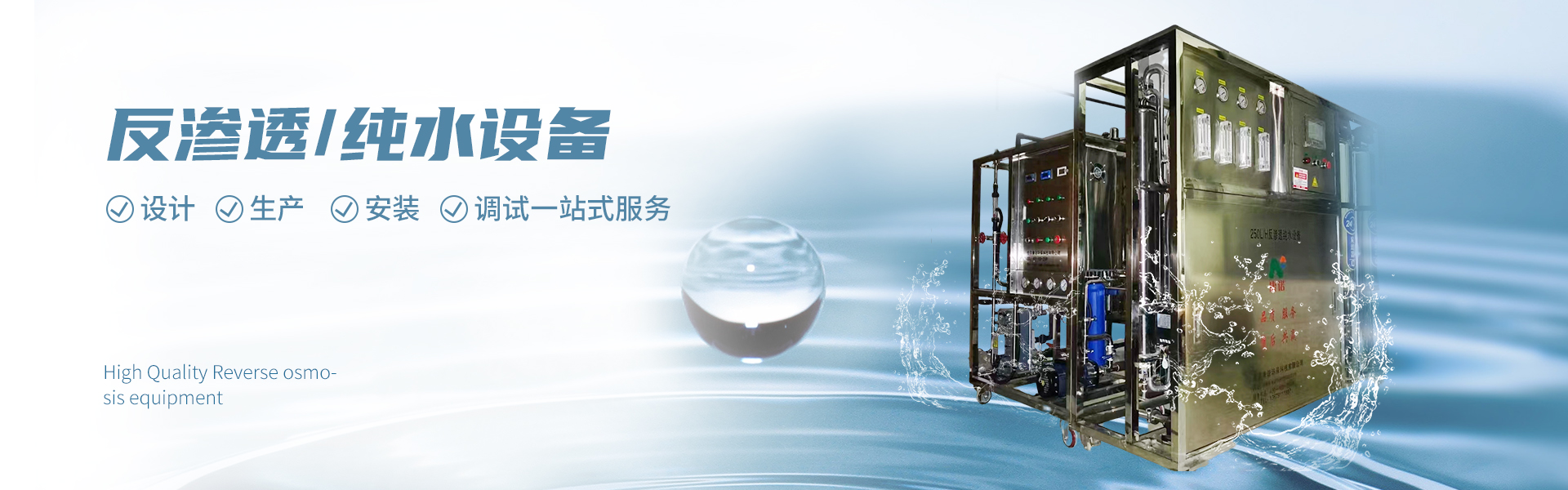
Reverse osmosis pure water treatment equipment has strict requirements for the design, equipment selection, and installation and debugging of the pretreatment system for raw water.
1. Pretreatment of raw water:
When the amount of silt and sand in the raw water is high, a sedimentation pond should be set up to remove the sediment; if the water source is surface water, then flocculants must be used to coagulate and settle the suspended particles before they enter the system.
2. Inflow Pressure:
The system's water inlet pressure must be ≥0.15MPa (gauge pressure). When the water's conductivity is too high, softening treatment or the addition of scale inhibitors is required.
pH Control Range: 5~9
Temperature Requirement: 10-35°C.
Salinity Requirement: 0.05% - 1.0%
6. Conductivity control range: Below 1.0 μScm.
7. Work Cycle: 8-10 hours.
Desalinated Water Quality: Production water conductivity ≤ 0.5 μS/cm.
Recycling Rate: Over 99.9%.
10. Lifespan: Over 20 years.
Reverse Osmosis Pure Water Treatment Equipment Applications
1. Electronic Industry Water Usage: Electronic industry water usage is one of the common application areas in the microelectronics industry, characterized by its high requirement for water quality stability. Apart from a few ultra-large-scale integrated circuits that use high-purity water, most electronic products utilize ordinary tap water as the water source for production and experimentation.
As the integration of semiconductor components increases and process technologies advance, an increasing number of integrated circuits use high-purity, even ultra-pure water as raw materials or cooling mediums in the manufacturing process.
2. In the power industry, boiler补给 for hydropower plants is one of the traditional methods of circulating cooling. When natural water sources are not available due to natural conditions, groundwater or urban wastewater are generally used as supplementary water sources.
3. The chemical industry requires high water quality for the production of many products, such as fertilizers, fine chemical products, and cosmetics, which are made using chemicals and organic solvents.
4. Beverage and Food Processing: The beverage and food processing industry requires a significant amount of water with high quality standards, especially during beer brewing and water treatment, where large amounts of COD are frequently produced. Therefore, the production processes in this industry are often equipped with ion exchange devices to remove calcium and magnesium ions.
5. Desalination of Seawater: With the increasingly scarce ocean resources, the development of seawater desalination technology has become an inevitable choice for coastal areas. However, only a few countries in the world have mastered the core technology of seawater desalination.
