




Is there any dirt on or around the weighing body, and are there any lumps inside the weighing body?
Are there any obstructions in the feeding and discharging mechanisms on the weighing body, and are there any leaks in the feeding and discharging valves?
The weight body has no lumps or blockages in the upper and lower soft connections, and the connection structure is not affected by any external forces. The dust removal device on the weight body is free of blockages or obstructions.
If the weighing body has limit positions, check if the limit gap is reasonable, and the limit bolt should not touch the weighing body.
Check the pressure of the air source and ensure the normal operation of the pneumatic three elements.
Weight sensors and speed sensors
Sensor's point of force: Presence of dirt or rust.
Are the screws securing the sensor or accessories loose or deformed?
Sensor ground wire and return cable for looseness, flow meter manufacturer, rusted.
Sensor cable for any insulation damage, crushing, or bending.
Waterproof connectors for cable entry and exit of junction boxes, check for loose cable connections, and ensure the junction box is not damp, especially when used outdoors.
Electrical Control Cabinet (Box)
Check the accuracy of the scale (calibrate the scale), especially for scales with multiple sensors (more than 3 sensors).
Inspect the wiring terminals of the gauge for looseness, dirt, lumps, and dampness.
Check if the instrument power supply is normal.
Inspect the cables from the junction box to the meter for any signs of insulation damage, crushing, or kinking.
Inspect communication cables from the instrument to the computer or PLC for any signs of insulation damage, crushing, or kinking.
Check the grounding wire and grounding point of the instrument for proper connection.
Regularly dust off the control cabinets (boxes), especially in places with a lot of dust.
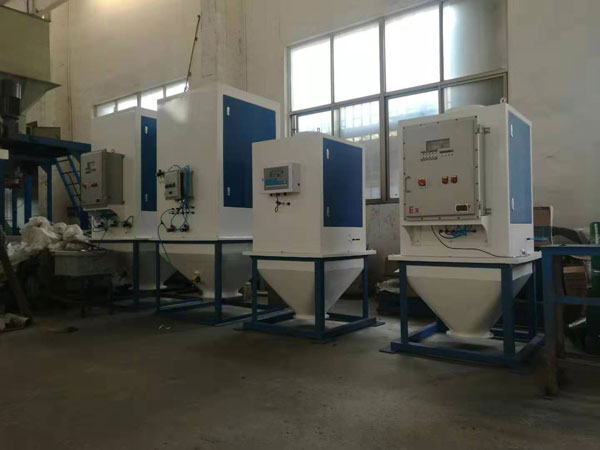
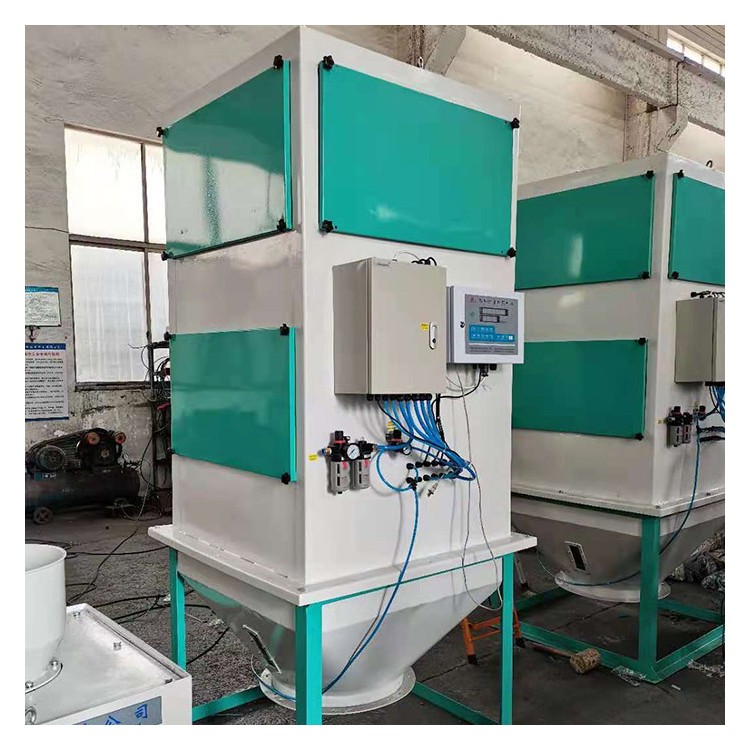
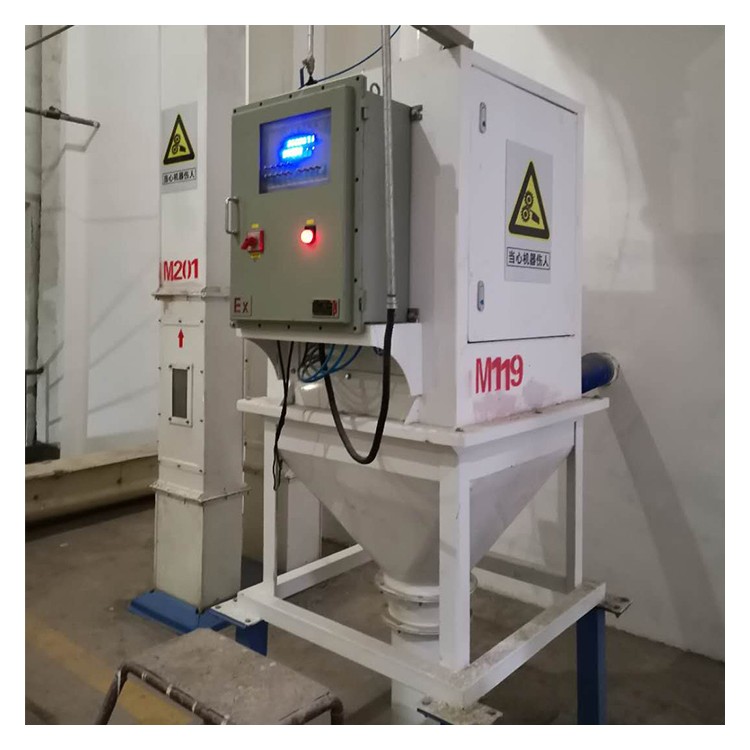
A non-continuous cumulative scale typically consists of a storage hopper, feeding device, weighing mechanism, actuator, electrical control cabinet, and weighing display controller, as well as a discharge hopper. Additionally, auxiliary devices such as a dust removal system and air balance system are required.
1) Material Hopper: Used to store a certain amount of material to ensure a constant flow rate. Typically equipped with a level sensor to ensure the hopper has sufficient material, thereby guaranteeing the continuity and stability of the weighing measurement.
2) Feeding Device: Utilizes a free-fall feeding method, composed of a feeding hopper, feeding door, etc. Accurate multi-level feeding is achieved by controlling the actuator of the feeding door, thereby ensuring the precision of weighing.
3) Weighing Device: Comprised mainly of a weighing hopper, weighing gate, sensor components, etc., it completes the collection of material weight signals. The weighing hopper is equipped with a level gauge to prevent overflow of material. Weighing hopper sides also feature a balance platform for placing weights during calibration.
4) Actuator: Performs feeding, unloading actions, and adjusts feeding speed. Actuators are mostly pneumatic. For flow meter inquiries, a complete pneumatic actuator should include elements such as filters, pressure gauges, oil misters, solenoid valves, and cylinders.
What are the details of using a belt scale?
The belt scale must be sealed equipment, kept dry, and cleaned frequently. It's crucial to calibrate before and after use; calibration is a vital operation. Otherwise, there may be errors. Belt scale prices vary.
On the belt conveyor, a heavy hammer tensioning device should be used. After the belt has been in use for a period of time, it may become longer. In this case, use the heavy hammer device to tighten the belt, ensuring it does not drift off course, and reset it from scratch.
The weigh roller should be lubricated 1-2 times a year, and the flow meter should be reset to zero after lubrication. The belt of the belt scale should be calibrated regularly; it is not allowed to run off track. If the belt is worn out, a new belt should be replaced.
Do not convey overly moist materials to prevent sticking to the belt and causing measurement errors. Regularly clean the belt and ensure it is zeroed for future use.
Flowmeter Inquiry - Flowmeter - Wuxi Rilei Technology Development (View) is provided by Wuxi Rilei Technology Development Co., Ltd. Wuxi Rilei Technology Development Co., Ltd. is a company specializing in "packaging machines, automatic packaging machines, granule packaging machines, powder packaging machines." Adhering to the philosophy of "honest operation, dedicated service," we offer you better products and services. Welcome to call for inquiries! Contact: Manager Tang.

