



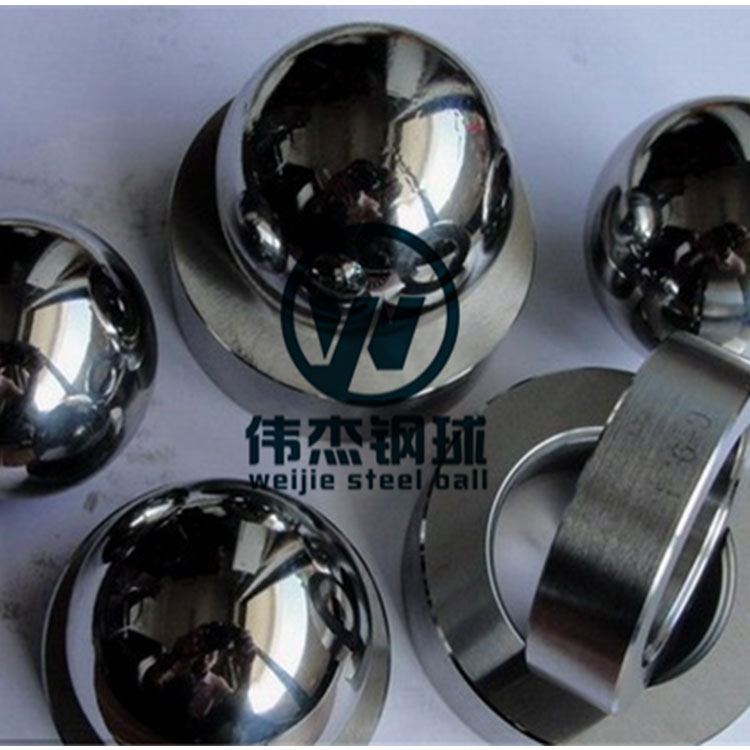
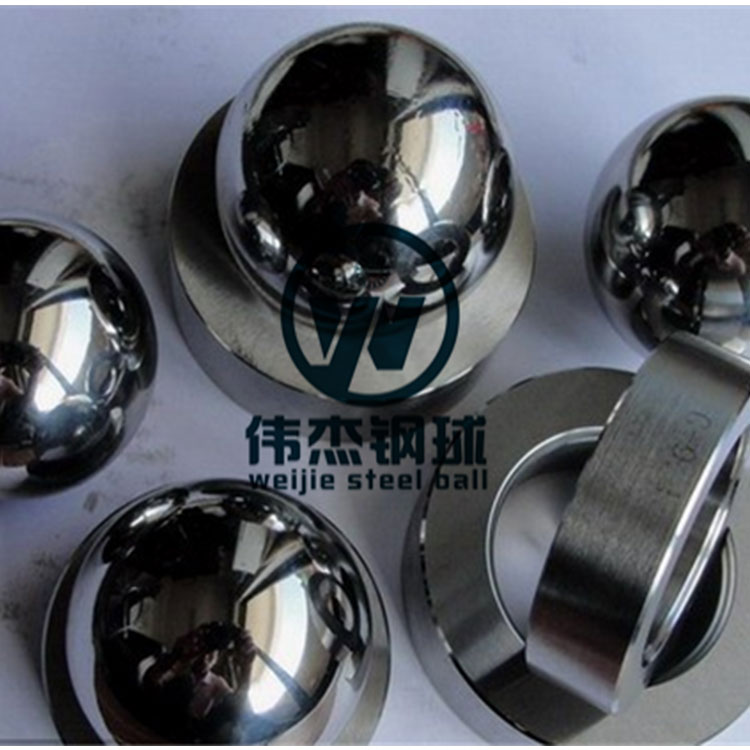
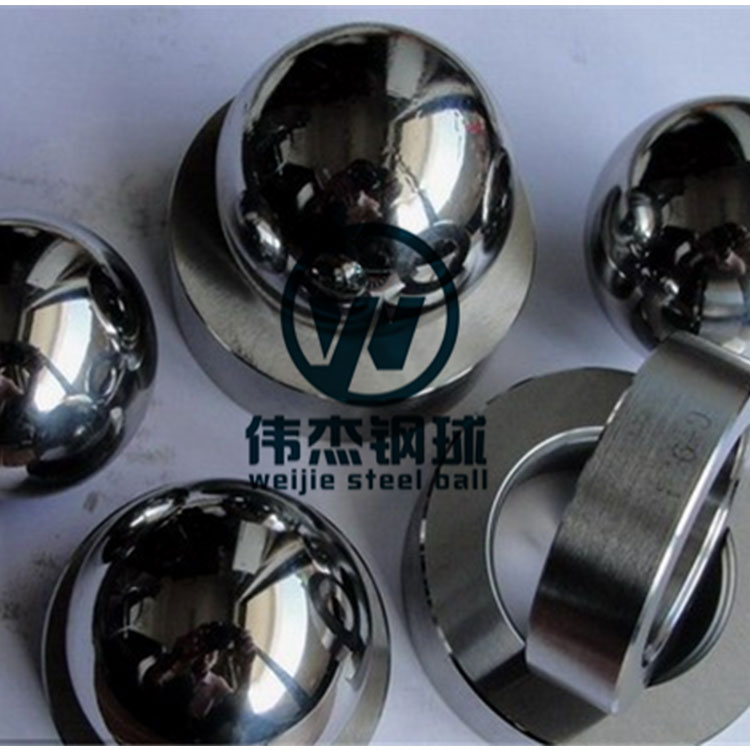

The company specializes in manufacturing tungsten carbide balls made of various materials with sizes ranging from 0.3MM to 76.2MM. We offer custom non-standard sizes (for customer convenience, we have developed a production process for alloy balls with a minimum order quantity of 3 pieces, filling a domestic gap). The precision ranges between G10 and G100. Our products are widely used in bearings, instruments, gauges, various hardware parts punching, valves, grinding, hardness testers, pump valves, oil, chemical industries, and measuring equipment.
The company boasts a team of technical and research experts capable of diagnosing customer needs and offering professional services.
Hardened carbide balls are primarily categorized into tungsten cobalt balls (YG6, YG6X, YG8, YG10, YG13), where the number following YG indicates the cobalt content, e.g., YG6 contains 6% cobalt, with the remaining 94% being WC. Another category is tungsten-nickel alloy balls (YN6, YN8, YN10, YN12), with the number indicating the nickel content. The density of the first two types of alloy balls is 14.6-15.1, and there's also a category of titanium carbide balls, which are lighter.
YG6 Hard Alloy Ball Composition: (Also known as YG6 Tungsten Steel Ball, YG6 Tungsten Alloy Ball)
Product Code | Composition | Hardness | Density | Bending Strength | Metallographic Analysis | |
Tungsten Carbide (WC) | Cobalt | HRA | g/cm3 | g/㎡ | ||
CO | ||||||
YG6 | 94% | 6% | 91 | 14.6-15.0 | 1700 | A02B02C02 |
Tungsten carbide ball | ||||||
Application Fields: YG6 hard alloy balls are widely used in various hardware industries, including valves, bearings, die casting parts, punching parts, grinding, and measurement.
Properties: Main component is tungsten carbide (WC-CO) with high hardness, HRA 90-92, and good wear resistance; its wear resistance is several to tens of times that of steel balls.
YG8 Carbide Ball Composition: (Also known as YG8 Tungsten Steel Ball, YG8 Tungsten Alloy Ball)
Part Number | Composition | Hardness | Density | Bending Strength | Metallographic Analysis | |
Tungsten Carbide (WC) | Cobalt | HRA | g/cm3 | g/㎡ | ||
CO | ||||||
YG8 | 92% | 8% | 89 | 14.4-14.8 | 1800 | A02B02C02 |
Tungsten carbide balls | ||||||
Application Fields: YG8 hard alloy balls are widely used in valves, bearings, die castings, piercing, grinding, measurement, hardness testers, oil, chemical industry, and aerospace.
Features: Mainly composed of tungsten-cobalt alloy (WC-CO), it boasts high hardness and abrasion resistance, with better toughness than YG6 alloy balls. It also exhibits excellent shock and vibration resistance, making it suitable for manufacturing parts that are subject to strong impacts and vibrations.
Punched alloy balls, also known as extruded hole balls or hard alloy punched balls.
Our punched alloy balls are all made from high-quality raw materials, ground to perfection. These products are widely used for punching and polishing in bearings, copper parts, aluminum parts, cast iron, stainless steel, and various other materials. In mechanical processing, steel balls are often used as tools to achieve smooth surface finishing on parts. This process utilizes the high precision, hardness, and low roughness of steel balls to deform the material, thereby improving the dimensional accuracy, hardness, roughness, and production efficiency of the machined surface. Over the years of our design and production in mechanical processing, we have repeatedly employed the steel ball extrusion process for the internal hole machining of parts. Compared to ordinary hard alloy balls on the market, our process has the following advantages:
(1) High density, up to 15.1 g/cm³, low porosity, excellent wear and corrosion resistance, lifespan up to dozens of times longer than regular tungsten carbide balls.
High precision, tolerances not exceeding 0.001MM, good surface finish, no pitting, and surface treated for enhanced durability (a process not commonly available with standard manufacturers).
(3) Can be produced in small batches; the company has developed a process capable of producing 3 units, and the technology for ensuring ellipticity fills a domestic gap.
