



 通过中商114认证
Belt ScaleThe weighing and feeding machine detects the weight of materials on the conveyor belt through a weight sensor located beneath the weighing frame, determining the weight of the materials on the belt. A digital speed sensor mounted on the tail roller or rotating equipment continuously measures the feeding speed, with the pulse output of the speed sensor being directly proportional to the belt speed. The speed signal, along with the weight signal, is sent to the conveyor belt feeding machine controller, which generates and displays cumulative quantity/instantaneous flow rate. The feeding controller compares this flow rate with the set flow rate, and the controller's output signal controls the variable-frequency drive to adjust the speed, achieving the requirement for quantitative feeding (as shown in Figure 1).
The superior PC can set various related parameters and achieve automatic system control with the PLC. It operates in two modes: automatic mode and semi-automatic/manual mode.
Automatic Mode
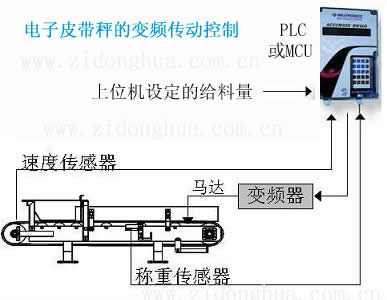
Figure 1: Schematic Diagram of the Weighing Feeding Machine Operation Principle
By selecting a pre-programmed recipe on the industrial control panel, the system is initiated upon confirmation of the recipe. The ingredient system automatically controls the operation of the ingredient feeders according to the recipe settings.
Semi-automatic Mode/Manual Mode
Manual setup of the formula proportions on the controller, manual activation of the controller, and the ZT3000 totalizer controlling the variable-frequency drive and the weighing feed hopper for adding materials.
2.1.2 System Composition
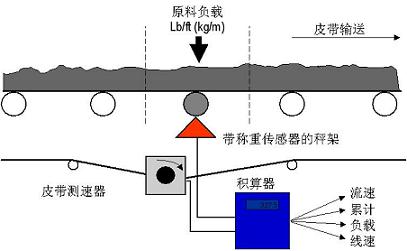
Figure 2: Schematic Diagram of the Weighing Feeding Machine Composition
The weighing and feeding machine system includes: the weighing frame (including the mounting bracket), weighing sensors, speed sensors, manual hanging weight verification device, anti-deviation measures, head scraper, internal cleaning, tensioning device, the sealed cover for the batching scale, support frame, conveyor belts, rollers, structural components (including the discharging hopper with a lining plate at the discharge end, a drag hopper at the drag end with a manual regulating door, etc.), variable frequency speed control motor, junction boxes and connecting cables (between the weighing sensors), communication connection facilities (for the weighing and feeding machine system), digital display meters, calibration and adjustment equipment, complete instrument panels, etc. (as shown in Figure 2).
The core component of the weighing and feeding machine is the belt scale (as shown in Figure 3). The main composition of the belt scale consists of a weighing frame, a totalizer, and a speed sensor; the structural characteristics and precision of the weighing and feeding system are primarily determined by the design structure of the belt scale.
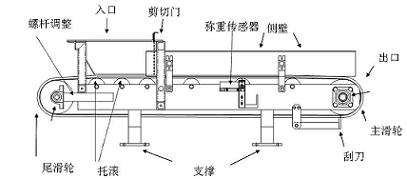
Figure 3: The belt scale is the core component of the weighing feeding machine.
2.2 Technical Features
The weigh feeding machine boasts its unique features in the structure of the belt scale's weighing frame, the totalizer, and the overall design of the weigh feeding machine. The TDG series feeding machine utilizes a direct-bearing weighing frame structure and the ZT3000 totalizer. This simplified weighing frame structure of the scale reduces the unnecessary load of the weighing system, offers appropriate range and sensitivity, and has a distinct advantage for low-flow weighing.
2.2.1 Scale Frame Structural Features
The design of the weighing frame for the belt scale is highly distinctive. Unlike the commonly used lever-type weighing frame design, it employs a direct-loading weighing frame structure known as "Three No's," which means: no lever, no fulcrum, and no balancing weight (as shown in Figure 4), i.e., no weighing carrier. The benefits of this design are quite apparent:
Ease of maintenance
The lever-scale frame lacks a fulcrum, movable parts, and issues like fulcrum wear. The lever-scale frame has a larger body and a larger surface area in the horizontal plane, requiring frequent cleaning of the large area of dust accumulation to prevent zero-point variation. Conversely, the direct-loading frame is shorter and has a smaller surface area in the horizontal direction, with minimal dust accumulation. As a result, the zero-point variation caused by dust is also minimal, making frequent cleaning unnecessary.
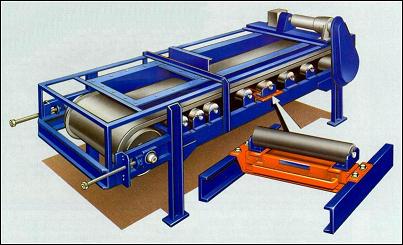
Figure 4: Diagram illustrating the principle of direct-bearing scale frame
The scale frame has a simple structure.
The direct-bearing scale frame structure ensures that the weight of the material is directly applied to the weighing sensor via the roller assembly, weighing both tare and material weight simultaneously. Consequently, the frame structure is exceptionally simple and lightweight.
The weighing frame features modularity and good versatility.
The scale frame structure is not only simple but also highly adaptable to different widths of belts, with components being universally applicable. Aside from the respective widths of the static and dynamic beams, the rest of the parts are almost identical. Moreover, the modular design significantly reduces the workload and costs associated with maintenance and replacement of spare parts.
Scale Rack with High Precision
Due to the use of the high-precision patented three-beam parallelogram weighing sensor, the influence of horizontal force caused by friction between the belt and the support rod on the accuracy of the belt scale is completely avoided. Its repeatability is 0.01%, and both non-linearity and hysteresis are 0.02%. This high accuracy is not only sufficient but also offers room for the nominal accuracy of 0.5% for the weighing feeder. Additionally, the direct-bearing structure also reduces measurement accuracy loss from these components and the mechanical vibration during material conveying that affects the weighing system.The interference.
