
Magnesium sulfate heptahydrate and anhydrous magnesium sulfate exhibit significant differences in various aspects. Below is a detailed analysis of the distinctions between the two.
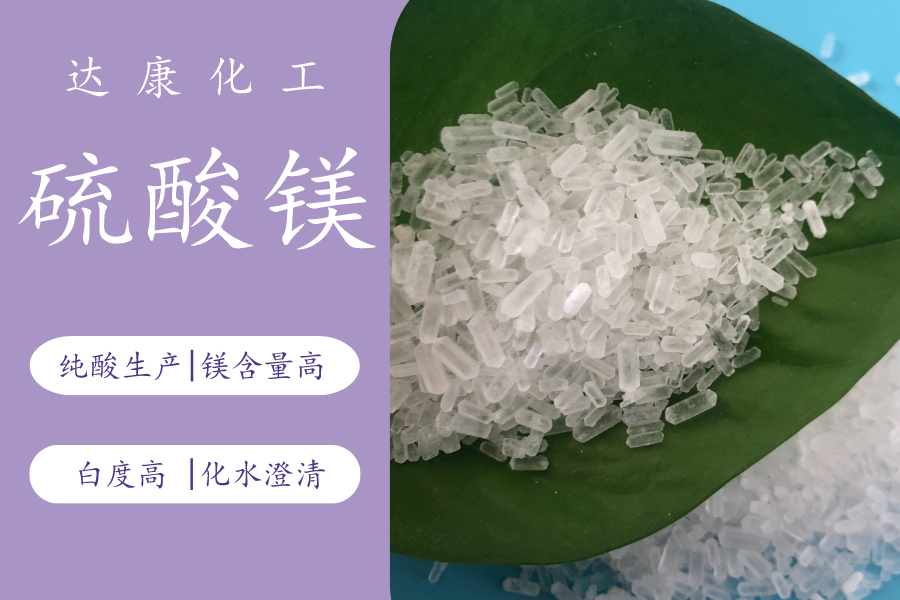
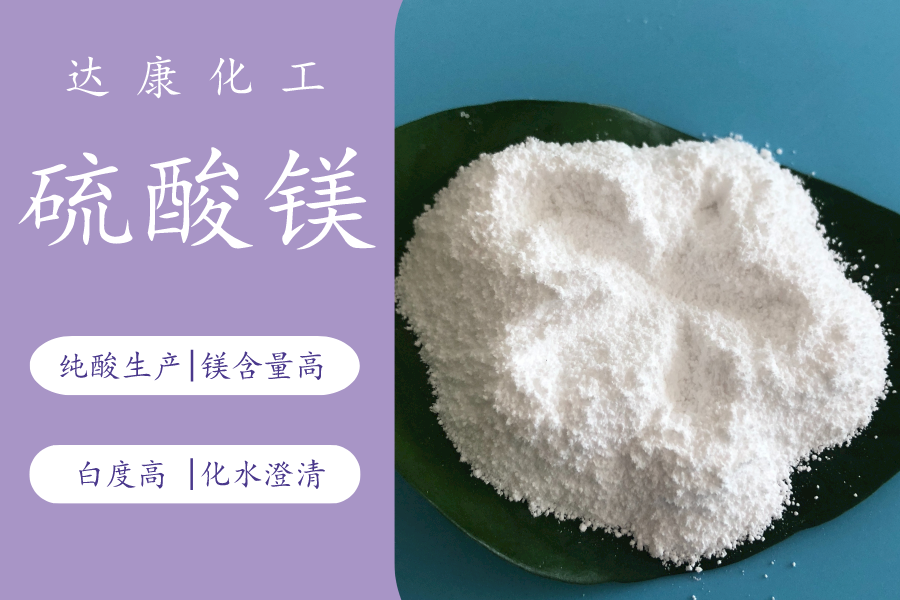
### I. Appearance - **Magnesium sulfate heptahydrate**: It appears as white or colorless needle-like or bladed-columnar crystals, odorless, cool, and slightly bitter. Its form is stable and not easily altered. - **Anhydrous magnesium sulfate**: It is a white powdered solid, distinctively different from the crystalline form of magnesium sulfate heptahydrate.
### II. Chemical Composition * **Magnesium sulfate heptahydrate (MgSO4·7H2O)**: Contains 7 molecules of crystalline water, with a molecular weight of 246. * **Anhydrous magnesium sulfate (MgSO4)**: Does not contain crystalline water, with a molecular weight of 128. Therefore, the magnesium content in anhydrous magnesium sulfate is 1.78 times that of magnesium sulfate heptahydrate (246/128≈1.78).
### Physical Properties * **Solubility**: Both are soluble in water; however, the specific solubility and rate of dissolution may vary depending on the form and the presence of crystalline water. * **Density and Melting Point**: Due to the presence of crystalline water, the density and melting point of magnesium sulfate heptahydrate may differ from anhydrous magnesium sulfate. Specific values can be found in relevant chemical handbooks or databases.
### Four, Applications * **Magnesium sulfate heptahydrate**: + Can be used as a food fortifier in food. + In the industrial sector, it is often used with calcium salts in distilled water to enhance water hardness. + It is also used in leather making, papermaking, enamelware, and as an additive in mineral water. + In agriculture, it serves as a magnesium fertilizer with high solubility. * **Anhydrous magnesium sulfate**: + It is a commonly used chemical reagent and drying agent. Due to its quick absorption of water and neutral nature, it does not react chemically with various organic substances, making it widely used in the drying process of the dyeing industry. + It can also be used as feed, acting as an activator for multiple enzymes and playing a crucial role in sugar and protein metabolism. + It can be used as fertilizer or compound fertilizer, and is also a raw material for the production of magnesium oxide.
### Stability and Conversion * **Magnesium sulfate heptahydrate**: It is prone to deliquesce into a powder in the air and gradually loses its crystalline water when heated, transforming into anhydrous magnesium sulfate. * **Anhydrous magnesium sulfate**: It can convert back to magnesium sulfate heptahydrate upon absorbing water, achieving a reversible conversion between the two.
In summary, there are significant differences between magnesium sulfate heptahydrate and anhydrous magnesium sulfate in terms of appearance, chemical composition, physical properties, applications, and stability and conversion. These differences result in their distinct roles within their respective application fields.