
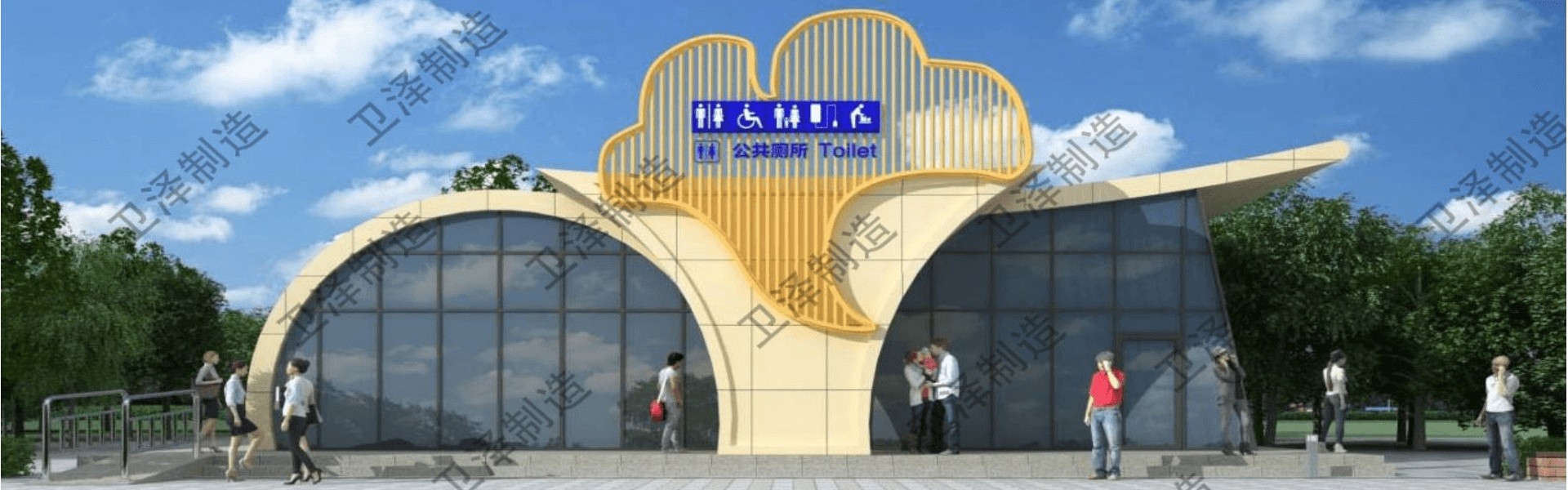

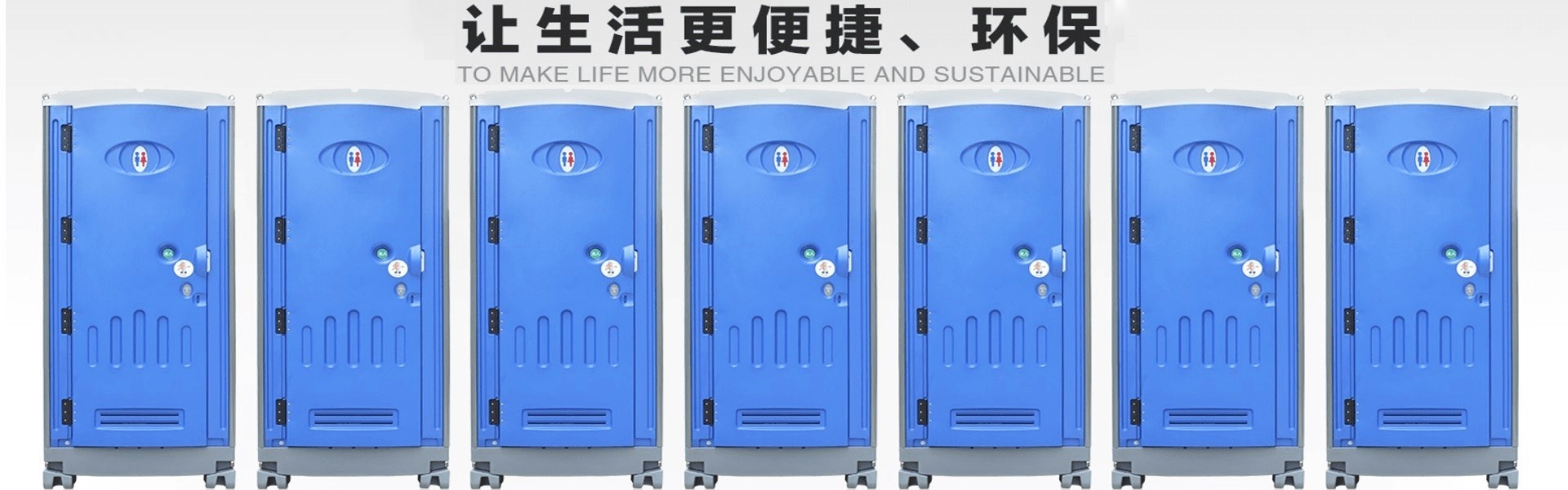

At city street corners and garden leisure areas, we can see portable toilets at any time, protecting the environment and meeting people's hygiene requirements for restrooms. But what are the main technical principles of portable toilets? Follow the portable toilet editor to find out.
The portable international non-inspection skeletal structure has wall thicknesses of 1.2mm or more, treated with anti-corrosion measures. It can be moved by hoisting or shoveling, ensuring product stability. The exterior walls are constructed with imported metal thermal insulation embossed panels or aluminum-plastic panels, while the interior panels use sandwich color steel plates. This material offers corrosion resistance, easy cleaning, and thermal insulation. The internal walls are reinforced with steel structures, providing sufficient strength. The external surface of the steel structures is coated with anti-rust paint, ensuring their corrosion resistance. The toilet ceiling is made of high-strength plastic tiles.
Eco-friendly portable toilets use foam instead of water for flushing. Once the foam mixture is transformed into foam through the action of gas, its volume expands a thousandfold, demonstrating significant water-saving effects. It also blocks unpleasant odors and enhances pipe lubrication, allowing waste to slide smoothly. The waterless portable toilet kits employ urine-separation technology, treating solid waste biologically, converting the majority into colorless and odorless gases like CO2, H2O, and N2, leaving only trace amounts of inorganic residues like calcium and magnesium. The liquid waste enters the urine collection and treatment system, where it is processed with a blend of microbial strains, resulting in water quality that meets middle water standards.
Toilets are a symbol of civilization for a country and region. How to scientifically construct toilets and how to reasonably allocate male and female stalls have become hot topics at the 11th World Toilet Summit currently underway. Experts from around the world are discussing the current state and future development of global sanitation.
