日期:2023-09-11 浏览:78
Stainless steel is a general term for steel that resists corrosion from weak corrosive media such as air, steam, and water, as well as chemical侵蚀性介质 like acids, alkalis, and salts. The chromium alloying element in stainless steel reacts with oxygen and oxidizing agents in the corrosive medium, forming a self-passivating oxide film of Cr2O3 on the steel surface after the reaction. This oxide film prevents further corrosion of the steel matrix and can immediately form in air or water, even repairing itself after scratches or damage.
Stainless steel is categorized by its matrix structure into ferritic, martensitic, and austenitic types, and by composition into precipitation hardening series (SUS600), Cr series (SUS400), Cr-Ni series (SUS300), and Cr-Mn-Ni (SUS200).
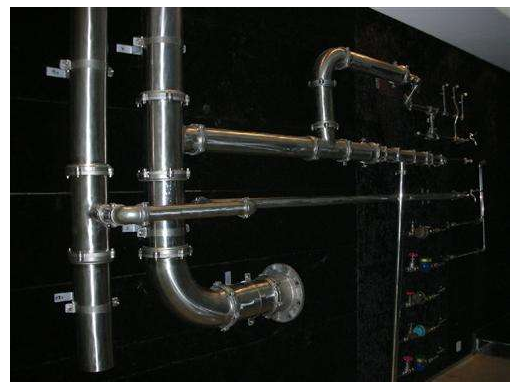
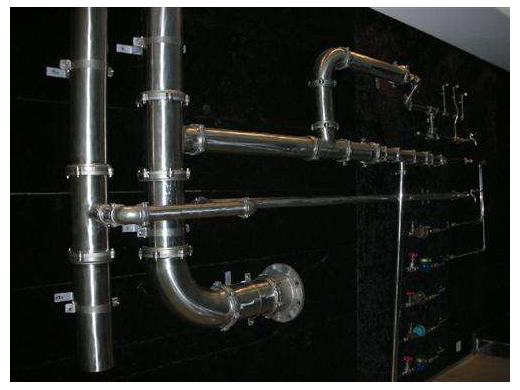
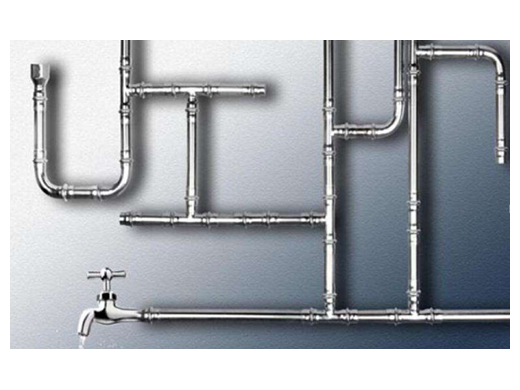
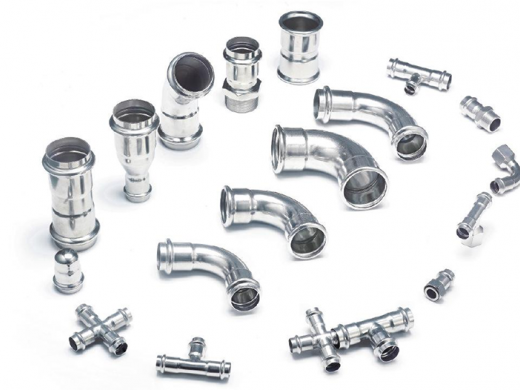
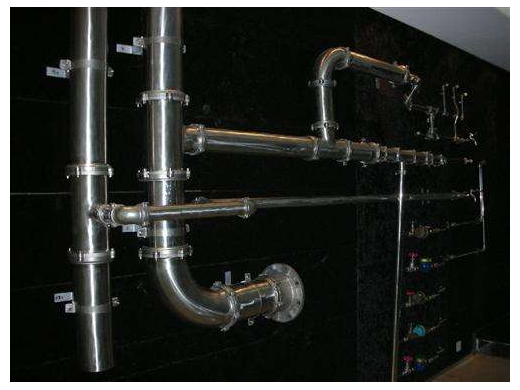
Stainless steel pipes and fittings, after undergoing purification, acid washing, and passivation processes, result in an increased thickness and improved uniformity of the Cr2O3 passivation oxide film. When stainless steel fittings are treated with the finishing process and stainless steel pipes are polished, not only are surface defects eliminated, but the passivation film becomes finer and denser, reducing the likelihood of pitting corrosion. Additionally, the polished interior of the fittings has a smooth surface with low friction, thereby saving energy consumption. Thus, stainless steel pipes not only possess high strength, excellent corrosion resistance, and good toughness, but also feature vibration and shock resistance, non-brittle at low temperatures, durability, and the ability to be recycled for decorative materials. They are widely used in construction and installation materials.
GB/T12771-2008 defines thin-walled stainless steel pipes as those with a wall thickness to outer diameter ratio not exceeding 3%. Currently, the industry requires thin-walled stainless steel pipes to have a wall thickness of not less than 0.6mm, typically ranging from 0.6mm to 2mm. These pipes are generally manufactured by rolling and coiling steel pipes, followed by welding using automatic argon arc welding or other fusion welding techniques. Building-grade thin-walled stainless steel pipes and fittings contain over 12% chromium (Cr) and are alloyed with other metallic elements to form austenitic crystal structures. Research has shown that the addition of nickel (Ni) can enhance the material's ductility and toughness, making it easier to form and bend; reducing carbon (C) content can improve welding properties; and adding molybdenum (Mo) or manganese (Mn) can enhance the material's resistance to pitting and seam corrosion.