
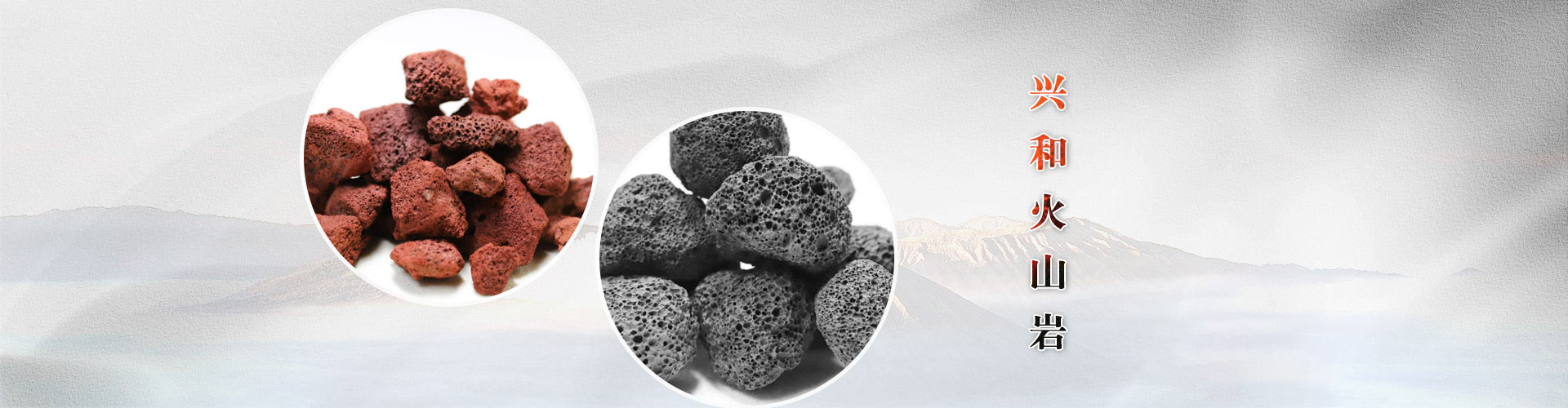
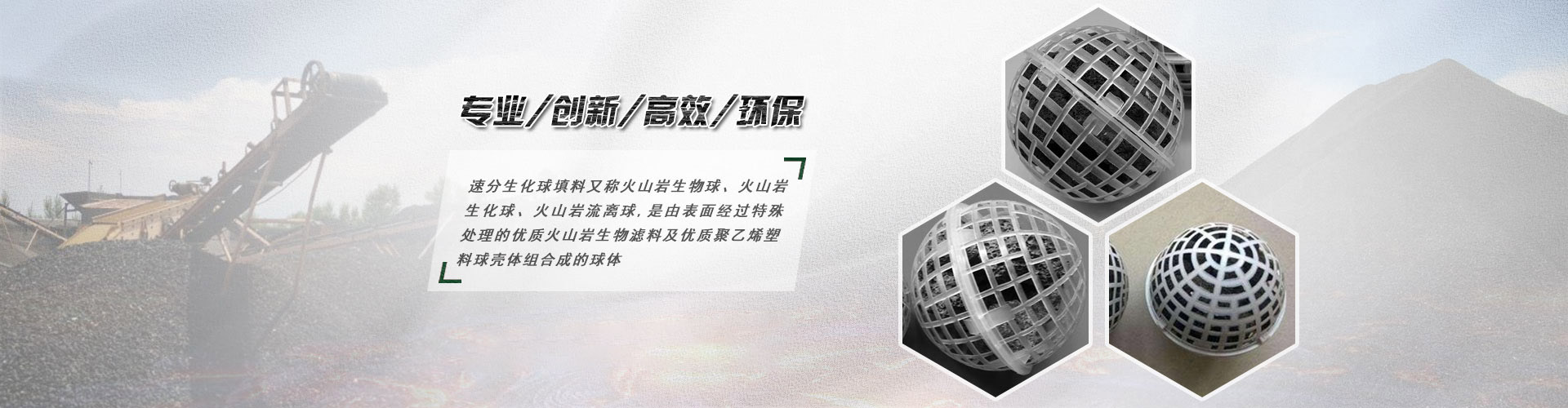

Volcanic rock filter media is a general term for volcanic rock water treatment products, including both volcanic rock filter media and filling materials.
Volcanic rock is formed by volcanic activity. Magma beneath the earth's surface erupts or gushes out along fractures or weak areas, spewing onto the ocean and land surfaces. Some of it flows and cools into volcanic lava on the surface or in water, while others fall as volcanic ash from the air, forming tuffaceous rocks. After cooling, volcanic rock is reddish-brown, porous, lightweight, and abundant, making it widely used in industrial production, particularly in the construction and wastewater treatment industries.
Volcanic rock biological filter media primarily serve to cultivate microorganisms during biological wastewater treatment. Due to their rough surface with numerous pores, lightweight texture, good chemical properties, suitable strength, well-developed and reasonably distributed roughness and voids, they are resistant to rinsing and clogging, and possess excellent physical, chemical, and hydraulic characteristics. These features make them adaptable to various wastewater purification requirements. Their properties are particularly suited for the growth and reproduction of microorganisms on their surface, forming a biofilm. Volcanic rock filter media enable aeration biological filter pools to not only process municipal wastewater, as well as biodegradable organic industrial wastewater, domestic drainage, and slightly polluted water sources, but can also replace quartz sand, activated carbon, and anthracite as filtration media in water supply treatment. Additionally, they can be used for advanced treatment of effluent from secondary treatment processes in wastewater treatment plants, with the treated water meeting recycled water standards for reuse.
I. Physical Properties of Volcanic Rock Biofilter Media:
1. Appearance and Shape: Free from sharp particles, offers low resistance to water flow, is not prone to clogging, and distributes water and air evenly; rough surface facilitates quick biofilm formation, and the biofilm is less likely to detach during backwashing.
2. Porosity: Volcanic rock is naturally honeycomb porous, making it an ideal growth environment for biofilm.
3. Mechanical Strength: Certified by the national quality inspection department at 5.08 Mpa, it has been proven to withstand various levels of hydraulic shearing forces, significantly extending its service life compared to other filtration materials.
4. Density: Moderately dense, it is easy to float during backwashing without losing material, contributing to energy conservation and cost reduction.
Chemical Characteristics of Volcanic Rock Biofilter Media:
Chemical composition as follows:
Chemical Composition: SiO2, CaO, MgO, Fe2O3, FeO, Al2O3, TiO2, K2O, Na2O
53.82% 8.36% 2.46% 9.08% 1.12% 16.89% 0.06% 2.30% 2.55%
1. Biochemical Stability: Volcanic rock biofilter media is resistant to corrosion, inert, and does not participate in biochemical reactions of biofilms within the environment.
2. Surface Electricity and Hydrophilicity: The volcanic rock biofilter has a positively charged surface, which is conducive to the adhesion and growth of microorganisms. It exhibits strong hydrophilicity, leading to a high quantity and rapid formation of the attached biofilm.
3. Impact on Biofilm Activity: As a biofilm carrier, the volcanic rock biofilter is harmless and non-inhibitory to the microorganisms it fixes, with practice proving it does not affect microbial activity.
Section 3: Hydraulic Characteristics of Volcanic Rock Biofilter Media
1. Porosity: The average internal and external porosity is around 40%, offering low resistance to water flow. Additionally, compared to similar filter materials, less quantity is required to achieve the expected filtration goals.
2. High Specific Surface Area: The high specific surface area, high porosity, and inertness are conducive to the adhesion and growth of microorganisms, maintaining a larger quantity of microorganisms. This facilitates the mass transfer processes of oxygen and nutrients required during the metabolic process of microorganisms and the transfer of waste products produced by metabolism.
3. Filtration Material Shape and Water Flow: As the volcanic rock bio-filtration material is non-pointy and has larger pore sizes compared to ceramic beads, it offers less resistance to water flow during use, thereby saving energy consumption.
