


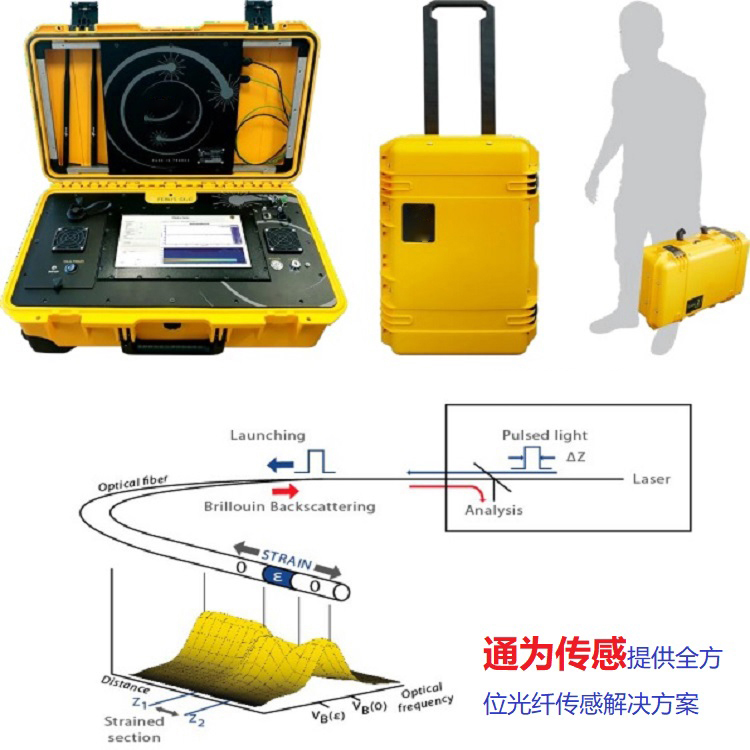

PortableDistributed Fiber Optic Strain&Temperature Measurement System | FEBUS G-C
BOTDR
Portable Distributed Fiber Optic Strain andTemperature Measuring Equipment:
Stress and Temperature Measurement
Single-end connection
Easy to install and use
Choice under stringent conditions
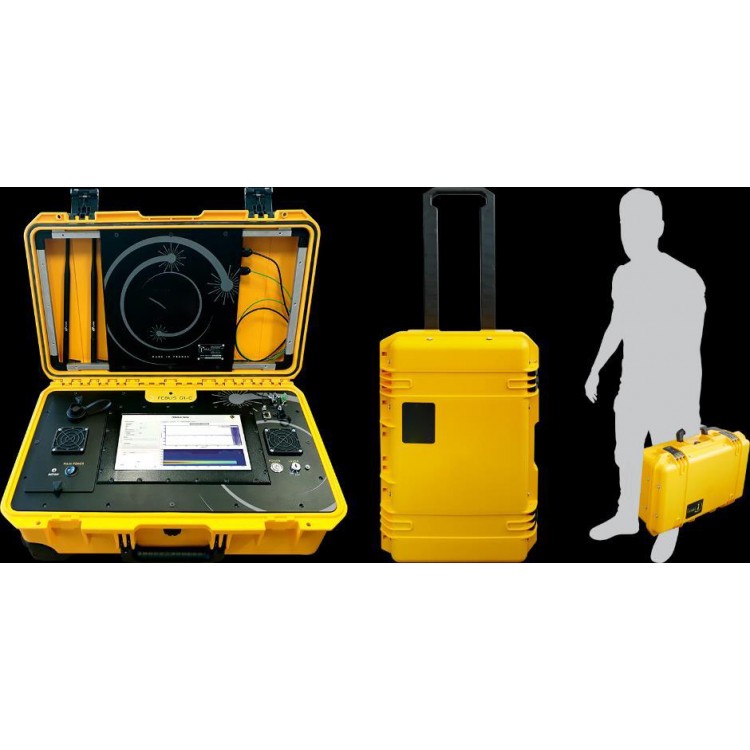
Easily portable (with wheels, weighs approximately 17 kg)
Self-powered with built-in batteryOperational2 hours)
Ø Plug and Play: From Start to FinishComplete within 3 minutes
Advantages Overview
PortableThe FEBUS G1-C Distributed Fiber Strain & Temperature Measurement System provides strain and temperature information at every meter (typical value) along tens of kilometers of optical fibers deployed within infrastructure. This system is specially designed and developed for use anywhere, and quickly achieves the Bragg measurement objectives. It is also particularly suitable for harsh environments and single-ended measurement requirements. Additionally, we offer personalized customization services for the FEBUS G1-C.
Site Inspection
Optical Fiber Deployment (via experienced partners)
· WithSCADA or similar for use with
· 2-year warranty and optional maintenance plans
Brioullin scattering
As light propagates along the fiber, a small portion of the energy is backscattered. This small portion of energy travels at a wavelength known as Brillouin frequency shift. This frequency shift is caused by temperature and strain variations. This is how we measure these two parameters.
Optical Time-Domain Localization
As the pulsed light propagates along the fiber, Brillouin scattering occurs precisely at the moment the pulse reaches that point. Since the speed of light in the fiber is completely known, the precise location of each scattering point can be determined. This is our method for locating measurements.
Primary Advantages:
User-friendly interface
User-oriented interface
Data Format: Text format file compatible with any software(Excel, Matlab,…)
Advanced measurement visualization (raw and engineering values)
The FEBUS G1-C Distributed Fiber Strain & Temperature Measurement System is an ideal device for many applications requiring rapid Brillouin measurements, and it can be used in various scenarios such as:
Civil Engineering Infrastructure Monitoring: Tunnels, Bridges, Large Buildings, Nuclear Power Plants...
Water Resources Infrastructure Monitoring: Dams, levees, docks...
Onshore and nearshore oil and gas:
Pipes, risers, oil pipes, and pipe-in-pipe
Umbilical Cable
Ocean Platform Monitoring
Oil well
Land Monitoring: Landslide Prevention, Mine Safety, Sewage Ponds, etc.
|
Performance Parameters |
Measurement Range |
30 km (@1mSpatial Resolution) / 50 km (@2m) / 100 km(@10m) |
|
Spatial Resolution |
1 m |
|
|
Sampling Interval |
0.1 m |
|
|
Measurement Repeatability (2б) |
10 µm/m or 0.5 °C at 1 km – 1mSpatial Resolution –10 sec Harvest Time |
|
|
20 µm/m or 1 °C at 50 km – 5mSpatial Resolution – 15 minCollection Time |
||
|
Dynamic Range |
12 dB at 1 mSpatial resolution Pre3Large kilometer wear can be increased6 dB |
|
|
Optical Properties |
Number of channels |
1 Channel |
|
Sensor Configuration |
Single-end (Connects to one end of the fiber optic cable) |
|
|
Fiber Optic Sensor Requirements |
Single-mode fiber optic |
|
|
Fiber optic connector |
E2000/APC |
|
|
Technical Data |
Operating System |
Linux (Ubuntu based) |
|
Communication Interface |
Wi-FiAndEthernet |
|
|
Local Data Format |
Text Files (Brillouin spectrum and temperature/strain data) |
|
|
Data Transmission Protocol |
MODBUS, FTP, interoperability with other parties SCADA |
|
|
Display |
Touchscreen |
|
|
External Interface |
USB x2 |
|
|
Power Consumption (High Value) |
100 W:Battery can operate continuously2 Hourly time* |
|
|
Dimensions |
55 x 35 x 25 cm |
|
|
Weight |
15 kg |
|
|
Environmental Conditions |
Operating Temperature Range |
0 °C to +40 °C |
|
Storage temperature range |
-10 °C to +60 °C |
|
|
Typical Environment |
Engineered for extreme environments |
