


After a fire, the decision on how to repair or demolish and rebuild a building should not be made based on intuition alone. A structural safety assessment of the property must be conducted, and a scientifically and reasonably sound fire-damaged property reinforcement and repair plan should be formulated based on the results of the assessment and relevant standards.
One: Methods for Reinforcing Fire-Damaged Houses
Common methods for reinforcing fire-resistant houses include: increased cross-section reinforcement, concrete replacement reinforcement, bonded steel plate (angle iron) reinforcement, and bonded carbon fiber cloth reinforcement, among others.
The Cross-Section Reinforcement Method involves removing the damaged concrete from the original component, thoroughly cleaning the interface between new and old concrete, applying an adhesive or bonding agent around the component, and then pouring new concrete as an outer layer. The increased cross-sectional size should meet the strength design requirements and should also allow for sufficient space to place reinforcement, with the concrete poured smoothly. The thickness of the outer layer should be no less than 60mm. Additionally, the original component's concrete strength grade should not be lower than C10.
The concrete replacement reinforcement method is similar to the increased cross-section reinforcement method, differing in that it involves entirely removing the original concrete components and then reconfiguring/compensating with reinforced concrete. After reinforcement, the structure can be restored without affecting the clear space of the building, and is primarily used for reinforcing components with low concrete strength or severe defects.
The steel plate (angle steel) reinforcement method is a technique that involves bonding steel plates to the surface of reinforced concrete members. This method results in minimal increase in the member's cross-sectional dimensions yet significantly enhances its load-bearing capacity. To ensure the steel plates adhere closely to the member's surface, the original surface must be ground smooth, free of debris and dust. The steel plates and spacers should not be bent, and when welding steel plates, clamps should be used to securely hold the steel sections. When using helical gaskets, after tightening the nuts, it is advisable to weld the nuts to the washers. A special adhesive is used to fill the gap between the steel plate and the original member, bonding them together into a reinforced structure. The original member's concrete strength grade should not be lower than C15.
Bolted Reinforcement Method: For reinforced concrete components that have only partial strength after a fire, and where increasing the cross-sectional area of the components is not permitted due to local issues, the bolted reinforcement method can be employed. The locally burned parts of the original component's outer surface are chiseled away, then a sleeve is fitted and焊接 connected. A gap is left between the sleeve and the column concrete, and high-strength fine stone concrete or high-strength polymer mortar is then灌入. The original component's concrete strength grade should not be lower than C15.
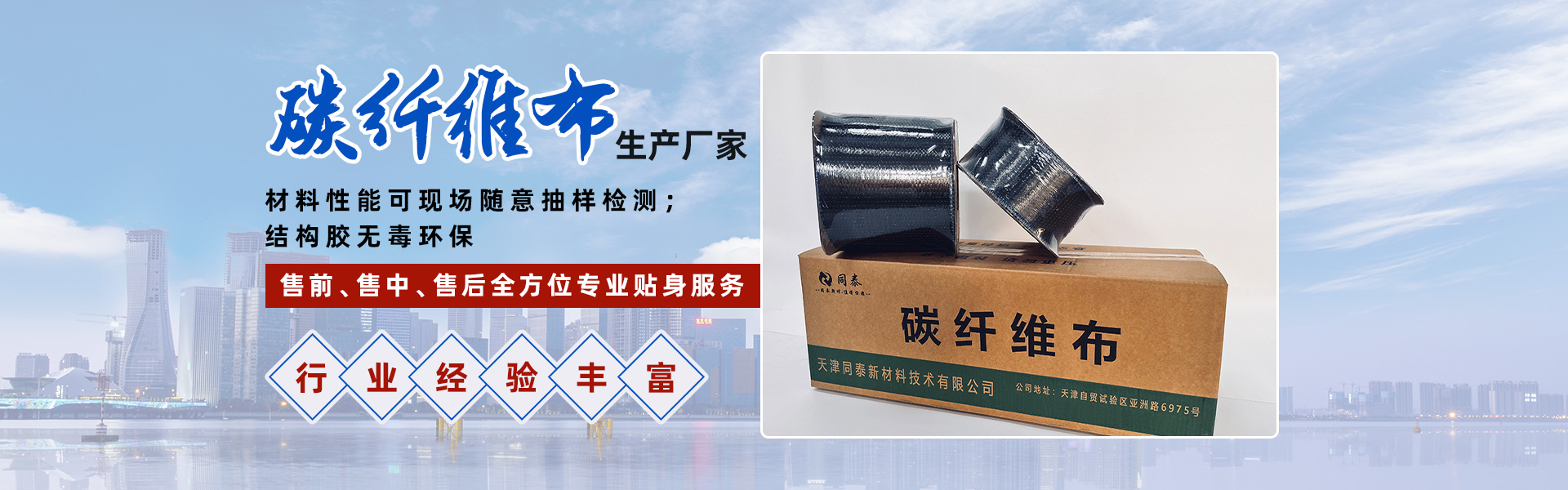
The Carbon Fiber Tape Lamination Method: Similar to the steel plate (angle steel) lamination method, but with the characteristics of a very thin thickness and light weight, as well as strong formability, allowing for flexible construction to match the structure's shape. It can be laminated in multiple layers (but not exceeding three). The original component concrete strength grade should not be lower than C15.
In summary, the commonality among various methods for reinforcing fire-damaged houses is that first, the damaged concrete must be removed, and steel reinforcement may be added as necessary to ensure the structural components have full load-bearing capacity. The cross-section is then restored or enlarged using the appropriate concrete in the required dimensions. Reinforcement can be achieved through methods such as replacement, wrapping, bonding steel, and adhering carbon fiber fabric.
Selecting Principles for Reinforcement Methods of Fire-Damaged Houses
Simple, efficient, and reliable; pay attention to the node construction and construction methods of the reinforced components, ensuring the reinforced part works together with the original structure, and consider the impact of reinforcement on the overall stress changes of the building.
Section 3: Case Study Analysis of Fire-Damaged House Reinforcement
Here is a specific example of reinforced design for an industrial factory building after a fire and the actual practice of fire-resistant construction for the damaged building:
A factory building is a three-story concrete frame structure. The fire-affected area is primarily the second floor, with rubber products as the burning material. The fire burned for approximately 4 hours, causing local columns to fracture or severely damage. Beams and slabs were heavily damaged, with exposed steel reinforcement and concrete spalling. In some areas, the floor joists were completely burned through. Core sampling tests on the concrete components revealed compressive strengths ranging from C15 to C25.
Through analysis of the testing and identification results, and a comprehensive assessment of the structural damage, our company has formulated a reinforcement construction plan for the fire-damaged house: dangerous and severely damaged beams and columns are reinforced with concrete replacement, moderately damaged beams and columns are reinforced using increased cross-sectional area methods and bonded steel plates (angle steel), and severely damaged floors are reinforced with concrete replacement. Moderately damaged floors are repaired with high-strength epoxy mortar before being reinforced with carbon fiber. For minor damage that does not affect the load-bearing capacity of structural components, the loose concrete sections are removed, and the surface is filled with high-strength epoxy mortar to ensure that the steel reinforcement is not corroded.
Prior to the concrete replacement and reinforcement of beams and columns, proactive support and unloading measures were implemented. Additionally, the bearing conditions of the original structural components throughout the construction process were calculated, observed, and controlled. Simultaneously, during the reinforcement design phase, a review calculation of the overall building structure was conducted to prevent the redistribution of stress due to the reinforcement of individual components, thereby avoiding overcorrection.
In the fire-resistant design for the damaged house, concrete replacement reinforcement was employed for the three edge frame columns that were broken due to the disaster, ranging from 9-11xD. Meanwhile, the frame beam from 9xC to -D at 9xD sank by 7cm. Other beams in severely affected areas by the fire exhibited cracking and damage, hence most of the beams and slabs in this region were reinforced with concrete replacement or increased cross-sectional reinforcement.
Prior to removing the original 9-11xD column concrete structure, the floor slabs within the column's bearing area in severely damaged areas were removed and unloaded to reinforce the concrete. Simultaneously, the surrounding columns were strengthened with increased cross-sections, reducing the load on the already fractured 9-11xD columns, and providing a safe and reliable guarantee for the later elevation and repositioning of the frame beams in the 9xC-D area and the 3rd floor 9xD column area components.
Prior to the construction of the fire-damaged house reinforcement project, a jacking support system was implemented. During the construction, a dedicated person monitored the deformation of key structural components, the verticality of the overall support system, and the jack pressure values to ensure safe and reliable construction through信息化 guidance.
Following the completion of the reinforcement construction on the fire-damaged house, observations of deformation and the results from nearly one year of use indicate that the structural components now fully meet safety requirements after the reinforcement measures were taken. Additionally, it demonstrates that compared to demolition and new construction, the reinforcement and restoration of the fire-damaged house can reflect better economic, social, and environmental benefits.
Tianjin Tongtai New Material Co., Ltd. is committed to providing reinforcement materials for construction, becoming a trusted brand in reinforcement materials for our clients.
