




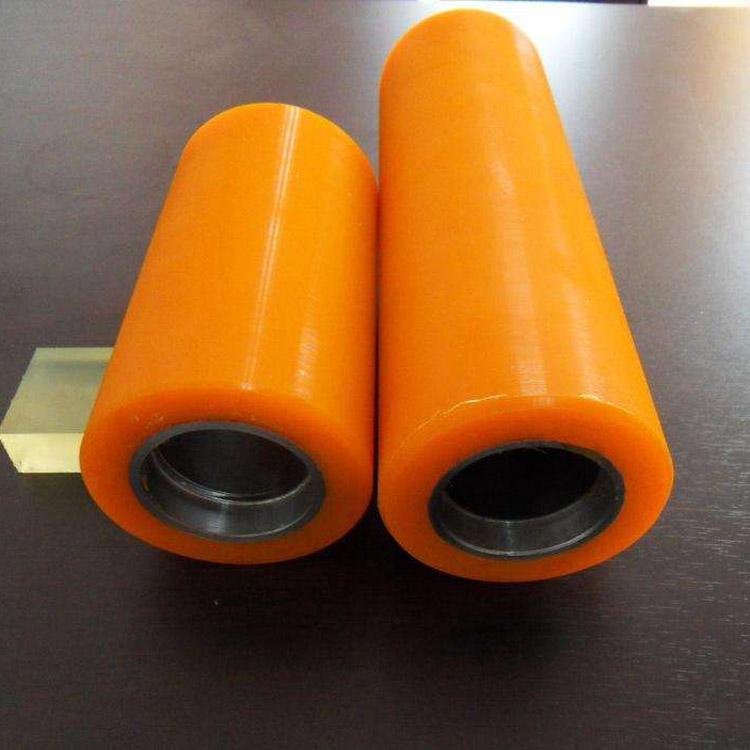
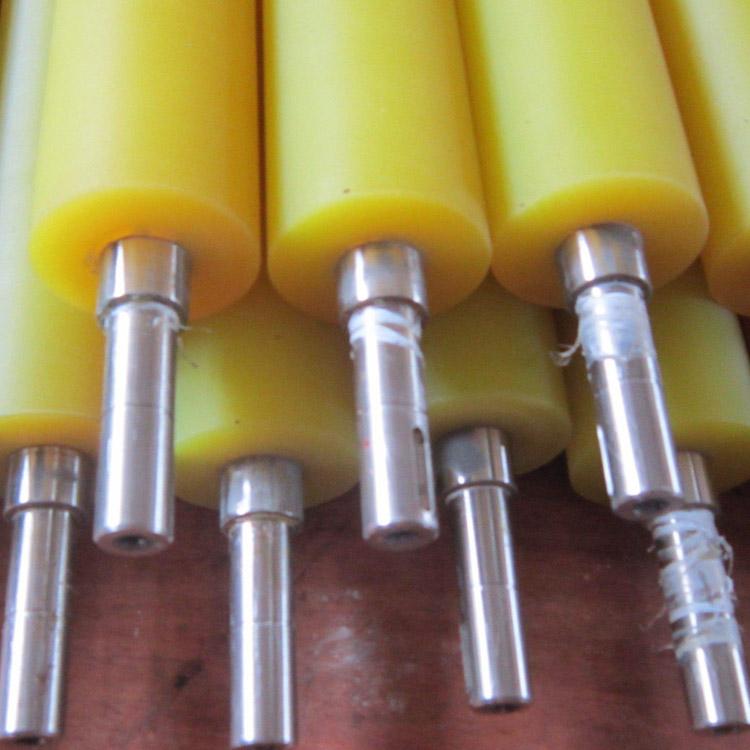
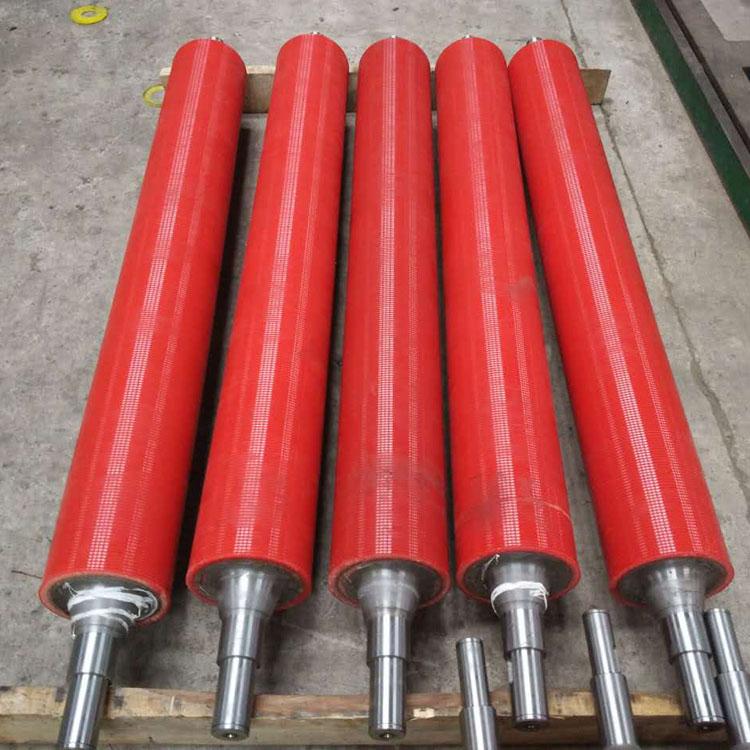
How to select quality rubber roller products? Ordinary users typically understand the performance of rubber rollers by considering factors such as hardness, roughness, and diameter variation, which are all manifestations of the roller's comprehensive characteristics. However, as professionals involved in bulk purchasing, it is crucial to gain a detailed understanding of its physical and chemical properties before making a decision.
1. Physical PropertiesInclusive. Refers to the ability of rubber roller to carry water and ink, being hydrophilic and hydrophobic, which is usually influenced by the surface roughness of the roller, and the affinity between the rubber material itself and water, ink.(2) Elasticity. It can be demonstrated through the indentation reflection ability, with the numerical representation being the indentation width. A good elastic roller responds sensitively to pressure, where even a small pressure change can result in a significant range of indentation width variations; whereas, a roller with poor elasticity will not show a noticeable change in indentation width even with increased pressure. The latter is very不利 for the printer in adjusting the machine. Typically, printing machine manufacturers provide a range of indentation reflection values based on the original roller's elasticity, making it easier for users to adjust the linear pressure between rollers. Of course, if the original roller is replaced, the adjustment values must be re-measured and determined based on the new roller's indentation reflection ability.(3) Vibration Absorption. Different types of printing machines have varying requirements for the vibration absorption of rubber rollers. For instance, single-sheet printing machines have gaps in their plate cylinders and print on fine-grained materials like offset paper and coated paper. To maintain smooth printing, it is required that the rubber rollers of single-sheet printing machines exhibit minimal vibration during the printing process, i.e., good vibration absorption. Conversely, web offset machines operate at high speeds, generating high heat, and need to transfer and store energy through the rubber rollers. Therefore, the requirement for vibration absorption in the rubber rollers used in web offset machines is not as stringent.(4) Abrasion resistance. This is often highly valued by customers, as it signifies durability, long usage time, and cost savings. The abrasion resistance of a rubber roller is indeed crucial, as it is directly related to the roller's ability to maintain surface area and its capability to resist侵蚀 from chemicals and other impurities. Additionally, it supports the roller's包容性. However, merely being abrasion-resistant is not enough to determine if a rubber roller is suitable for printing.(5) Pressure Resistance. While soft rubber rollers are suitable for printing and easy to process, they must maintain a certain degree of hardness and a fine structure to accommodate changes in printing pressure, preventing frequent adjustments by users that could compromise the stability of the roller and the print quality.(6) Maintain the frictional force for paper elasticity. Particularly in newspaper printing, an unsuitable frictional force on the roller surface can easily cause paper slippage and breakage.2. Chemical Properties(1) Corrosion resistance. Primarily refers to various chemicals used in printing, such as inks, paper, dampening solutions, and cleaners, which contain some corrosive substances. The rubber roller must have the ability to resist their erosion.(2) Conductivity. During the single-paper printing process, materials such as paper and ink can generate static electricity under unsuitable conditions, which can severely lead to ink adhering to the roller and double-sheet feeding. Therefore, in addition to some direct influencing factors, the rubber roller needs to have anti-static properties. In intaglio printing, the static voltage printing roller must also carry a specific, quantified charge under certain conditions.(3) Thermal Conductivity. Every type of rubber has a maximum temperature tolerance, and its heat resistance directly determines the lifespan of the rubber roller. Especially with the increasing use of high-speed newspaper web offset presses and commercial web offset presses in the industry, their speeds have reached up to 60,000 rpm. High-speed operation inevitably generates high heat, thus requiring the printing rubber roller to have excellent thermal conductivity to ensure a normal service life and printing quality.(4) Accuracy of water transfer. The water roller should be hydrophilic and repel ink. A good water roller should evenly distribute water or dampening solution over the roller surface and maintain a certain amount of moisture. Additionally, for water rollers using alcohol dampening solution, rapid dampening is required. If the rubber roller has a strong affinity for alcohol in the dampening solution but carries less water, it will inevitably cause a series of printing problems such as paper washing, ink washing, crystallization, excessive emulsification, and a narrow water amount adjustment range due to insufficient water on the plate. Therefore, the accuracy of water transfer is crucial for maintaining ink-water balance.(5) Compatibility with chemical solvents. Poor compatibility between the rubber roller and the chemical components of cleaners, inks, and fountain solutions can hinder their individual functions.
