


 通过中商114认证

Surface Treatment Requirements for Spiral Steel Pipe: When painting the metal surface, the rust removal should reach the national standard Sa212 level through shot blasting and sandblasting. Maintain a clean surface free of oil stains, dust, etc., and apply the coating within 4 hours. Mix Ratio: A:B = 3:1 (by weight). Theoretical Coverage Rate: Under dry film thickness of 80~100 micrometers, kilograms per square meter. Diluent Consumption: If the paint is too thick, add diluent as needed.
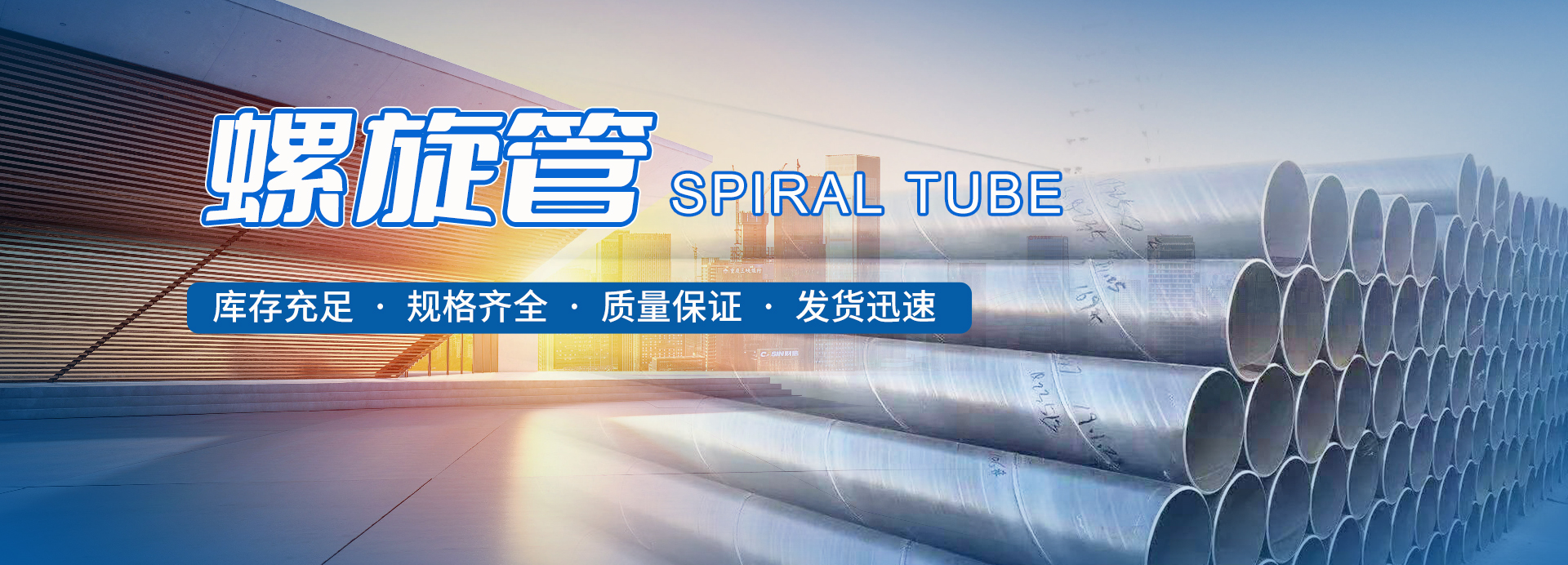
Spiral steel pipe welding technology involves butt-jointing the strip ends with single or double wire submerged arc welding. After rolling into steel pipes, automatic submerged arc welding is used for post-welding.
Prior to forming, the strip steel undergoes leveling, trimming, edge dressing, surface cleaning, and pre-bending processing. An electrical contact pressure gauge is used to control the pressure of the hydraulic cylinders on both sides of the conveyor, ensuring smooth strip steel transport. External or internal roller forming is employed.
The weld gap control device ensures that the weld gaps meet the welding requirements, with strict control over pipe diameter, misalignment, and weld gaps. Both internal and external welds of large-diameter spiral steel pipes are performed using Lincoln electric welders for single or double wire submerged arc welding, thereby achieving stable welding quality.
Some garden fences are made with precision steel pipes, particularly the 20# precision steel pipe, which is widely used in the railing industry. The precise dimensions ensure that users do not waste labor and materials. Moreover, precision steel pipes can be stored in environments without stringent requirements, as they can be placed in damp conditions without corroding.
