
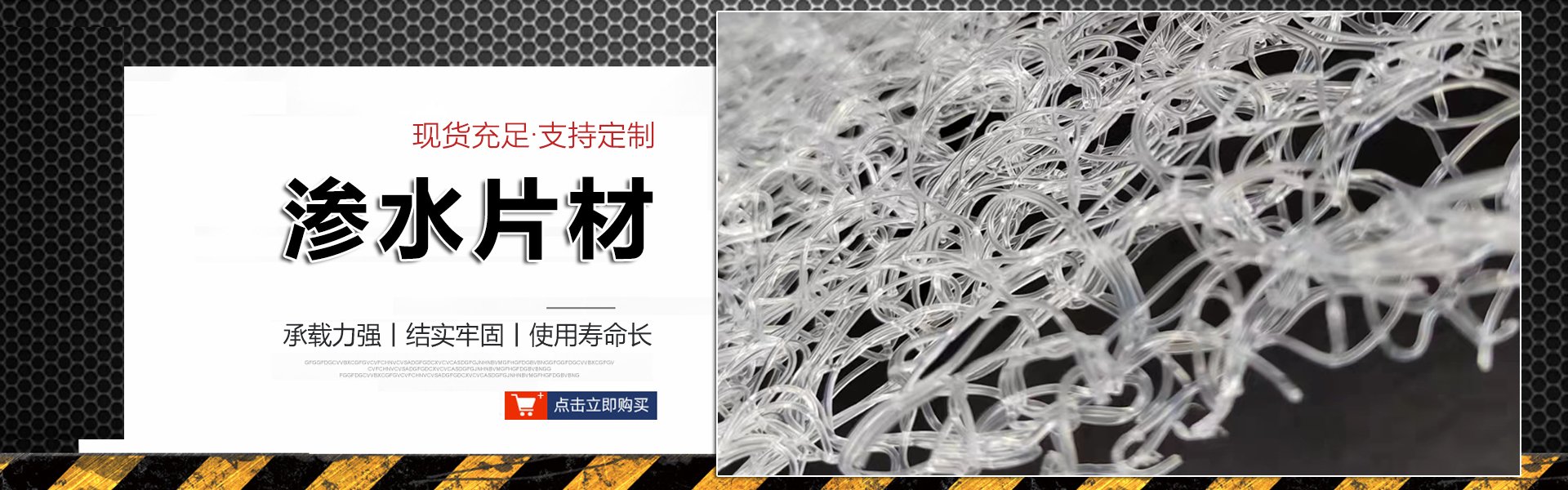

The waterproof sheet material is made of polypropylene composite, which endows it with the ability to withstand extreme temperatures and corrosion resistance. It can operate normally under conditions of 40°C to 80°C. It is resistant to strong acids and alkalis, has a long service life in soil and water, and can maintain its performance for decades even in the complex leachate from the bottom of a landfill.
Application Fields
Waste Landfill Application
1. Waste leachate collection and drainage
2. Biogas Collection and Emission
3. Field cover layer drainage
Application in Subterranean Building Drainage
Section 3: Road and *** Applications
1. The application of median barriers and drainage ditches along road shoulders
Application of Retaining Wall Drainage
3. Application in Slope Dewatering
Application in Tunnel Drainage
5. Applications in Other Settings
Application in the Field of Water Conservancy
Construction Process: (Full Coverage)
Firstly, the site to be prepared for construction must be cleaned and cleared, ensuring there are no loose soil, stones, concrete protrusions, or any other sharp objects.
2. Lay the drainage sheet materials flat on the ground according to the design specifications. When the drainage area length exceeds the length of the drainage sheet materials, a connection is required; the connection is made using nylon clips, spaced 8-10 cm apart; no connection is needed in the width direction.
3. Waterblocks are installed at retaining walls or parapets, primarily for gathering rainwater and directing it away through drainage holes; the waterblocks are cut from plastic drainage sheet materials measuring 100-200mm in width and 50mm in thickness; the installation length is determined based on the width of the drainage area.
4. After the drainage pads and water channel blocks are installed, lay the geotextile. When two pieces of geotextile overlap, the overlapping width should not be less than 200mm.
When laying geotextile up to the parapet or retaining wall, roll it over the height of the water drain block by at least hmm (usually h=100-150mm). Fold the geotextile in half and secure it to the parapet (or retaining wall) using geotextile fasteners.
6. The geotextile fastener is a 50mm wide, 8mm thick wooden strip dipped in asphalt, nailed to the parapet (or retaining wall) with concrete nails to secure the geotextile.
The water collected from the water-conducting blocks is drained through the overflow holes into the roof gutter or rainwater drain. The overflow holes are located below the parapet wall (or retaining wall), with a size of 120mm x 60mm each. The spacing between the two overflow holes is 1-2 meters.
