




 通过中商114认证

Steel fibers have been in existence for a short time, but their application fields are expanding widely. Correspondingly, the variety of steel fibers is continually increasing.
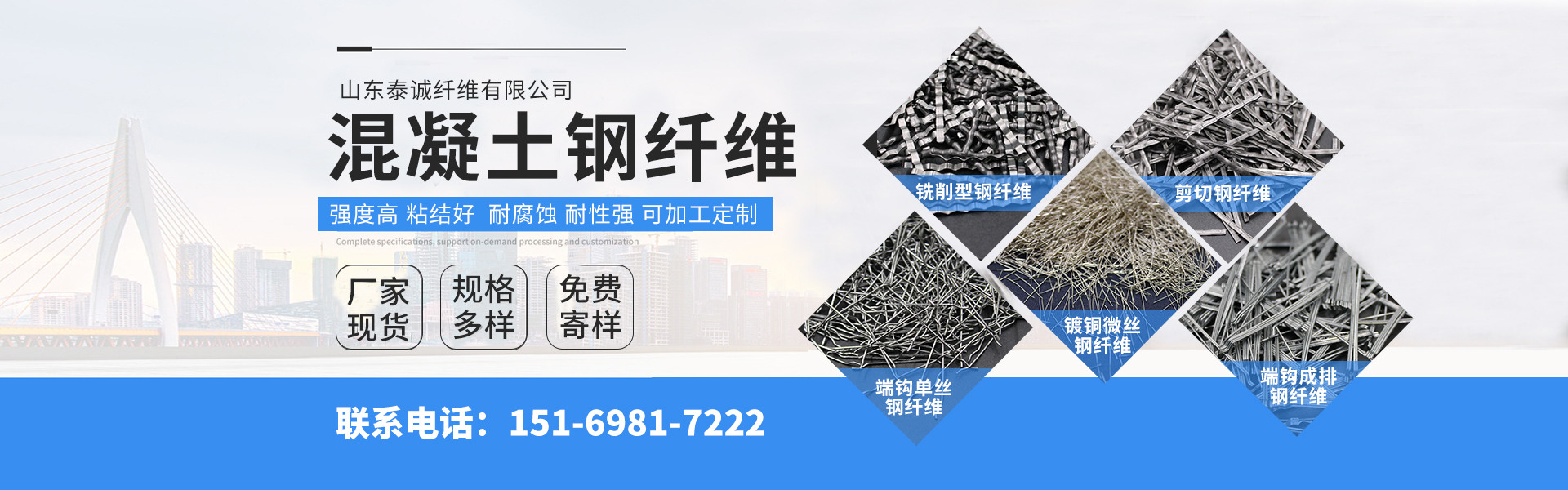
1. Available in various shapes, including straight steel fibers, ribbed steel fibers, wavy steel fibers, hooked steel fibers, bulbous steel fibers, double-pointed steel fibers, bundled steel fibers, and more.
2. Divided by cross-sectional shape, they include: circular, rectangular, slot-shaped, and irregular.
3. Divided by production process, there are: Cut steel fibers (using fine steel wire to cut); Sheared steel fibers (using thin steel plates or strips to cut).
Machined Steel Fiber (cut from thick steel plates or ingots); Molten-Drawn Steel Fiber (manufactured from molten steel).
4. Divided by material:
Plain carbon steel fiber (tensile strength typically ranges from 300 to 2500 MPa).
Stainless steel fibers (including grades 304, 310, 330, 430, 446, etc.)
Other metal fibers (aluminum, copper, titanium, and alloy fibers). 5. Divided by surface coating status:
Uncoated, with a surface coated in epoxy resin, galvanized, etc. The commonly used in industry are uncoated ordinary steel fibers.
6. Categorized by construction techniques: jetting and casting.
7. Classified by diameter size:
Standard steel fibers (diameter d > 0.08mm)
Ultra-fine steel fibers (diameter d ≤ 0.08mm)
Ultra-fine steel fibers are primarily used to reinforce plastics and asbestos friction materials.
