


1. Heavy-duty storage racks
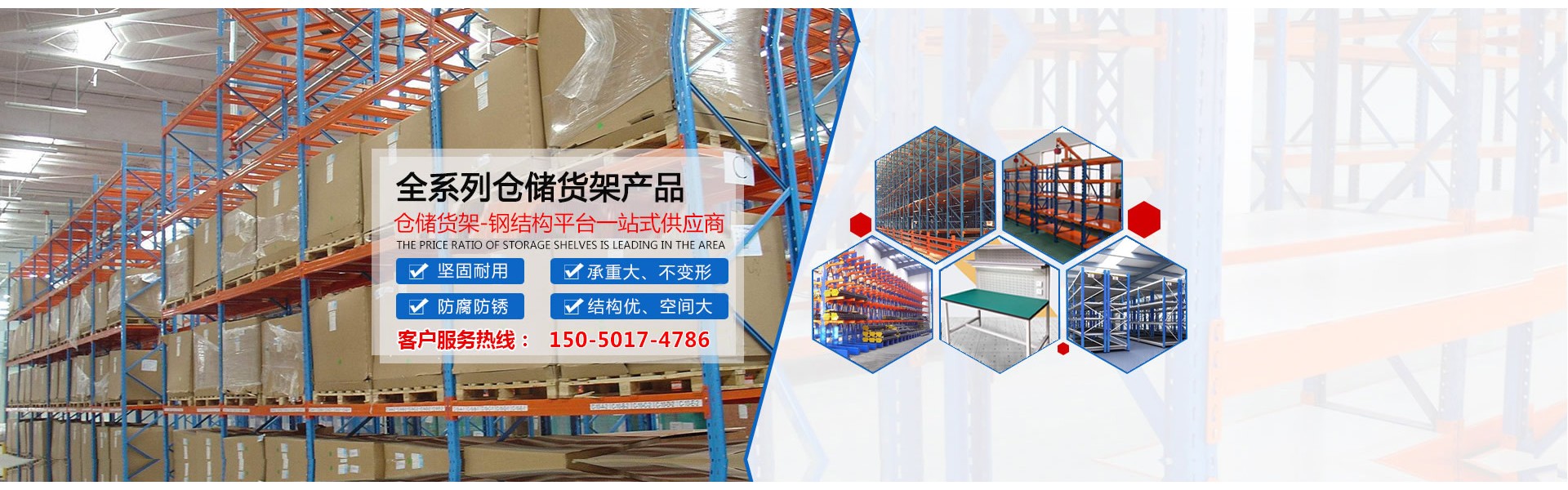
The main components consist of pillars and beams, designed for storing palletized goods. The shelf position sizes are tailored to the storage item and the pallet dimensions. Additionally, to prevent forklift collisions, accessories such as collision posts and guardrails are added.
Installation and Dismantling
Heavy-duty storage racks are typically handled by forklifts for loading and unloading operations. The height of the racks is primarily determined by the usable net height of the warehouse and the lift height of the forklift, usually over 3 meters, with some high-rise heavy-duty racks reaching up to ten or more meters.
2. Medium-sized shelves
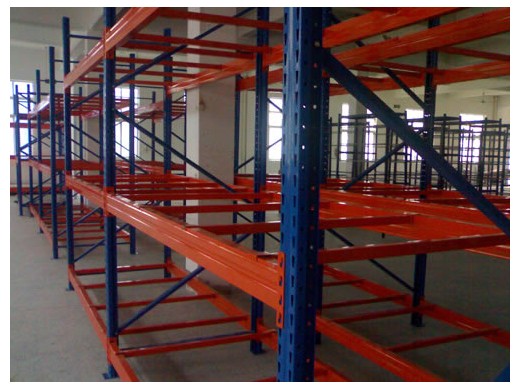
Typically, manual handling is used for inventory retrieval, with shelves generally designed to accommodate the reach of workers and lift trucks, often no higher than 3 meters.
Medium-duty racks, a type of storage racks, are categorized by their load-bearing capacity. This classification places medium-duty racks between light-duty and heavy-duty racks, hence the name. Typically, these racks can bear a load of 150kg to 600kg per shelf (the load capacity of most racks is calculated on a per-shelf basis).
Composed mainly of beams, columns, and shelves, these storage units are designed for smaller items. They often require consideration for the storage of loose parts, which can be accommodated by designing containers such as cardboard boxes or component bins on the shelves. They are both aesthetically pleasing and practical. With high load-bearing capacity and height, to ensure the stability and safety of the shelves, holes must be drilled and the shelves secured to the ground with expansion bolts. To disassemble, the bolts must be removed, thus installation of heavy-duty storage racks should be performed by qualified rack installation staff.
1. Moderately sized ramp length: The overall depth of the shelves (i.e., the track length) should not be excessive, as this would lead to a larger unusable "dead corner," affecting space utilization. Additionally, a longer ramp would reduce the controllability of the descent, increasing the downward force, which could easily cause the goods on the pallet to slide unevenly, get stuck, or tip over.
2. Fair Slope Size: After the slide is installed on the shelf, it should have a certain slope to ensure smooth sliding under heavy loads. Too small a slope may prevent the pallet from moving or cause it to slide unevenly; too steep a slope can result in rapid sliding, leading to collisions or tipping over. Additionally, the slope size depends on the material of the pallet bottom. For wooden pallets, a slope of 3.5% to 3.0% is generally suitable; for plastic pallets, 2.5% to 2.0%; and for steel pallets, 2.0% to 1.5%. In actual warehouse design, the slope should be determined through specific calculations and experiments.
3. Additional Damping Device: To ensure smooth sliding, especially on longer inclines, a buffer and pick-up separation device should be installed at the ramp to prevent the tray of goods from toppling due to excessive impact force upon reaching the end. This design, manufacturing, and installation process is more challenging and costly.
4. Shelves Should Not Be Too Tall: For any type of warehouse racking, reliability and maneuverability are crucial. Heavy-duty racks typically do not exceed 6 meters in height, and the weight of a single load is usually under 1,000 kg. If the height is too great and the single load is too heavy, its reliability and maneuverability will significantly decrease.
Key Points in Designing Heavy-Duty Racks. Properly designed heavy-duty racks are essential for efficient storage and retrieval of goods by both manual labor and forklifts.
Heavy-duty shelving, as the name implies, has a high load-bearing capacity, with each shelf capable of supporting up to 4,500 kg. It offers quick and convenient access, making it a widely-used storage system for palletized goods with strong versatility.
The structure features heavy-duty racks arranged in rows along the width of the warehouse, with aisles left in between for the passage of forklifts, lift trucks, or other handling equipment. Each row of racks is divided into columns along the length of the warehouse and into layers vertically, thereby creating a large number of storage spaces for palletized goods.
Features: Each pallet can be independently stored or moved, making the loading and unloading process more cumbersome yet faster. The storage racks can accommodate various types of goods and can adjust the beam height according to the size requirements of the goods, maximizing the use of the upper storage space in the warehouse. The配套 equipment is simple, cost-effective, and easy to install and dismantle.
