


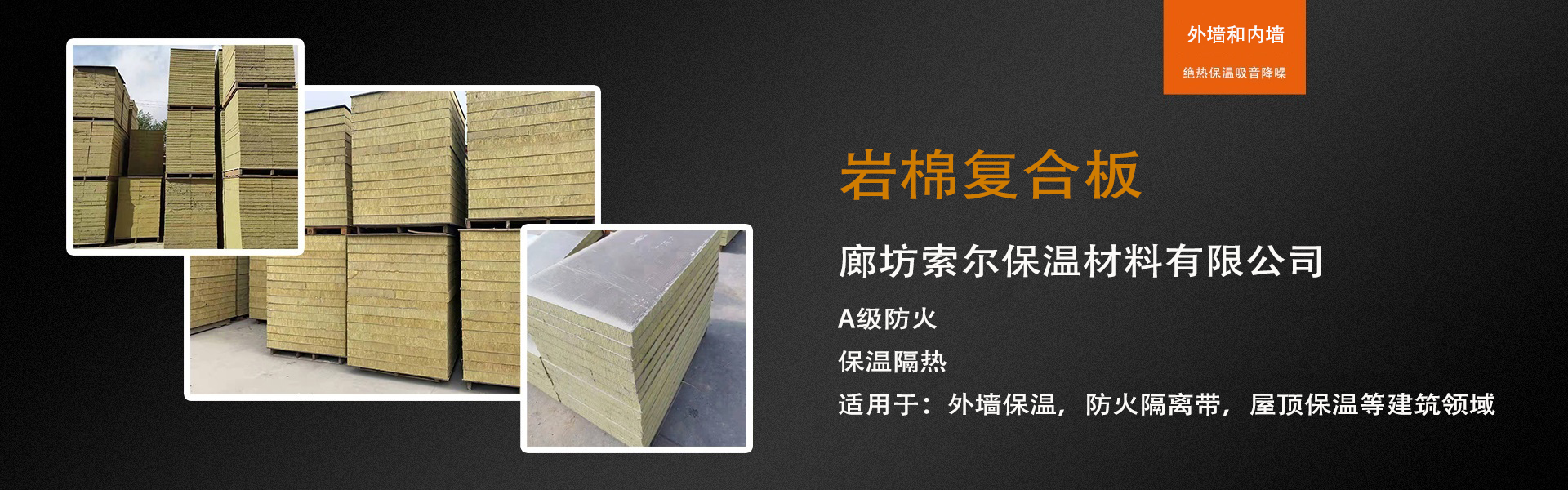

Rock wool composite panels, like rock wool boards, are made from rock as the raw material. The primary raw material for rock wool boards is basalt, while the main raw material for rock wool composite panels is natural ore. Below, we can mainly learn about rock wool composite panels.
Rockwool composite panels differ from standard rockwool panels in that they feature an additional layer of cement mortar coating. This cement mortar layer hardens the soft material of the rockwool, and also eliminates the need for the plastering process on the wall during construction.
The main raw materials for rock wool sandwich panels are the same as those for rock wool, primarily basalt, with some iron ore-like substances added. These materials are heated and melted at high temperatures, combined with a binder to form inorganic fiber material, which is the prototype of rock wool. After being extruded into shape, it becomes rock wool, and by adding a layer of cement plaster, it forms a composite, enhancing its strength.
Rock wool composite panels are inorganic, flame-retardant, have low thermal conductivity, good insulation properties, and are moderately heavy. Due to these characteristics, rock wool composite panels are widely used in various industries, such as exterior walls of buildings, insulation for industrial equipment, and cabin insulation for ship bodies. They are also suitable for sound insulation, with excellent results.
Rockwool composite board structure: Paste - Insulate - Anchor bolts - Coating - Mesh - Coating - Decorative finish - Accessories.
Paste: It is the intermediate layer between the panels and the walls, serving to firmly bond the panels to the walls. It is primarily filled with inorganic materials, and its quality directly impacts the lifespan of the panels.
Insulation: Organic Matter - Water - Interfacial Agent
Coating: Paint, coatings, metal panels, tiles. Coating mortar for point application, breathable and waterproof, making rock wool composite panels light yet aesthetically pleasing.
Accessories: Paints, adding various colors to rock wool composite panels, enhancing aesthetics with some thermal insulation and flame-retardant properties.
Color Steel Rock Wool Composite: Color steel serves as the base layer, combined with rock wool for fire resistance, lighter in weight, excellent in thermal insulation, noise absorption, and good soundproofing. In terms of usability, it is lightweight, cost-effective, and has high strength, making it resistant to bending and deformation. Applications include temporary mobile buildings, partitions, and some factory buildings.
