
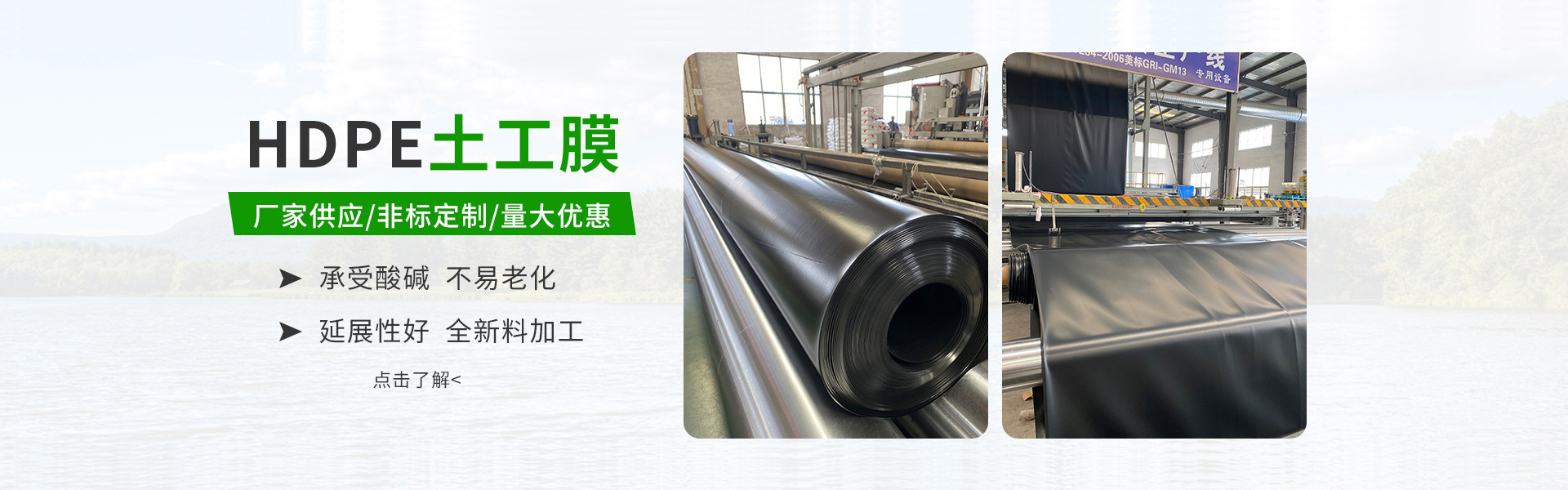


Currently, composite geomembranes far exceed conventional geomembranes in terms of their waterproofing performance. This can be attributed to the higher grade of raw materials chosen during the manufacturing process, which also results in outstanding waterproofing effects. In the process of selling on the market, the market price of these geomembranes is influenced by various factors. What are the main ones?
Factor One: Thickness Coefficient. As composite geomembranes are sold in the market with different thickness standards, there are strict thickness requirements when laid on various substrates. Naturally, the thicker the thickness, the higher the market price will be; conversely, a thinner thickness will be more economically reasonable in price. Therefore, when comparing in the market, it is determined by the actual thickness coefficient.
Factor Two: Model Size. Depending on the actual application, manufacturers will categorize and customize the composite geomembrane into different models during the production process. Each model varies, and there will be price discrepancies in the market. When analyzing prices, it is essential to consider the specific model chosen by the customer, as this will lead to varying comparisons. At least in terms of technology, there will be significant differences.
Factor Three: Quality Grades. Each model of composite geomembrane sold in the market is categorized into various grades. The grades differ, and so does the price. At this point, customers should compare prices based on the actual quality grades.
