


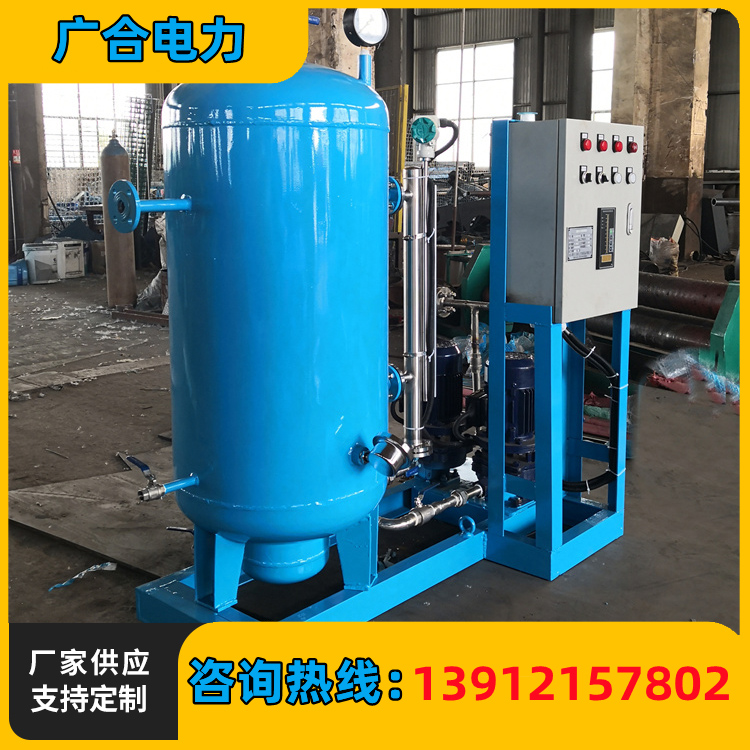
Wastewater Expansion and Cooling Vessel
One,Introduction to Waste Water Expansion and Cooling Tank
Wastewater cooling tanks are widely used in heating systems. In heating systems, the pressure and temperature of the wastewater are high. According to relevant regulations, wastewater must be expanded and pressure-reduced before entering the cooling system. It must be cooled to below 40℃ before it can be discharged into the drainage system. The wastewater cooling tank collects high-pressure and high-temperature wastewater from the heating system, cools and reduces the pressure of this wastewater, and then discharges it into the drainage system.
Section 2: The Function of the Effluent Expansion and Cooling Tank
Reduce the temperature of the effluent water to below the regulated requirement of 40℃.
Section 3: Working Principle of the Effluent Expansion and Cooling Tank
The effluent cooling tank is equipped with an automatic water cooling system. Upon the entry of various waste waters into the tank, the system automatically activates the cooling water system based on the internal water temperature, allowing the cooling water to mix with the effluent for temperature reduction. This process is controlled automatically. After mixing, the waste hot water temperature is reduced to below 40°C, and the cooling water system is shut off. The cooled wastewater is then directly discharged into the sewage system.
4. Control Methods and Instrument Valves for Waste Discharge Expansion and Cooling Vessels
1. Locally installed pressure and temperature gauges for effluent cooling storage tanks.
2. Local magnetic float level gauge
3. Temperature Sensor
4. Cooling water inlet valve assembly
5. High Water Level Overflow Control Device
6. Smart control system ensures equipment operation.
7. Control Box
When wastewater enters the effluent cooling tank, the temperature sensor transmits temperature signals to the control system. The system then controls the opening of the cooling water valve to mix and cool. Once the temperature drops to the set point, the cooling water valve is closed.
V. Summary of Wastewater Expansion and Cooling Vessels
Currently, standard waste water cooling ponds occupy a large area and require a significant initial investment. By opting for a new automatic waste water cooling tank, not only is the cooling function met, but operation and management are also convenient. In situations where flat space is limited, it is even more advisable to consider using a waste water cooling tank.
