


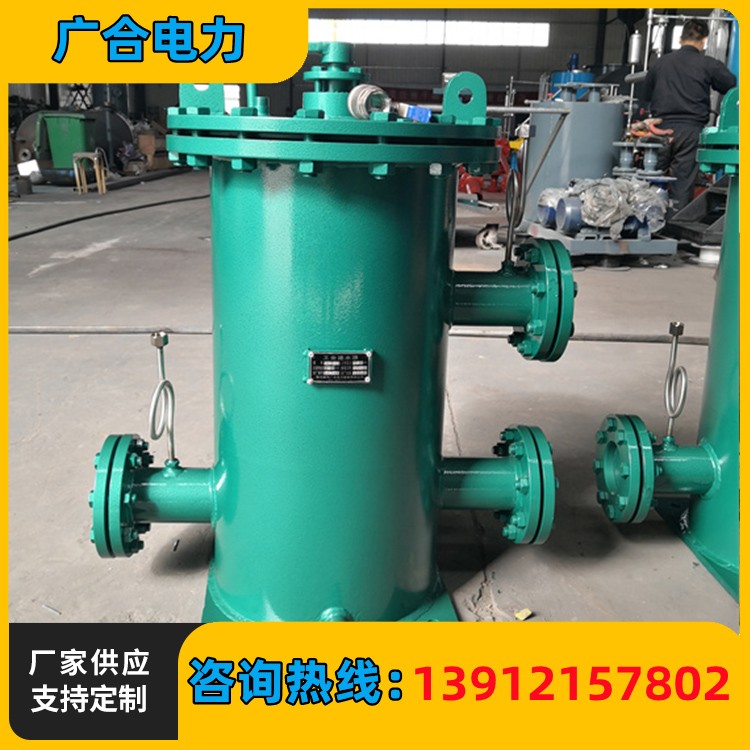
Electric Industrial Water Filter
Considering economic, convenient, and maintenance factors, Guanghe Electric Equipment Co., Ltd. has designed and manufactured a new series of industrial backwash filter systems that meet user requirements and thoroughly resolve the aforementioned issues.
I. Advantages of the Product:
1. Simple structure, occupying minimal space.
2. Low cost (refers to manual backwash style).
3. High filtration flow and precision.
4. Fully Automatic Water Filter (More expensive than manual models)
This model features an imported PLG programmable control system, remote control, and is designed with an online differential pressure monitoring system. The equipment also boasts manual, timed, and automatic cleaning functions.
5. Applicable Impurities: Mud and sand, industrial waste, weeds, plastics, fish and shrimp, snails, algae, etc.
6. Innovative design, long service life.
II. Filter Structure:
This water filter is composed of ①rotary pump, ②locating rod, ③supporting shell, ④filter core, ⑤inlet, ⑥outlet, ⑦drainage port, as well as electric reducer and electrical cabinet.
Water quality is generally fresh water type, with the filter and main internal components made of stainless steel. For saltwater and other strongly acidic or alkaline types, it is recommended to use special stainless steel materials for parts in contact with the medium.


III. Categories
1. Differential Pressure Backflushing: When impurities accumulate to a certain amount, use the differential pressure signal between the cooling water inlet and outlet pipes for backflushing drainage. This is achieved by the electric junction pressure gauge transmitting control signals, which activate the control mechanism to open the electric drainage valve. The electric reducer then operates at a speed of 3-6 rotations per minute, reversing the flow of water to flush the impurities adhering to the inner wall of the mesh core. The debris is then drained through the drainage pipeline and valve into the cooling water outlet pipe. The cleaning process takes approximately 5-10 minutes. In case of large debris that prevents the filter mesh from functioning properly, the electric unit should operate in reverse to flush out the debris.
2. Users can set the effluent timing as needed, ranging from 0 to 99 hours to determine the cleaning and effluent time. Generally, the effluent is set to occur every 12 hours, and the timing can be adjusted according to the water quality of the power plant. The electric reversing reducer is activated at the set time to reverse and open the effluent valve, followed by a reverse flushing and effluent process. This continues until all compartments have been back-flushed, at which point the electric device stops working, and the electric back-flush and effluent valves are closed, marking the end of the effluent operation.
Section 4: Installation of Water Filters and Precautions
1) Industrial water filters can be horizontally mounted at the condenser inlet or at the circulation pump outlet, yielding the same effect.
2) The length of the filter screen inlet straight section should be greater than the diameter of the recirculating water pipeline.
3) Do not tilt during installation; ensure a secure connection.
4) Maintain a spacing of 100mm or more between the filter mesh and the condenser circulating water inlet, and install a compensating joint between the filter mesh and the condenser for ease of maintenance, disassembly, and compensation.
5) After installation, all debris in the pre-filter circulation pipes must be removed, and a operational test must be conducted before commissioning.
Section 5: Filter System Ordering Instructions
Filter precision requirements.
2. Please provide the pipe diameter, pressure, and flow rate.
