



- AllProduct Category
-
Domestic Explosion-Proof Certification
Explosion-Proof 3C Certification
Explosion-proof Electrical Inspection
Coal Mine Safety Certification
ATEX & IECEx Certification
Ex-proof Qualification Certificate
Explosion-proof Construction Renovation


Recommended Products

Xi'an Dust Removal Equipment IECEx Explosion Proof Certification, Shenzhen ZhongNuo Inspection

Flameproof Certificate Application Documents for Communication Equipment - Shenzhen ZhongNuo Inspection, Application Process
Electromagnetic Valve SIL Certification Application Requirements - Shenzhen Zhongnuo Inspection
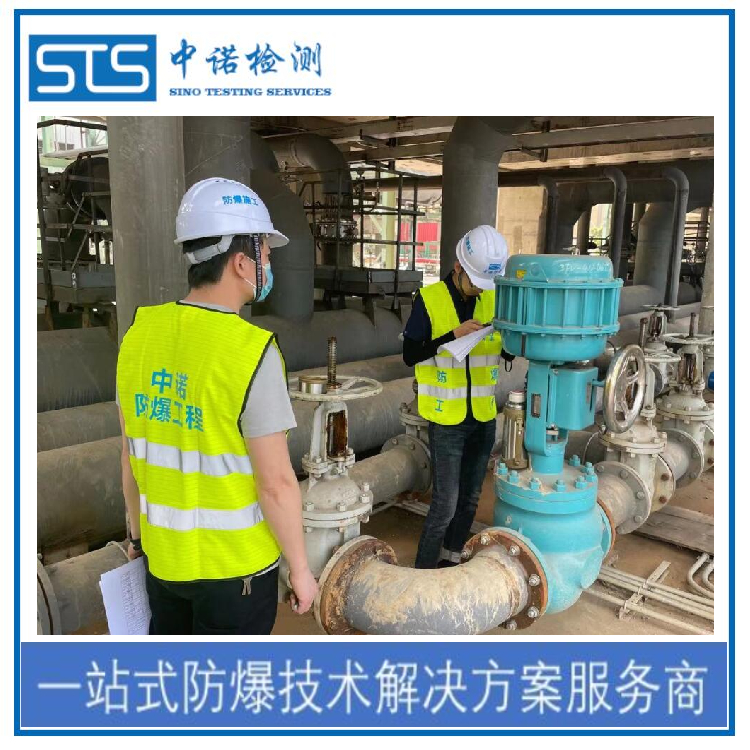
On-Site Oil Storage Explosion-Proof Electrical Inspection Application Requirements | Online Inquiry | Shenzhen ZhongNuo Inspection
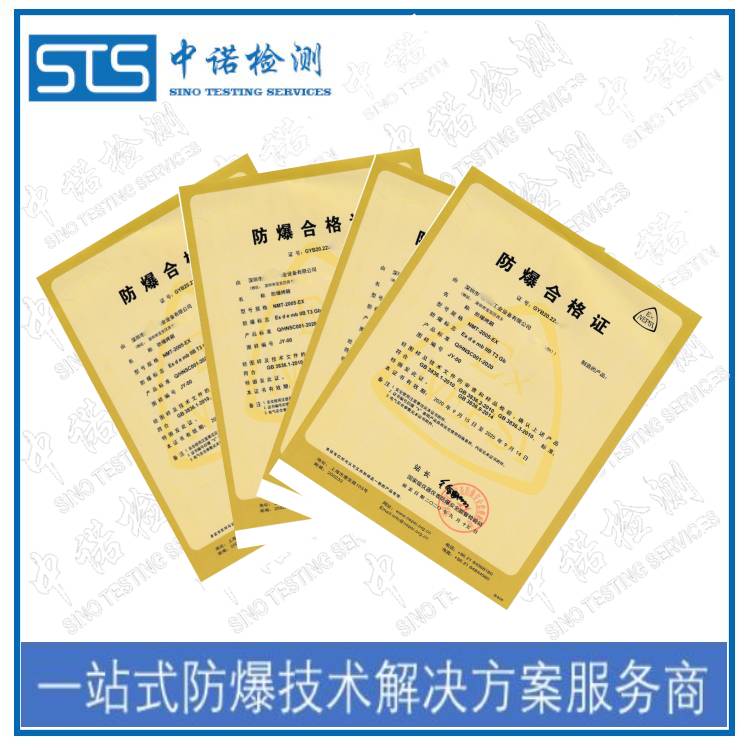
Where to apply for a dust explosion-proof certificate in Hangzhou? Shenzhen Zhongnu Inspection, what are the requirements?
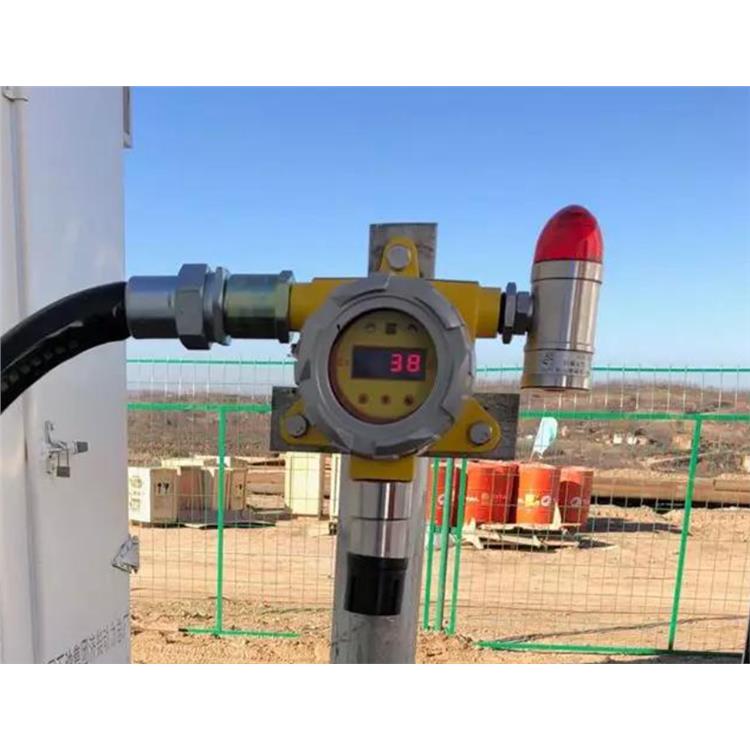
Yangzhou Gas Detector Calibration Services - ZhongNuo Inspection
详情描述
Shenzhen ZhongNuo Testing Technology Co., Ltd. is based in South China and specializes in explosion-proof certification and coal safety certification application consulting services, offering a one-stop explosion-proof technology consulting service.
Explosion-proof certification application documents and process requirements | ZhongNuo Inspection
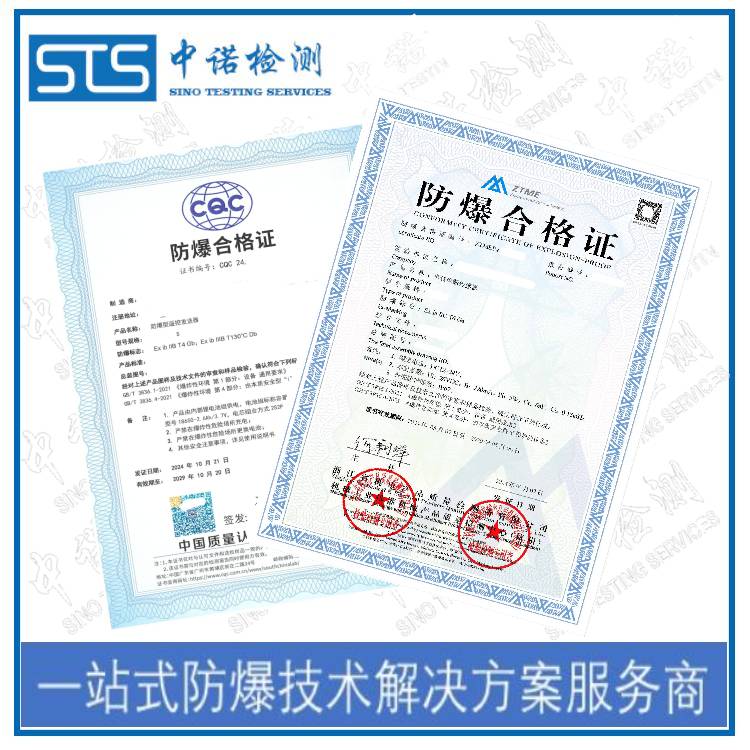
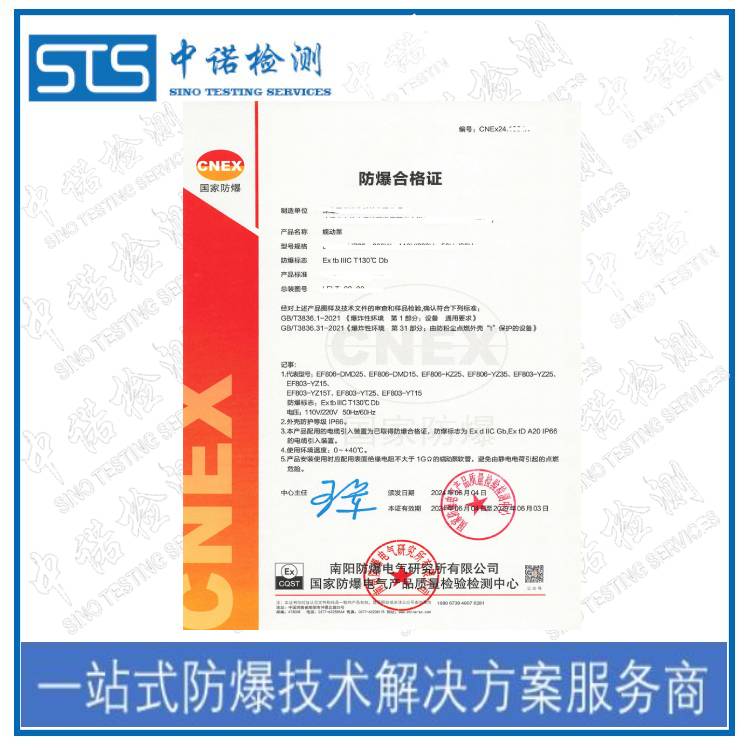
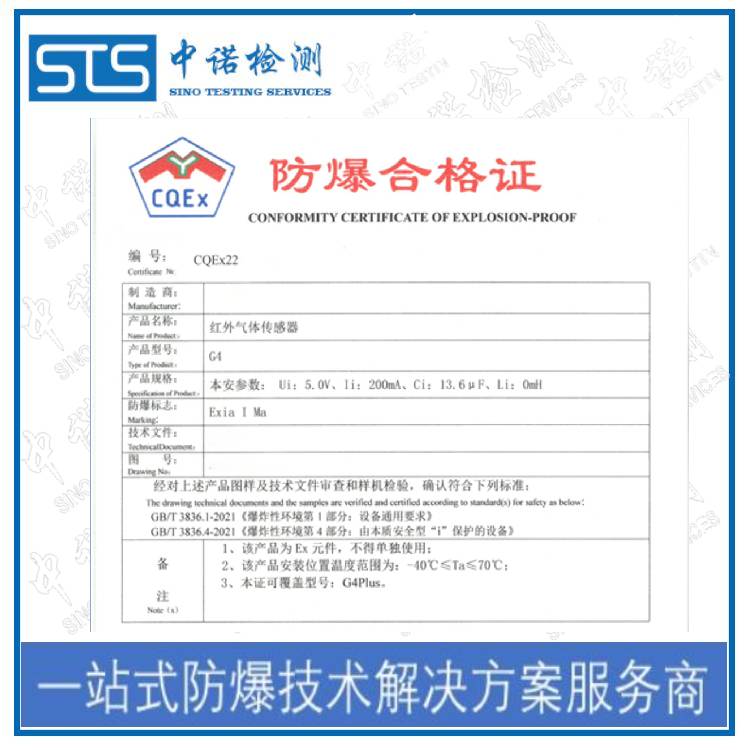
The explosion-proof certificate is a certification model for products outside the explosion-proof 3C catalog.
As of October 1, 2009, a portion of explosion-proof electrical equipment was included in the CCC certification catalog, which is a mandatory product certification. Products listed in the catalog must undergo explosion-proof 3C certification, following the "product testing + factory audit" model. For a detailed explosion-proof 3C certification catalog, please refer to the relevant content on our website. Explosion-proof products not listed in the catalog can opt for a Certificate of Conformity, obtainable simply by passing the product testing.
The general procedure for obtaining a防爆 certification includes: submitting relevant product documents, conducting product testing, and upon passing the test, issuing the防爆 certification. Throughout the process, ensure your product complies with the relevant explosion-proof standards and requirements.
If you're not familiar with explosion-proof standards and certification requirements, no worries. Shenzhen ZhongNuo Testing Technology Co., Ltd. offers explosion-proof design and modification services, as well as certification agency services for intrinsic safety, flameproof, explosion-proof enclosures, and positive pressure. We help businesses easily obtain explosion-proof certificates.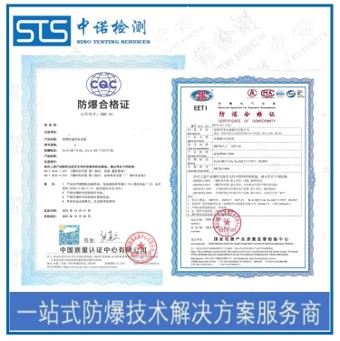
What test items are required for explosion-proof equipment certification? What are the testing standards?
What testing projects are required for explosion-proof certification of products? What specific requirements are there for the explosion-proof design of the product? How can one design to successfully pass the explosion-proof testing requirements? This is what many clients producing explosion-proof products want to know. Here, Zhongnuo Testing answers your questions.
Currently, domestic explosion-proof certification follows the GB/T 3836 series standards. There are general standards and specific requirements for explosion-proof products. Different product structures, electrical parameters, installation methods, and usage locations are suitable for various certification standards and testing items. Therefore, the explosion-proof design and requirements for products also vary. For example, for intrinsically safe products, the general testing items include appearance and structure inspection, spark ignition test, dielectric strength, battery and battery pack testing, temperature rise test, and transient energy test. For flameproof products, the main testing items include heat and cold resistance tests, internal ignition without propagation, shell pressure resistance, IP testing, and temperature rise test.
If you're in need of explosion-proof certification for your products, turn to Shenzhen ZhongNuo Testing Technology Co., Ltd. We offer pre-certification design and rectification consultation, prototype rectification guidance, assistance with drawing and documentation preparation, and certification acquisition agency services. Feel free to message us for more info!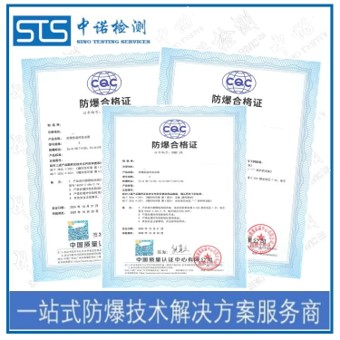
Basic Knowledge of Explosion-Proof Grades and Explosion-Proof Certifications
Here is a brief overview of explosion-proof ratings, primarily categorized by the type of equipment used, the temperature group of the explosive gas mixture, and the explosion-proof type:
I. Equipment Usage Category
Explosion-proof electrical equipment can be classified by type into:
Class I underground electrical equipment for coal mines
2. Electrical equipment for all explosive gas environments, excluding those in coal mine shafts.
3. Electrical equipment for explosive dust environments (excluding coal mine) of Category III
Among them, Class II electrical equipment can be further subdivided into:
ⅡA: The representative gas is one with relatively low explosiveness.
ⅡB: Applicable to the operating conditions of ⅡA equipment, with a moderate flammability level, the representative gas is ethylene.
ⅡC: Suitable for use conditions of IIa, IIb; highly explosive; representative gas is hydrogen.
For Class III electrical equipment, they can be categorized according to the nature of dust as:
ⅢA: Combustible lint.
ⅢB: Non-conductive dust.
ⅢC: Conductive dust.
Section II: Temperature Groups for Explosive Gas Mixtures
Temperature groups are categorized based on the ignition temperatures of explosive gas mixtures, specifically divided into:
T1:450℃>t
T2:300℃≥t>200℃
T3:200℃≥t>135℃
T4:135℃≥t>100℃
T5:100℃≥t>85℃
T6:t≤85℃
Three: Explosion-proof type
Explosion-proof types are designed according to different applications and locations, primarily including:
D: Explosion-proof
Enhanced safety type
Type 4P (Intrinsically Safe)
Molded Seal
n:n type
o: Immersed type
Positive Pressure Type
q: Sand-filled type
Special Type
T: Dust-Proof Ignition-Proof Housing
Section 4: Explosion-Proof Certification Mark Examples
For example, the explosion-proof marking "Ex db IIB T4 Gb" signifies:
"Ex" indicates that the equipment is explosion-proof.
"db" indicates that the equipment is explosion-proof.
"IIB" indicates that the equipment is used in an explosive gas atmosphere of Class II B, with ethylene being the representative gas.
"T4" indicates the equipment operates at a high surface temperature category not exceeding 135°C (T4).
"Gb" stands for Equipment Protection Level, indicating a "High" protection grade.
In summary, the classification of explosion-proof ratings is a comprehensive evaluation process, requiring consideration of various factors such as the type of equipment use, temperature groups of explosive gas mixtures, and the type of explosion-proof design. In practical applications, the appropriate explosion-proof rating and equipment should be selected based on the specific explosive environment and equipment requirements.
For more information, please directly contact Shenzhen Zhongnuo Testing Technology Co., Ltd.!
【Flame Resistant Symbol】Meaning of the Flame Resistant Certification Symbol Letters
The meanings of the letters in the explosion-proof certification标志 are crucial for understanding and selecting the appropriate explosion-proof equipment. Here are the meanings of some common explosion-proof grade letters:
This is the explosion-proof electrical equipment symbol, indicating that the equipment is explosion-proof. This symbol must be printed on all explosion-proof equipment.
ib, db, eb: These letters represent the explosion-proof protection type of the equipment. For example, ib indicates intrinsic safety protection, db indicates flameproof protection, and eb indicates increased safety protection. Sometimes, equipment may use multiple protection types, such as db ib indicating both flameproof and intrinsic safety.
This letter specifically refers to the coal mine gas environment. If explosion-proof equipment is suitable for the coal mine environment, this letter will be included in its marking.
IIC: This symbol indicates that the equipment is suitable for explosive gas environments of IIC category gases, which include and the like.
The number following "T" (e.g., T4, T6): This indicates the temperature category, signifying the high surface temperature of the equipment. For instance, T6 means the equipment's high surface temperature does not exceed 85°C, while T4 indicates it does not exceed 135°C. The temperature category is a crucial factor to consider when selecting explosion-proof equipment to ensure safe operation in specific environments.
Mb, Gb: These letters indicate the protection level of the equipment. For instance, Mb signifies that the equipment is suitable for use in mining environment Zone 1, while Gb indicates the equipment is applicable to Zones 1 and 2 of non-mining gas environments.
In summary, a composite explosion-proof marking such as Ex db ib IIC T4 Gb can be interpreted as follows: This equipment is an electrical device for use in non-mining environments with flammable and explosive gases, utilizing both explosion-proof and intrinsic safety protection. It is suitable for IIC, IIB, and IIA gas classifications, with a maximum surface temperature not exceeding 135°C, and is applicable in Zones 1 and 2.
We hope this information helps you understand the meanings of explosion-proof ratings. If you need more information about explosion-proof certifications and markings, Shenzhen ZhongNuo Testing Technology Co., Ltd. will provide you with further clarification.
Explosion-proof Certification Application Consulting Service - Shenzhen Zhongnuo Testing Technology Co., Ltd.


