



- AllProduct Category
-
Domestic Explosion-Proof Certification
Explosion-Proof 3C Certification
Explosion-proof Electrical Inspection
Coal Mine Safety Certification
ATEX & IECEx Certification
Ex-proof Qualification Certificate
Explosion-proof Construction Renovation


Recommended Products

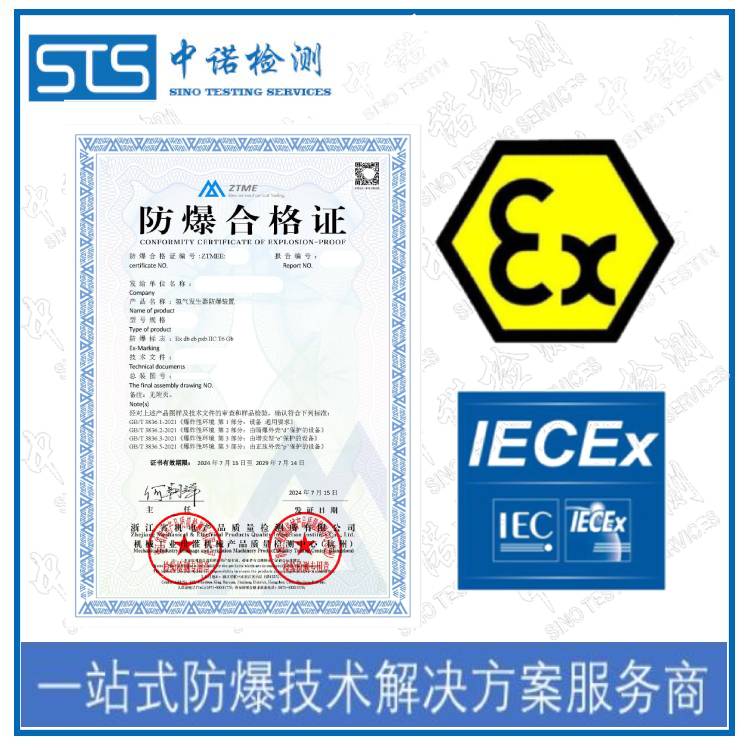
Xi'an Dust Removal Equipment IECEx Explosion Proof Certification, Shenzhen ZhongNuo Inspection

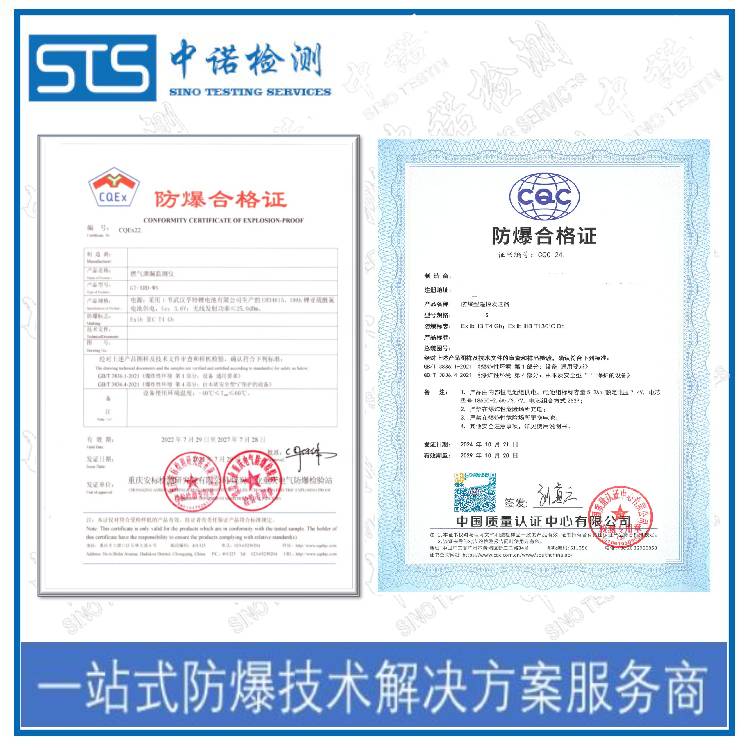
Flameproof Certificate Application Documents for Communication Equipment - Shenzhen ZhongNuo Inspection, Application Process
Electromagnetic Valve SIL Certification Application Requirements - Shenzhen Zhongnuo Inspection
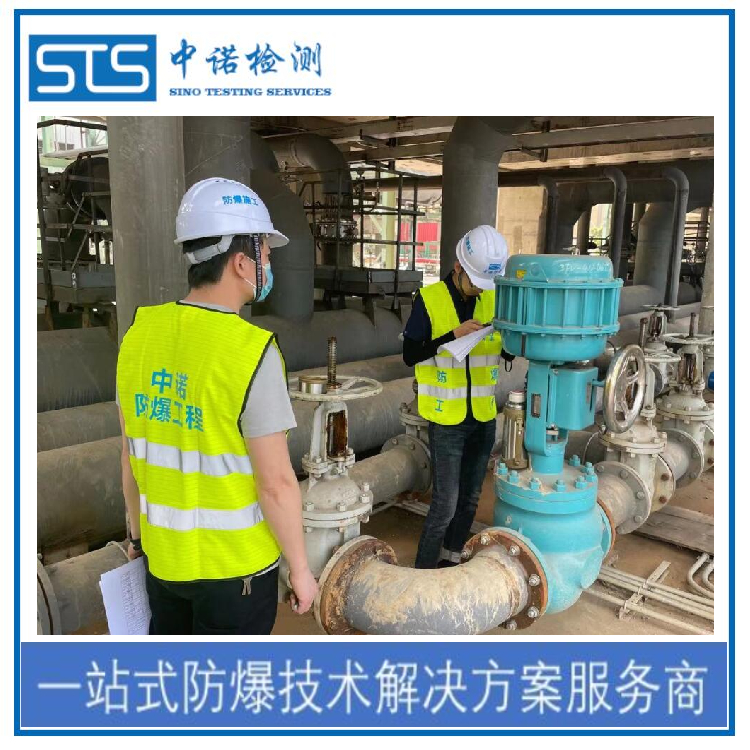
On-Site Oil Storage Explosion-Proof Electrical Inspection Application Requirements | Online Inquiry | Shenzhen ZhongNuo Inspection
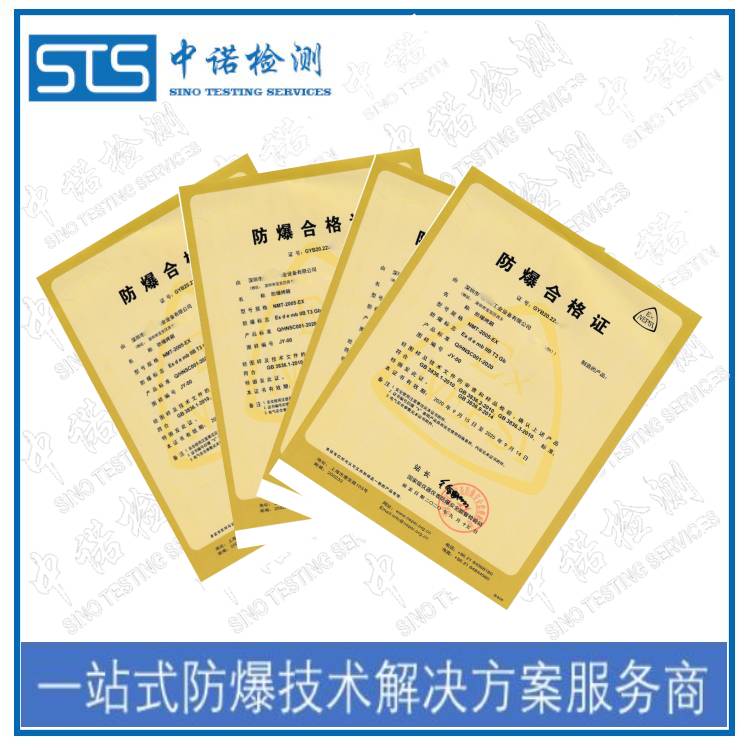
Where to apply for a dust explosion-proof certificate in Hangzhou? Shenzhen Zhongnu Inspection, what are the requirements?
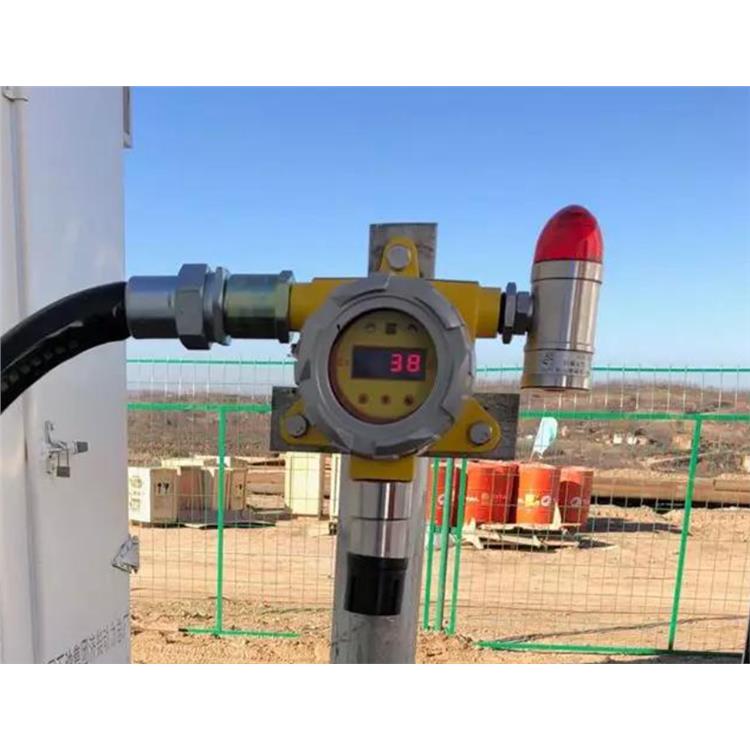
Yangzhou Gas Detector Calibration Services - ZhongNuo Inspection
详情描述
Shenzhen ZhongNuo Inspection & Technology Co., Ltd. is based in South China and specializes in explosion-proof certification and coal safety certification application consulting services, offering one-stop explosion-proof technology consulting.
Do you need to do a explosion-proof design first for a product to apply for explosion-proof certification?
That's for sure.
The process of obtaining an explosion-proof certification for products is to pass the relevant test items of the explosion-proof standards and acquire an explosion-proof qualification certificate.
To ensure the product passes the explosion-proof standard test items, it is definitely necessary to design the product according to the test requirements, which is to say, to implement explosion-proof design.
For explosion-proof requirements, refer to GB/T3836.1 and GB/T3836.2; for intrinsic safety design, consult GB/T3836.1 and GB/T3836.4; and for positive pressure design, refer to GB/T3836.1 and GB/T3836.5.
If your equipment is looking to apply for explosion-proof certification and enter the explosion-proof market, private message us right away! ZhongNuo Inspection has been deeply involved in the explosion-proof field for many years, familiar with the technical requirements of GB/T3836 and EN/IEC60079 explosion-proof standards, offering explosion-proof product rectification and design guidance, as well as a one-stop explosion-proof technical solution.
Limitation requirements for surface resistance of non-metallic casing of explosion-proof equipment
In hazardous areas with explosive dust or gases/vapors, such as coal dust and flour, static electricity can cause fires or explosions, posing a significant risk. Therefore, it is advisable to minimize the use of insulating materials in explosive hazard areas. When selecting electrical insulating materials, it is recommended to maintain a low insulation resistance to prevent discharge when non-metallic components come into contact with charged parts. For non-metallic insulating materials, the antistatic capability of the equipment can be assessed by measuring the surface resistance of the equipment's housing.
Surface Resistance, measured in ohms (Ω), refers to the resistance between two electrical contacts on the measuring surface.
In accordance with the requirements of the IEC 60079 series standards:
In Category II explosive gas environments, when the surface area of a non-metallic enclosure of an electrical equipment exceeds a certain limit (as shown in Table 1), a surface resistance test of the non-metallic material is required to verify that: by selecting the material, the surface resistance meets at least one of the following requirements when measured according to IEC 60079-0 26.13:
At ≤1 GΩ, (505)% relative humidity;
At ≤100 GΩ, (305)% relative humidity.
2. In Class III explosive dust environments, if the surface area of the non-metallic housing of electrical equipment does not exceed 500 mm², the risk of static electricity can be disregarded; if it exceeds this limit, a surface resistance test must be conducted for verification. The criteria for assessment are the same as those for the surface resistance test limit requirements for Class II gas environments. For fixed installation equipment that cannot meet the surface resistance limit, an "X" can be added after the "Explosion-proof" sign, a corresponding warning sign should be placed on the equipment, and the user should be informed in the user manual.
What are common misconceptions about applying for explosion-proof certification for products?
1. Explosion-proof ratings aren't the higher, the better.
In relation to the explosion-proof grade, choose the appropriate one based on the product structure, installation method, and usage location. Of course, as long as the product structure meets the requirements, the higher the explosion-proof grade, the broader the range of applicability.
2. Explosion-proof rating is not the same as protection rating.
The protection grade is what we commonly refer to as the IP rating, which is different from the explosion-proof grade.
3. The lower the temperature range, the safer it is, rather than the higher the better.
Temperature groups indicate the high surface temperature reached by the equipment under adverse conditions. In explosive hazardous areas, of course, the lower the high surface temperature of the equipment, the safer it is.
4. The gas explosion-proof certificate is not applicable in dust environments, and conversely, the dust explosion-proof certificate cannot be used in gas environments.
5. Flameproof is safer than intrinsic safety. Many clients believe that having a protective housing for flameproofing makes it safer than intrinsic safety, which is incorrect. They are different types of explosion-proofing, both can achieve explosion-proofing, and if they are suitable for the product structure and environment, they are safe.
Welcome to DM Shenzhen ZhongNuo Inspection Technology Co., Ltd. for specific communication.
What is a safety explosion-proof certificate? What are the requirements for applying for a safety explosion-proof certificate?
The explosion-proof equipment primarily ensures safety by controlling the electrical parameters of the device circuit, limiting the energy of the entire circuit, and meeting the explosion-proof requirements.
Key measures include reducing voltage and current, and controlling the parameters of energy storage components such as inductors and capacitors.
The product design reference standards are GB/T3836.1 and GB/T3836.4.
Customers applying for the explosion-proof certificate need to provide electrical schematics, block diagrams, PCB layouts, and tag number diagrams.
Assembly drawings, manuals, corporate standards, and other documentation.
Recently, CNO Testing has obtained temperature vibration sensors, remote transmitters, monitoring devices, and Bluetooth beacons for our clients.
The explosion-proof certificates for walkie-talkies and other products are all of intrinsic safety type explosion-proof designs.
If you also have products that require explosion-proof certification, feel free to message us!
Explosion-proof Certification Application Consulting Service - Shenzhen Zhongnuo Testing Technology Co., Ltd.


