

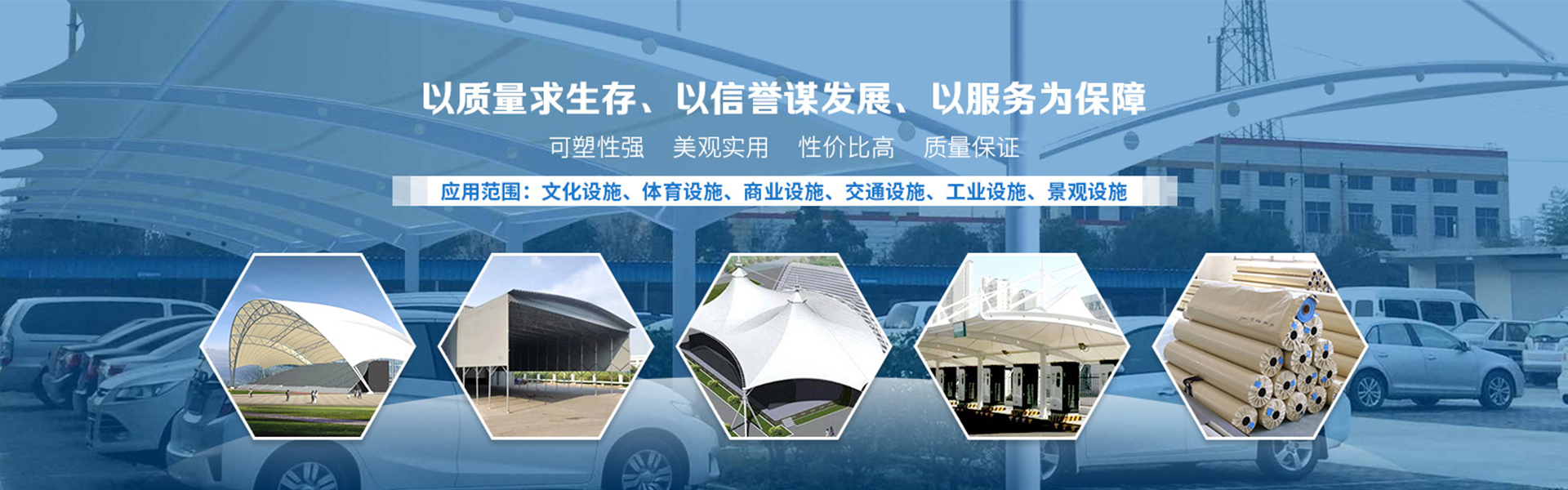

Membrane Structures emerged as a new architectural form in the mid-20th century. Tensegrity is a self-stressed and self-supported grid structure composed of a series of continuous tension rods and continuous or discontinuous compression rods. It is designed to generate a certain amount of pre-tension within its structure to form a specific spatial shape. These structures use membranes as their covering and are capable of withstanding certain external loadings.
Membrane structures integrate structural mechanics, materials science, and computer technology, boasting high technical content and aesthetic appeal. Their curved surfaces can blend with the overall environment, adapting to architects' designs and allowing for the creation of iconic engineering projects.
Membrane structures are categorized into two main types: inflation membrane structures and tension membrane structures. Inflation membrane structures rely on continuous inflation inside the space, creating a pressure difference between the interior and exterior (typically between 10mm to 30mm water column). This pressure difference generates an upward buoyancy on the roof membrane, enabling larger spans. Tension membrane structures, on the other hand, are supported by columns and steel frames or formed by steel cable tensioning, offering a very elegant and flexible design.
