

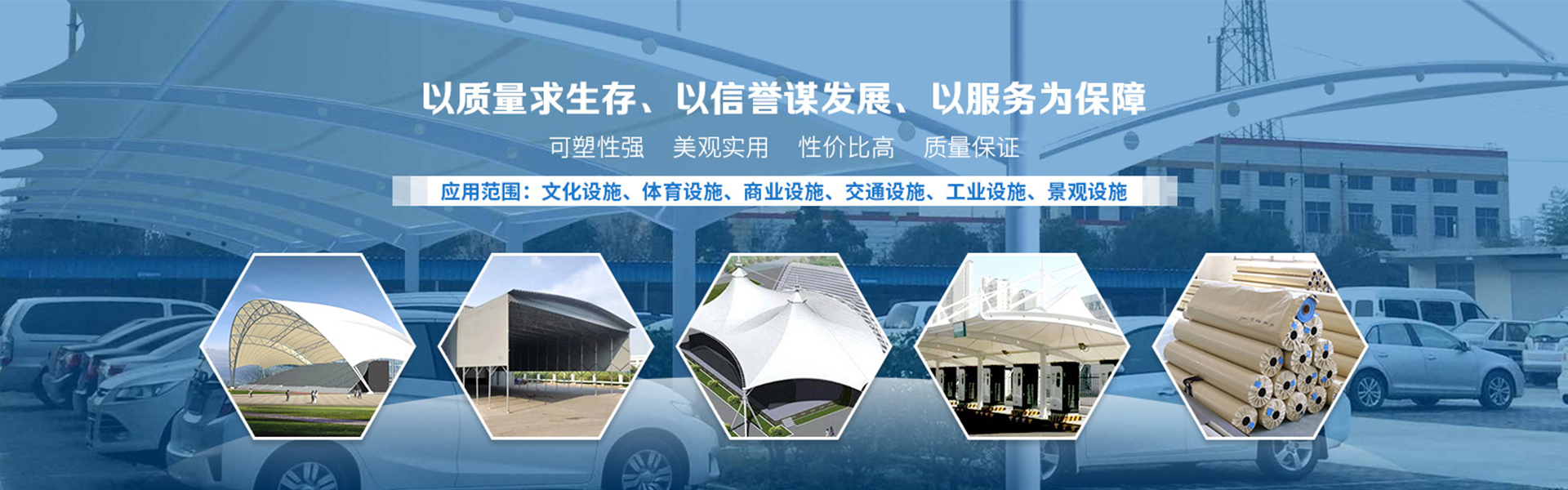

One, The shaping, packaging, and transportation of membrane materials for tensile membrane structures are typically complex, with numerous angle variations and a high precision requirement for processing. Strengthened quality management is essential during the manufacturing process to ensure accuracy. Before the membrane structure is made, material and mechanical property inspections must be conducted on the membrane materials and accessories used in the project according to design and specification requirements, such as the bidirectional stretching test of the membrane materials. The processing and manufacturing of membrane materials must be strictly adhered to the design drawings in a professional workshop by professionals. Since tensile membrane structures are usually spatial curved surfaces, the cutting involves using flat membrane materials to represent these surfaces. This method of fitting flat membrane materials to spatial curved surfaces inevitably introduces errors, so it is quite necessary for cutters to incorporate some remedial measures during the cutting and processing of the membrane materials. Each cut membrane sheet should be remeasured for size and numbered, with detailed records of the actual deviation values. During the cutting operation, it should be avoided to fold or bend the membrane to prevent damage and wrinkling of the membrane surface, which can affect the architectural aesthetics. After the cutting of the membrane sheets is completed, the thermal welding scheme should be determined based on the drainage direction and the connection nodes of the membrane sheets. Before formal thermal welding processing, welding tests should be conducted to ensure that the strength of the焊接 joints is not less than that of the base material. Qualified finished membrane products should have a comprehensive packaging plan determined based on the characteristics of the membrane, construction plans, etc. For example, polytetrafluoroethylene-coated glass fiber base membrane materials can be packaged in rolls, with the core diameter not less than 100mm. For membranes that cannot be rolled into a tube, soft filling materials should be placed inside the membrane, then folded and packaged. After packaging, mark the packaging content, usage location, and folding and unfolding direction of the membrane on the outer packaging. During the transportation of membrane materials, efforts should be made to avoid heavy pressure, bending, and damage. At the same time, the installation sequence should also be considered during transportation, aiming to deliver the membrane sheets in one go to avoid secondary transportation within the site, reducing the chance of damage to the membranes. The processing and manufacturing process of membrane materials includes: membrane cutting and drawing → review drawings → technical briefing for membrane processing → inspection → layout → cutting → pre-assembly of membrane materials → thermal welding of membrane materials → edge processing → dimensional check → cleaning → packaging → shipment.
The installation of tensioned membrane structures on supporting structures can be categorized into rigid boundaries and flexible boundaries. The magnitude of installation errors in the supporting structure not only directly affects the appearance of the building but also influences the distribution of prestress within the structure, with severe cases potentially impacting the structural safety. Prior to the installation of supporting steel structures, strict re-measurements of the top elevation and axis dimensions of the steel foundation should be conducted according to specifications and design requirements, and records of the re-measurements should be made. The installation process for supporting structures is as follows: steel structure pre-burial briefing → steel structure pre-burial → steel structure fabrication → foundation pre-burial verification → component anti-corrosion coating → component fire-retardant coating → component hoisting.
Prior to the membrane installation, the project team should review the construction plan to determine detailed installation procedures and safety measures. First, recheck the dimensions of the supporting structure to ensure that the installation errors at each control point are within the allowed range of design and specifications. Inspect the factory certificates, product quality guarantees, test reports, as well as the types, specifications, and quantities of the membrane and accessories. Check for any damage or creases on the membrane's appearance, any detachment in the thermally fused seams, and any scratches or rust on the bolts, aluminum alloy strips, and stainless steel strips. Also, verify if the coatings on cables and anchoring equipment are damaged. While organizing the inspection of components, set up a membrane unfolding platform and install safety nets based on the site conditions and construction plan. For large tensile membrane structures, collect weather information during the installation period. Pay close attention to wind direction and speed during installation to prevent the membrane from vibrating. In strong winds or heavy rain, stop construction immediately and take appropriate safety precautions.
News Center Co., Ltd.
