

To excel in the design of building water supply and drainage systems, coordination during the design phase is crucial. For instance, ensuring comprehensive sanitation and technology design, and establishing a robust building water supply and drainage system, requires each staff member to master fundamental skills. In the indoor water supply and drainage phase, adherence to China's building water supply and drainage design codes is essential, and the application of building water supply and drainage design software must be implemented. Throughout this process, China has engaged in a series of engineering projects, learned from past design mistakes, actively studied, and introduced popular design theories and their experiences.
An analysis of the actual development needs of China's construction industry indicates that the application of a rationalized and systematic water supply and drainage design is crucial. In this process, China's resources for water supply and drainage design are relatively abundant, with many practitioners who possess excellent knowledge and practical skills, as well as rich design experience. However, on a broader scale, China's water supply and drainage design system remains incomplete.
The advancement of China's urbanization economic system has also propelled the development of high-rise architectural design.
Our advancements have enhanced the intelligence of our design system, aligning with the needs of high-rise architectural design in our country, which has stringent requirements. If a series of fire accidents occur in high-rise buildings, the entire building system can be affected, leading to significant economic losses or casualties. Therefore, it is crucial to perfect the design system for water supply and drainage in high-rise buildings, ensuring coordination among all internal components. In daily operations, it is alarming that many high-rise building managers lack awareness of the importance of architectural design. Ignoring this can lead to drainage design plans that fail to meet engineering needs, potentially causing fire spread.
Our relevant staff must adhere to the design specifications for building water supply and drainage, ensure a robust indoor drainage pipeline system for high-rise buildings, effectively implement the design of drainage pipes, and increase the use of conduit and firestop rings. Reducing construction costs should not come at the expense of applying architectural design. Failure to comply with these regulations could lead to a greater spread of fire during emergencies, affecting the operations of upper floors.
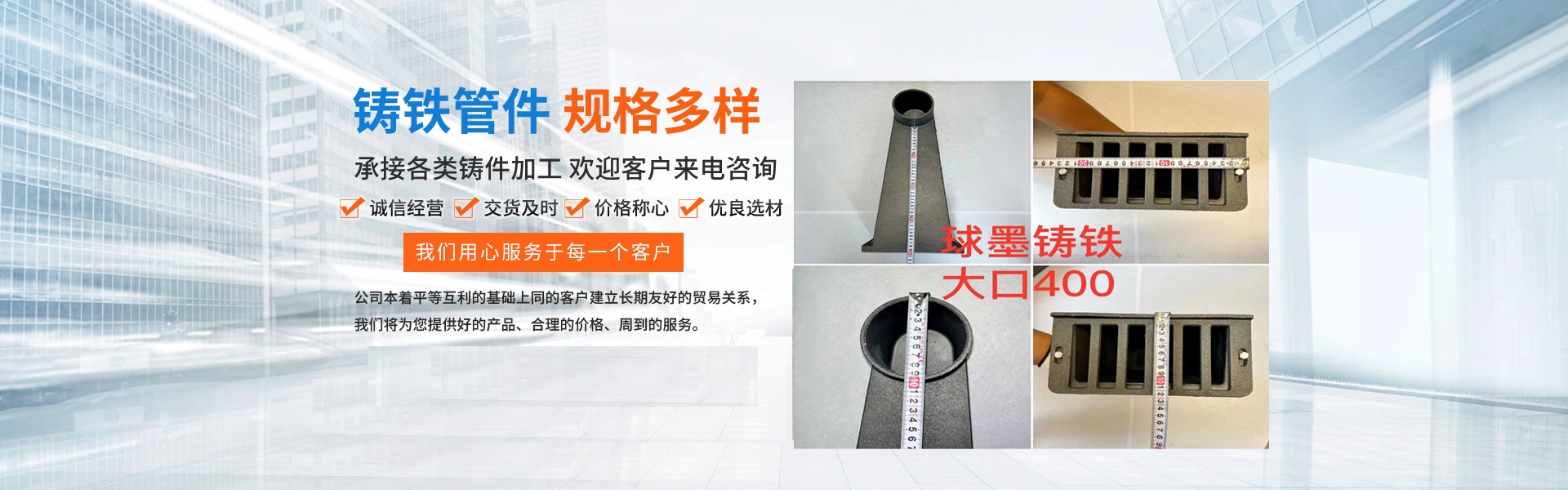
In the more common residential housing, the design issues of water supply and drainage are something that needs to be addressed. The common problem is that the cast iron drain plug of the drainage equipment is not reasonable. This requires designing the drain plug based on the actual conditions of water supply and drainage design, to meet the actual user needs. The design of drain plug for balconies, bathrooms, and other areas requires coordination in this work process.
In the space design phase of floor drains, we must pay attention to the sedimentation of pipes. Neglecting this aspect can lead to gas formation, which in turn affects human health. Currently, many architectural designs in our country have reduced the application of floor drain designs. Particularly during the secondary renovation of residential interiors, due to their low usage frequency, there is a tendency to decrease the number of floor drains. This situation directly results in the generation of gases. Should the water leakage situation worsen and lack the support of floor drain installations, it can lead to water seeping into the floors, resulting in a series of losses.
Proper pipeline layout is crucial in building plumbing and drainage design. This requires determining the location of the plumbing and drainage pipelines in the building project according to design specifications, conducting standardized operations, ensuring proper spacing of the pipelines to avoid situations where they are either too large or too small. In some drainage setups, issues with ordinary plastic drainage pipes are also common due to their thin walls, which result in noticeable water flow noise and a series of cavitation situations. This leads to resonance noise between the pipeline and the water flow, which is不利于the normal rest of surrounding users.
The Hauf joint steel plate leak stopper is a novel design involving an improved pipe joint, composed of at least three arc-shaped bodies interconnected to form a circular structure, which encloses the outer sides of the two pipe bodies. The resulting circular pipe joint features two open ends, with a radial ring protruding on the inner circumferential wall of each end. A circumferential groove is provided on the edge of the pipe body for the rings to fit into. To assemble the pipe joint onto the pipe body, simply align the free ends of the arc-shaped bodies and insert a pin. Additionally, a leak-proof ring is clamped between the two protruding rings on the pipe joint, with its inner wall extending a stop edge that fits between the two pipe body ends. For temperature cracks, considering the "lag effect" of concrete buildings on temperature, it is generally recommended to perform grouting treatment at the low point of the concrete body temperature, where the Hauf joint performs effectively.
To prevent leakage in pipes (Huck fittings) containing strong corrosive mediums like concentrated acids and alkalis, follow this method: press the CHD4 chemical film over the grid of a GX150/12 honeycomb self-sealing pad. Stick the grid surface onto the pipe's leak location. Place a stainless steel clip on top of the honeycomb pad. The inner shell of the Huck fitting, along with the seals at both ends and the sealing strips on the sides, form a wafer-like integrated structure. The sealing pad forms a closed inner shell within the Huck fitting, which not only effectively solves the corrosion problem but also enhances the sealing performance of the Huck fitting.
