
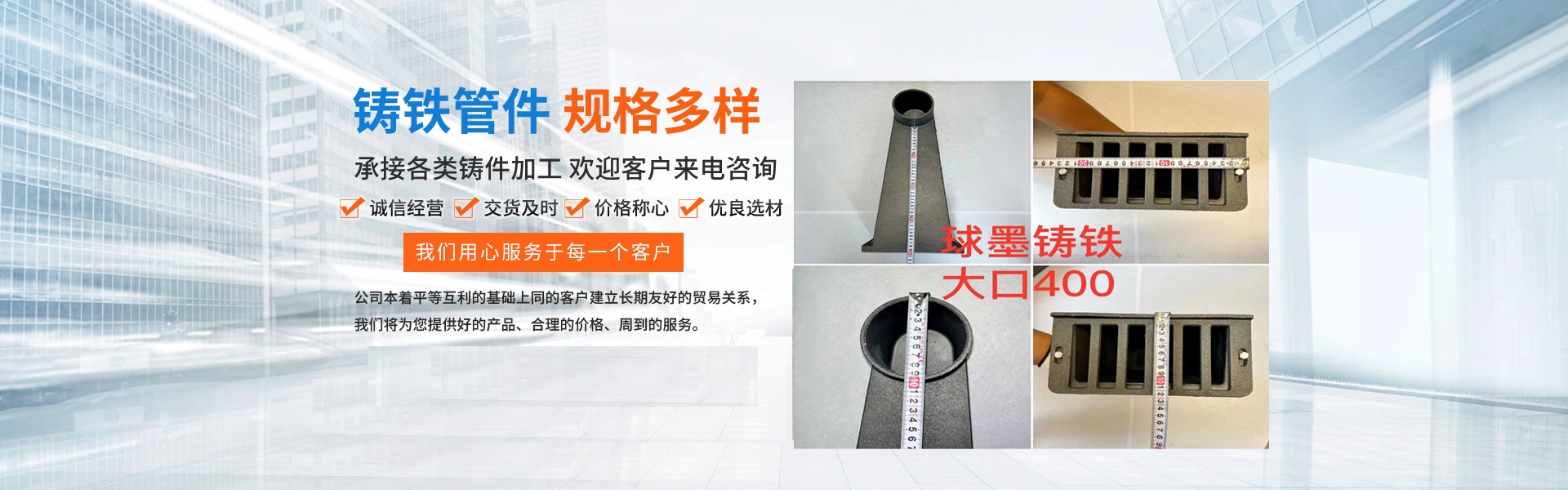

Manufacturing Process of Flexible Cast Iron Pipes
Firstly, the production of cast iron pipes requires melting. The melting temperature is relatively high, around 1500 ℃, and it is generally recommended to use a medium-frequency induction furnace. Next, the lining can be either acidic or alkaline, and the lining's mixing, knotting, drying, and sintering should all be carried out according to standard processes.
2. Filling process: In the normal sequence for casting flexible cast iron pipes, first, gray cast iron, molybdenum iron, and other refractory iron alloys are loaded into the bottom of the furnace. Subsequently, scrap steel is filled in a tight-to-loose manner from bottom to top, which aids in material compaction. Adjust the electric furnace power to an appropriate setting for melting. Due to the significant melting loss of chromium iron, it should be placed at the back, typically adding the red-hot chromium iron after all the scrap steel has been melted.
3. After all the metal furnace charge has been melted and heated to an appropriate temperature, add manganese iron, silicon iron, and aluminum for deoxidation. The iron liquid for casting iron pipes should remain in the ladle for a period of time, and the pouring temperature can range from 1380 to 1410°C, depending on the size of the workpiece.
