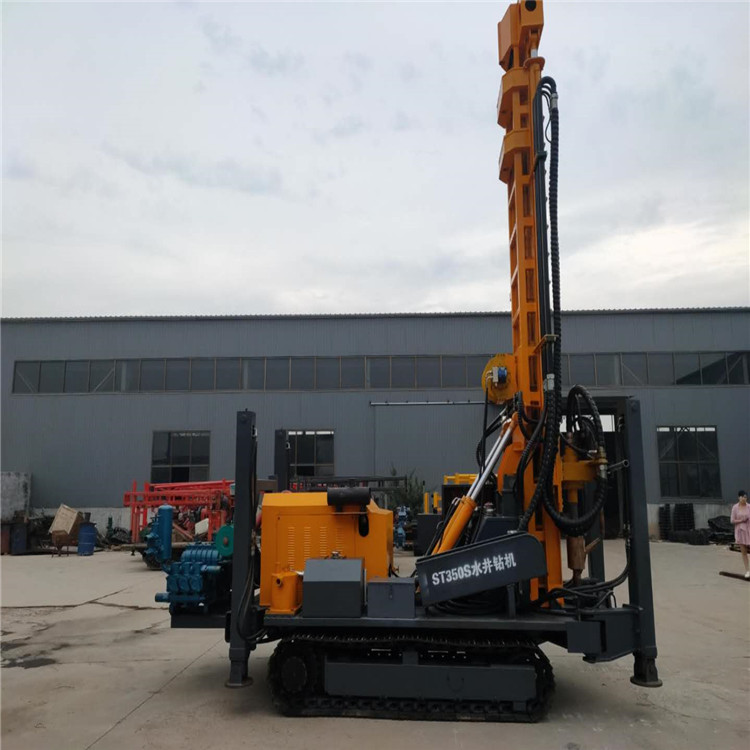


How to resolve the slipping issue with well-drilling machines? First and foremost, it's essential to understand why slipping occurs before coming up with a solution.
Why Does the Slippage Occur:
When the drilling rig encounters slipping, the debris that falls at this point has lost its original integrity as solid soil. After the second drilling, the drill bit directly penetrates into the debris, and the bottom plate of the drill bucket is pressed directly onto the debris. As the bucket rotates and drills, it compacts the uneven and crack-filled debris. When the debris can no longer be compressed, the bottom plate is held up by the debris, and the bucket teeth repeatedly rotate in the pre-drawn grooves. This forms three layers: the first is the repeatedly rotating drill bucket, the second is the fallen debris acting as an intermediate layer, and the third is the uncut solid soil. Due to the drill bit's diameter matching the hole, and the drill rod rotating without resistance, counterforce, friction, or pressure, the bottom plate and the fallen debris, lubricated by water or mud, experience slipping.
How to Prevent Skidding
The phenomenon of sliding in engineering drill bit heads can be overcome. First, combine the single-bucket penetration depth displayed on the monitor. Although the resistance during mud layer drilling is low, as the internal slag in the drill bucket accumulates, it creates resistance at the intake opening. Therefore, increasing the penetration resistance, the sound of the planetary reducer on the power head changes with the resistance, so listening to the power head sound can determine the penetration depth. When the penetration resistance rises, the speed of the power head also decreases, so the penetration depth can also be judged by the drill rod speed. If the geological changes are minimal, the time and depth of each bucket of drilling should remain within a certain range. The single-bucket penetration depth in the mud layer should be between 0.5 to 0.6 meters. When reversing and closing the bucket bottom, it is best to do so when the drilling is loaded, as the bucket bottom then has a certain resistance, preventing it from reversing along with the drill tube.