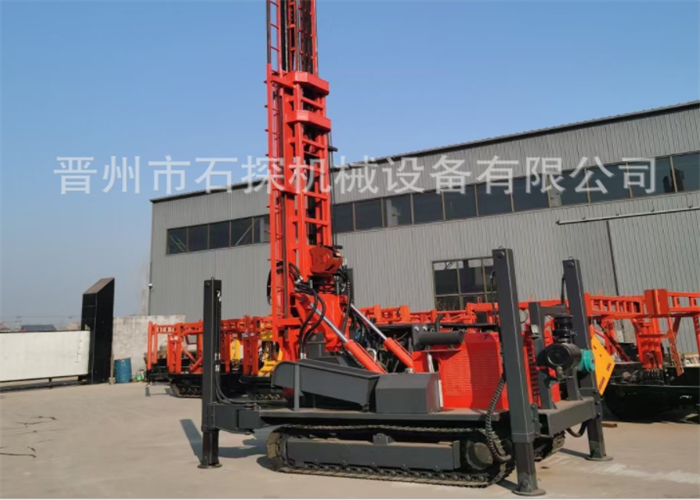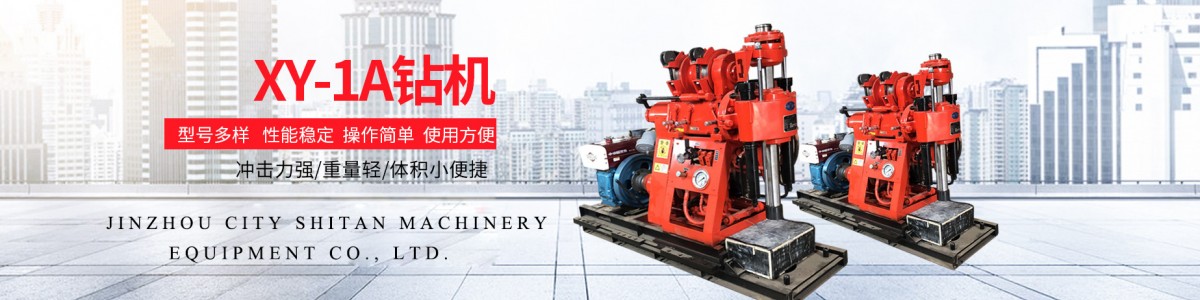
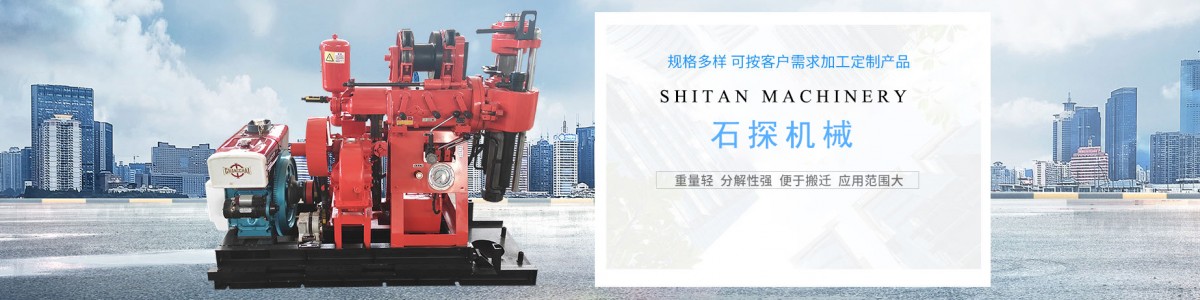
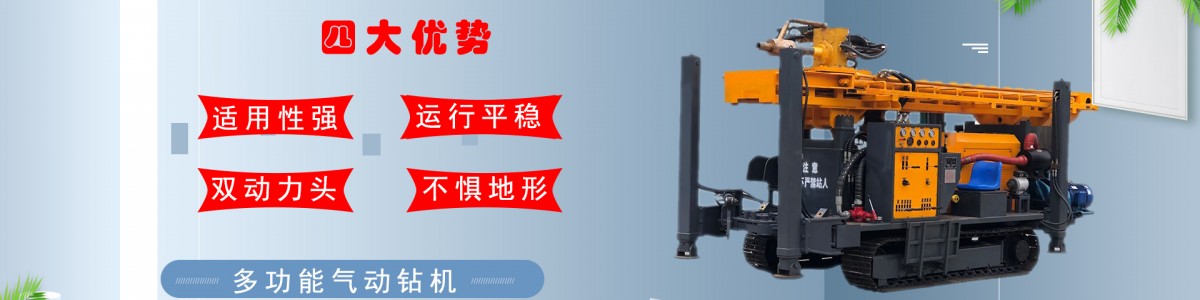

When selecting a location for a drilling rig, there are many factors to consider. Let's take a look.
The excavation of the foundation trench should follow a stable slope, with susceptible to collapse strata being excavated in a stepped shape. The bottom of the foundation trench should be excavated to a depth of 0.5-1.0m above the groundwater level, and the spacing between the trench wall and the well shaft outer wall is generally 0.6-1m. Ensure normal construction for the well-drilling machine.
2. The pouring of the blade foot should be done on a solid soil layer; otherwise, compaction treatment is required to prevent the drilling machine from tilting during construction. The concrete blade foot strength must reach 70% of the design strength before the well casing can be poured onto the blade foot.
3. The steel rod must be used to securely fasten the well-drilling machine, preventing any displacement at the wellhead during operation.
4. Rotate the handwheel to properly wrap the central steel wire rope of the well-drilling machine. Use the rope end hook to lift the middle slider, allowing the handwheel to rotate clockwise to lift the drill rod. When the slider is one person's height above the ground, secure the two steel wire ropes on both sides, and simultaneously lift the water nozzle and the main drill rod. The lower ends of the two steel wire ropes are hung on the handwheel. Note that the winding direction is opposite to the main rope. One end of a 4-meter-long rubber hose is securely attached to the water nozzle, and the other end is connected to the outlet of the water pump.
5. When installing the drilling rig, ensure the main rope hook is aligned with the well mouth. Adjust the diesel engine and connect a V-belt to the outer groove of the main engine's three-groove pulley, with the inner groove connected to the water pump. After the small oil valve raises water from the pump, you can begin the drilling operation. The size of the working throttle is determined by the water output of the pump, aiming to flush up silt and sand. Typically, this process takes 1-10 minutes per stroke. The lower end of the pump is connected to the inlet pipe, which is placed in a circulating pool at the bottom. The pool should be deep enough to allow for sedimentation, and the lower end of the suction pipe must be equipped with a filter.
6. When drilling into thick or deep sand layers, increase the feed rate to prevent long-term stirring, which may cause cave-ins. In case of cave-ins, mix sticky mud to form a thick slurry and pump it in with a pump. If the cave-in is severe, you can fill the well opening with solid sticky mud in blocks, re-drill after filling, or drill while placing mud columns and mud balls.
7. After the desired depth is reached and confirmed, elevate the main pipe section to ground level for shutdown. Disassemble the drill rod at the workbench, remove the main ball valve and slide marker together. Attach the prepared small lifting hook to the work rod and then lift each section of the drill rod with the middle wire rope. Once the first rod is set, raise the small oil gate to lift the main rod. Stop the machine when the drill head pipe joint is exposed at ground level, then raise the pipe joint above the workbench. Loosen and remove the drill head with two pipe clamps. Pre-assemble the second drill head rod at the proper position where it can connect with the main rod, quickly attach it, tighten with a pipe clamp, and lower it back into the well. Proceed to water the well, start the machine, and for the third rod, only disassemble the second section of the work drill rod attached to the main rod; no movement of the drill head is necessary.
8. Installation: Wrap the pre-drilled pipe with sand mesh, insert it from the main unit's opening, pull it out about half a meter once it reaches the bottom, cut it on the workbench, and use wellhead to pump water. After a few minutes, if everything is normal, remove the main unit, install the pump, and begin the pumping process, marking the completion of the well drilling.
9. Wall thickness deviation allowance: Reinforced concrete - 50mm, masonry - 30mm.
10. During the well sinking process, it is crucial to maintain stability. If displacement or tilting is detected, it must be corrected immediately. Henan Drilling Machines primarily address the issue of water scarcity. In many remote mountainous areas across China, where many regions still lack running water, drilling machines are essential for extracting water and solving the water source problem. Given the vast territory and abundant resources of China, the role of drilling machines is even more significant.
When employing artificial construction with drainage methods, the water level in the well pit should decrease as the well shaft sinks, generally maintained at 0.5 to 1.0 meters below the excavation face. The recommended depth for each manual excavation of soil is 0.3 meters.
12. For large wells with water seepage through the wellbore, the water seepage holes and the reverse filter layer must be installed according to the design specifications. Prevent clogging of the water seepage holes during construction.
The large well with water entering from the bottom must have its filter layer thickness and filter material particle size constructed according to design specifications. Prior to laying the filter layer, the mud and sediment at the bottom of the well must be cleared. The filter material should be sifted to remove mud and measured for reserve use.
14. After well completion, a test pumping operation should be conducted, typically involving only one significant drawdown, with the water level remaining stable for at least 8 hours.