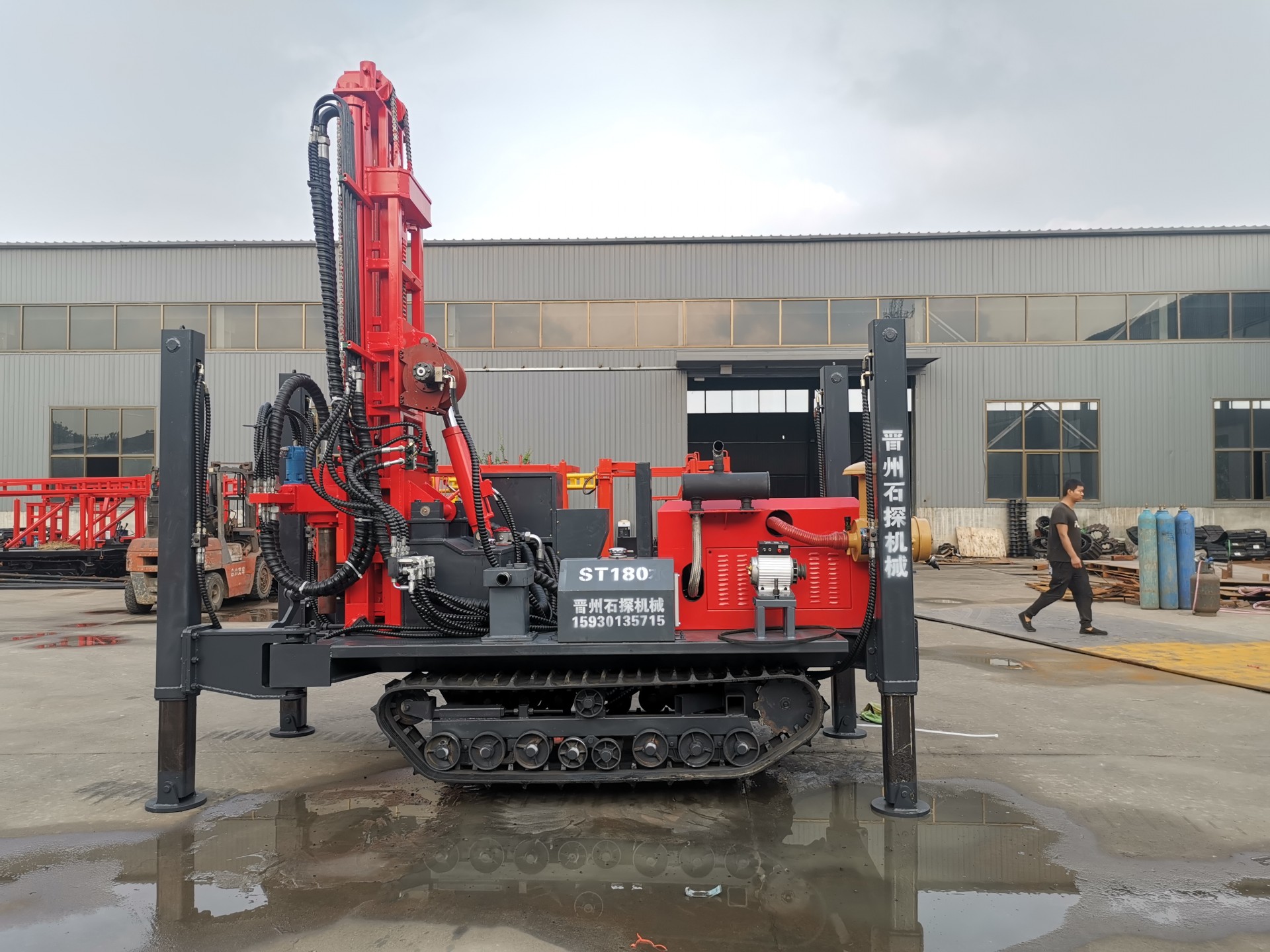

Boring wells should be familiar to everyone. Remember what Chairman Mao once said: "Don't forget the well-digger when you drink water." In the past, every household had a well, with water that was warm in winter and cool in summer. This is because well water is groundwater, which comes from the water of rain and snow, filtered and stored in small openings. What kinds of wells can a drilling rig produce?
Five primary types of wells are excavation, driven, bored, drilled, and jetted (flushed).
Most drilling equipment is available, or boreholes are built-in due to the perceived high cost of drilling. Modern wells are typically lined with concrete tiles and have large diameters, providing large openings for the aquifer. This allows them to extract water from very fine sands, silt, or clay materials. Wells are shallow and do not have continuous casing, making them susceptible to contamination from nearby sources.
By driving small-diameter pipes into sandy or gravely sediments in shallow water, drive wells are manufactured. These wells are relatively simple and economical to construct, yet they are only capable of tapping into shallow water and are susceptible to contamination like traditional wells.
The boreholes are composed of large auger drills. The depth of the boreholes typically ranges from 50 to 70 feet, and they are usually made of soft materials such as sand, silt, clay, and soft rock.
Drilling operations are conducted using impact or rotary drilling machines. These wells can exceed 1,000 feet in depth. Wells penetrating soft or hard ground require casing and screens to prevent sediment inflow, which could lead to well collapse.
Force high-pressure water into underground drilling to inject or flush the well. This construction method is only suitable for soft soil foundations.