




 通过中商114认证
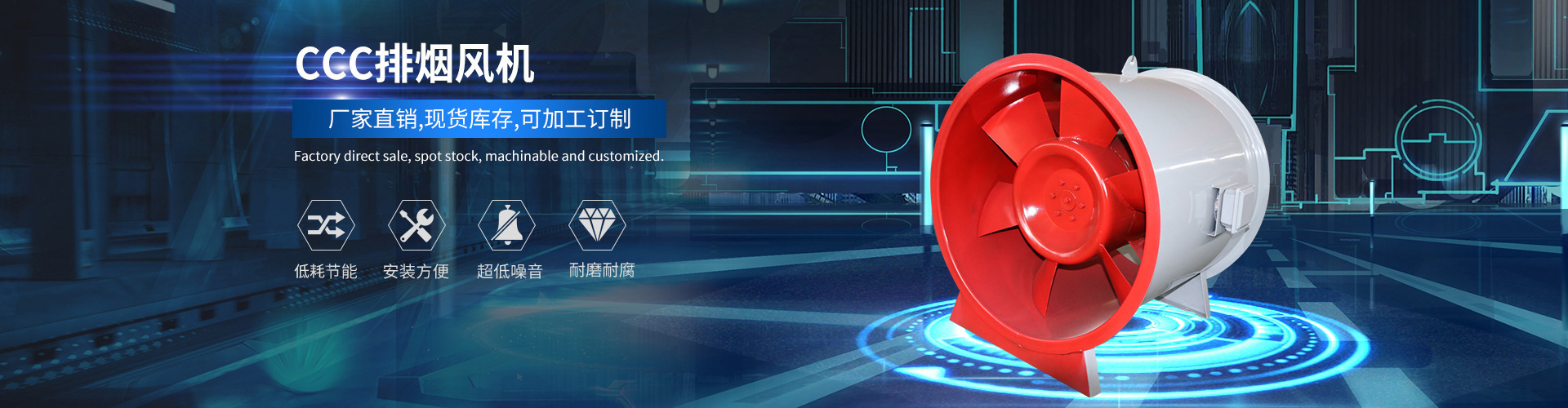
The selection of fire exhaust fans and their methods for mechanical smoke exhaust are widely used in engineering. In a short period, smoke spreads to the dispersed corridors with high viscosity. After the smoke is exhausted first, it is quickly removed, resulting in high visibility in the corridors and minimal disruption to personnel dispersion. This method is particularly ideal for smoke prevention and exhaust, with excellent air flow organization, short exhaust time, and great benefits for reliable dispersion.
One, beneficial for fire mitigation and eliminating losses caused by fires. Additionally, natural smoke exhaust, which is based on varying fire load conditions in tests, results in smoke filling over 60 meters of scattered corridors within a relatively short time, with high viscosity.
Due to the natural ventilation and smoke exhaust, the smoke prevention and exhaust functions are not effective. The smoke does not dissipate over a long period, which is unfavorable for the safe dispersal of personnel and the mitigation of fires.
Despite the fact that high-temperature exhaust fans manufacturers may opt for high-temperature exhaust fans that allow both full-pressure and reduced-pressure startups, it is important to note that during full-pressure startups, the current should be 5-7 times the rated current. In cases where the grid capacity is insufficient, a reduced-pressure startup should be adopted. When conducting the trial run of fire-fighting exhaust fans, it is crucial to carefully read the instructions and verify whether the wiring of the high-temperature exhaust fans is correct.
Fire dampers are valves installed on the supply and return air ducts of ventilation and air conditioning systems, which are normally in operation. During a fire, when the gas temperature inside the pipeline reaches 70°C, the fusible link melts, causing the valve to close automatically under the action of the torsion spring. This ensures that the valve meets the requirements for fire resistance and integrity for a certain period of time, serving as a smoke and fire barrier. A shutdown message is sent when the valve closes.
The ducts connecting the inlet and outlet of the high-temperature smoke exhaust fan have independent supports and should not bear the weight of the pipeline on the components of the high-temperature smoke exhaust fan. When installing the fire smoke exhaust fan, attention should be paid to the experience orientation of the high-temperature smoke exhaust fan. The interface between the high-temperature smoke exhaust fan and the foundation and the connection of the exhaust duct should be adjusted to fit naturally, and should never be forcibly connected.
An alternative fire exhaust fan is the electric positive pressure supply air outlet, which can be managed separately for each floor. Also known as the pressurized air supply system. To prevent overpressure conditions, a bypass is added and pressure is released regularly. After major engine repairs, regular cold grinding and hot testing are required. Technical parameters of the fire model are reviewed and defects in the device are improved, the appearance quality of the forward collaboration components is enhanced, extending the engine's service life, achieving greater power and economy, effectively reducing consumption, and lowering emissions.
Used oil from repair processes must be collected and managed in covered containers, waste cotton yarn should be collected immediately to prevent environmental pollution. When accumulated to a certain extent, the kitchen is no longer suitable for continued practical operations. Therefore, fans are used to exhaust contaminated gases through the exhaust ducts out of the kitchen. The smoke exhaust system is often used in basements, large shopping malls, extremely large fire compartments, and extremely long corridors. In cases where natural smoke exhaust cannot provide the necessary supply, mechanical smoke exhaust systems are added.
