
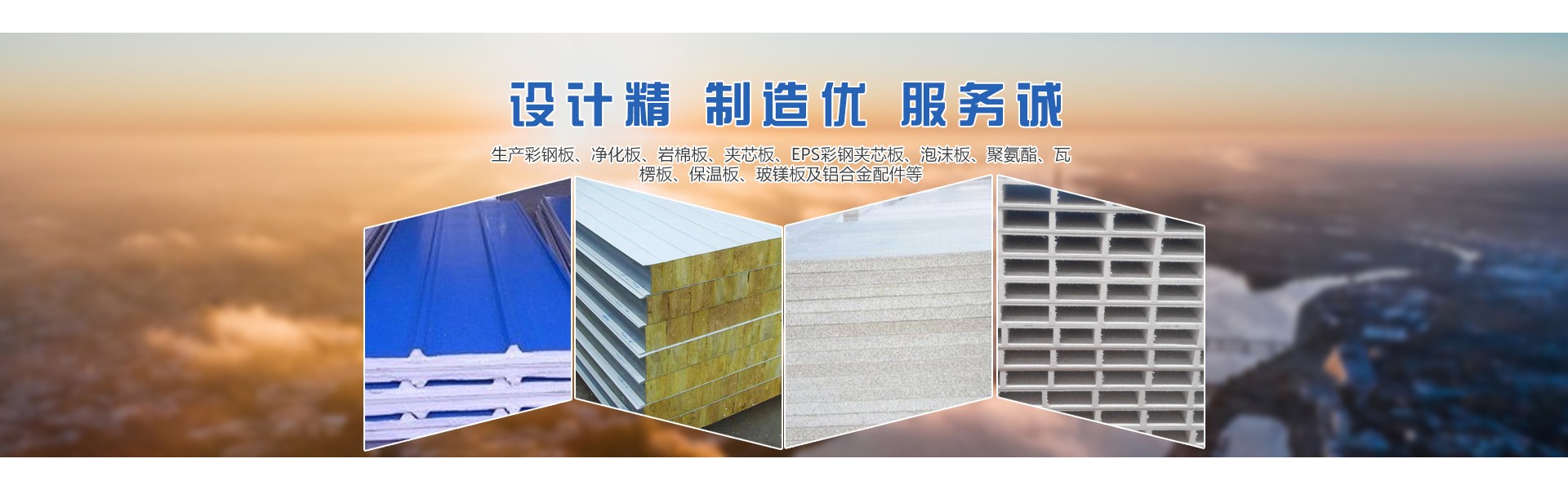
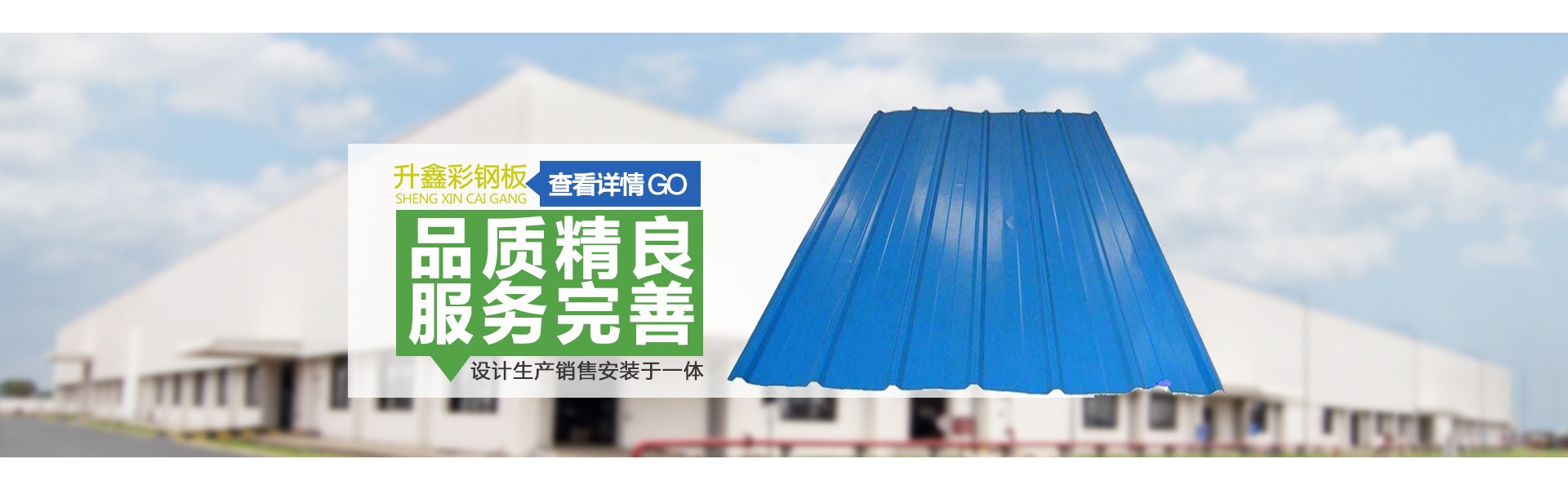

There are generally two methods for installing color steel plates: penetration and concealed clip styles. As an experienced Hunan color steel plate manufacturer with years of operation, let's briefly explain these two installation methods.
Through-fastening is a relatively common method for installing sandwich panels on walls, which involves fixing the panels to a support structure using self-tapping screws or rivets. This is achieved by securing through ribs, slots, or a combination thereof. The concealed clips include a special clip that is combined with a concealed board to be fixed to the support structure, and then mounted onto the mother rib of the sandwich panel and the web rib of the concealed clip. This method is generally used for the installation of floor support panels.
Snap-fastening involves overlapping the colored steel edges, with the installation of each steel plate requiring positioning the edge on the old plate and clamping it tightly until both ends are secured. A simple method is to use a pair of clamps to hold the overlapping steel edges. When the steel plate is positioned vertically, particularly at the top end, it should be clamped with fixtures to ensure one end is in place and the overlap is correctly positioned. Therefore, during the process of securing the steel plate, the fixtures should be held vertically. Before installing the next plate, each one should be fully secured. Tightening should start from the center of the plate and extend to both sides to fix the overlapping edges. For back overlaps, since roof-decking and wall profiles are continuously manufactured, steel plates of lengths limited by transportation conditions can be provided, generally without overlaps. The length of the steel plates is sufficient to meet the roof requirements.
For on-site handling and transportation, two shorter steel plates can be used, overlapping at both ends to cover the entire length as needed. The overlapping sequence of the panels is from bottom to top, followed by inserting the next row. The ends of the steel roof and wall panels are placed on the supports. For roofs with a slope between 1/12 (50) and 1/4 (150), the overlap length at the steel plate ends should be at least 200mm; when the slope exceeds 1/4 (150), the overlap length should be at least 150mm, with the midpoint of the steel plate ends at the center of the support. The small overlap length of the wall panels is 100mm.
When selecting self-tapping screws, choose fasteners based on the structural lifespan. Pay particular attention to whether the lifespan of the covering material aligns with the specified lifespan of the fasteners. Also, note that the thickness of the steel band should not exceed the self-drilling capability of the screws. Currently, available screws include plastic heads, stainless steel caps, or special protective coatings. Additionally, other than embedded fastening screws, the screws come with waterproof washers and corresponding solar panel-specific wind pressure washers.
The installation of color steel plates is relatively straightforward, but certain details are crucial. When dealing with roof color steel plates, it is important to trim them at the roof and eaves to prevent rainwater from entering the roof.
